A £400 holiday sounds wonderfully straightforward. You find the flights, book the hotel, congratulate yourself for being organised and start imagining the part where you are sitting somewhere warmer than home.
Then the spending begins.
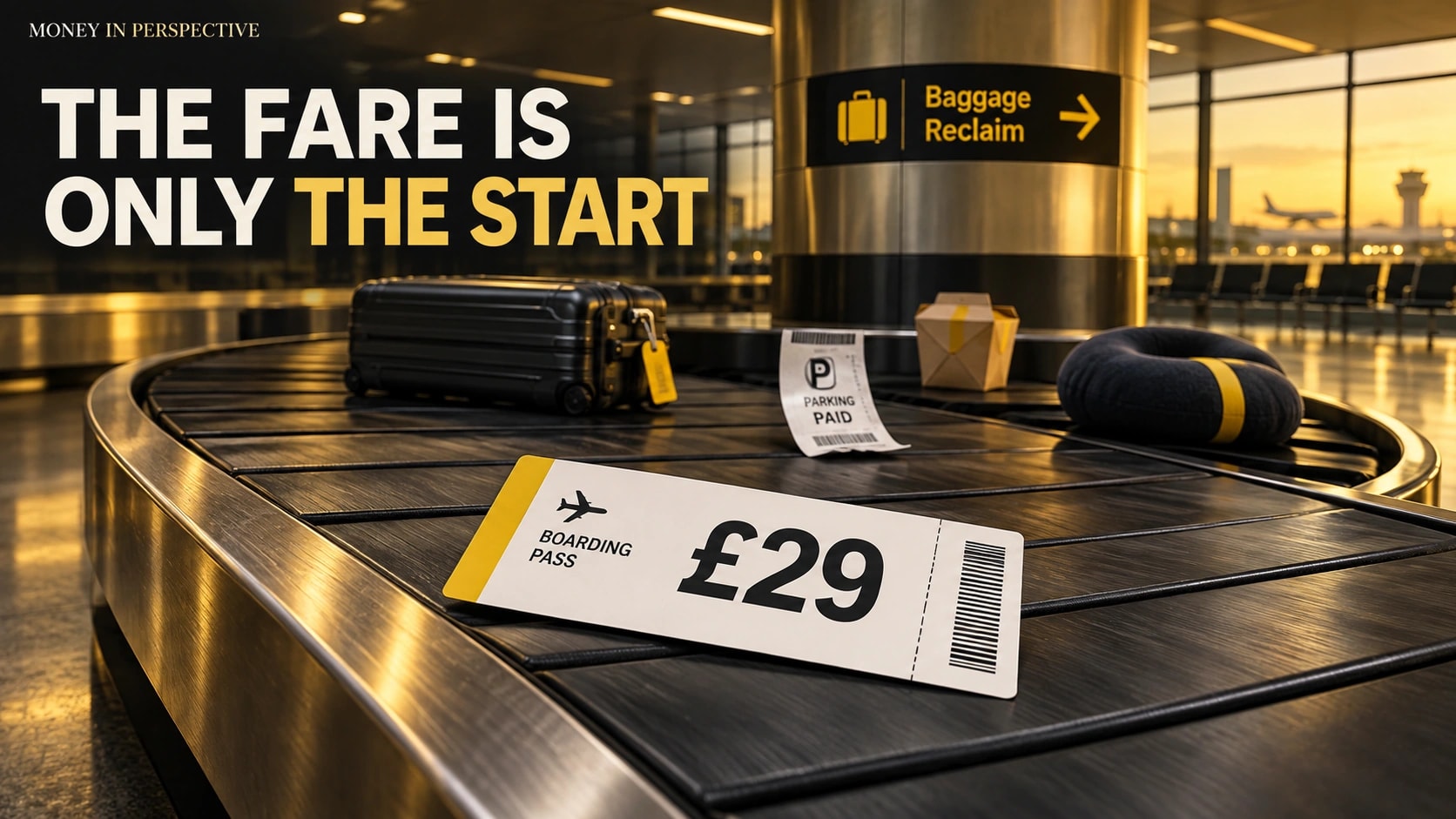
Baggage is extra. The airport is not nearby. The flight leaves early enough to make public transport useless. The hotel needs a transfer. Breakfast is not included. There is a city tax. You book one excursion, then another. You eat out because that was part of the point of going away. Somewhere between the first coffee at the airport and the final taxi home, the £400 holiday has become an £1,100 holiday.
Nothing necessarily went wrong. The problem is that the £400 figure was never the cost of the holiday. It was the cost of the first pieces of the holiday.
That distinction matters because travel is one of the easiest places to underestimate total spending. Prices are fragmented across different days, websites and categories, so each new amount feels separate. Flights are booked in January. The hotel balance is paid in March. Airport parking is added in May. Spending money disappears in June. Because the payments do not arrive together, the holiday can feel cheaper than it really is.
The first useful step is to stop treating the booking price as the trip price. A holiday has several layers, and the headline deal normally covers only some of them.
Start with transport. A £60 return flight can be genuinely cheap, but it may not include the luggage you actually need. Add a cabin bag or checked suitcase and the fare changes. Then consider how you will reach the airport. A train, taxi, fuel or parking can easily cost as much as the flight. An early departure may require a hotel the night before. A late arrival may mean paying for a taxi at the destination because the cheaper buses have stopped running.
None of these costs are unusual. That is exactly why they belong in the budget from the beginning.
Accommodation can create the same illusion. A hotel advertised at £350 may become more expensive once taxes, resort fees, cleaning charges or deposits are considered. Some of these amounts are clearly displayed when you book. Others appear later. The safest approach is to record the final amount you expect to pay, not the number that first attracted you to the listing.
Then there is food.
Holiday food has a habit of being budgeted vaguely. People say they will “just eat normally” without deciding what normal means in a place where every meal may be purchased outside the home. Breakfast, lunch, dinner, snacks, drinks and airport food can turn into a major part of the trip.
Suppose two people spend an average of £25 each per day on food and drinks for five days. That is already £250. Increase the average slightly because of a nicer dinner, cocktails or an expensive tourist area and the total rises quickly.
This does not mean you should spend the holiday searching for the cheapest sandwich available. Food is often one of the best parts of travel. The financial mistake is not enjoying it. It is pretending it will cost almost nothing.
Activities create another layer. A holiday can be booked because the destination itself looks affordable, while the things you actually want to do there cost extra. Museums, boat trips, theme parks, tours, shows, beach clubs and excursions can all be reasonable purchases. Together, they can exceed the original flight cost several times over.
A useful planning method is to choose the important experiences before travelling. If there are two things you definitely want to do, price them early. That gives the budget shape. You can then decide whether additional activities fit rather than saying yes to everything once you arrive and are already in holiday mode.
Holiday mode matters more than people think.
At home, you may hesitate over a £20 purchase. On holiday, £20 can feel like part of the experience. The normal rules soften. You are away for a limited time, so spending acquires urgency. A restaurant is not merely dinner; it is one of only five dinners you have in the destination. A taxi feels more reasonable because you do not want to waste an hour. Souvenirs feel meaningful because you may never return.
This is not irrational. Scarcity changes value. The problem appears when every individual purchase is justified using the same logic. If everything is a special occasion, the total can become very special indeed.
Currency can make this harder. Spending in euros, dollars or another currency creates a small layer of distance between the price and your usual sense of money. A number may not trigger the same instinctive reaction as pounds. Add card payments and contactless transactions, and the spending becomes extremely smooth.
One solution is not to convert every purchase obsessively, but to know a rough exchange rate and a rough daily budget. If you have £600 available for six days, you do not need to spend exactly £100 each day. You simply have a reference point. A quieter £70 day can balance a £140 excursion day.
The return journey deserves attention too. Holidays often finish with the least glamorous expenses: transfer back to the airport, food while waiting, extra baggage because shopping expanded the suitcase, and transport home after landing. These costs rarely feature in the fantasy when the holiday is booked, but they are part of the same trip.
The best way to avoid the £400-to-£1,100 surprise is to build a complete holiday cost before paying the deposit.
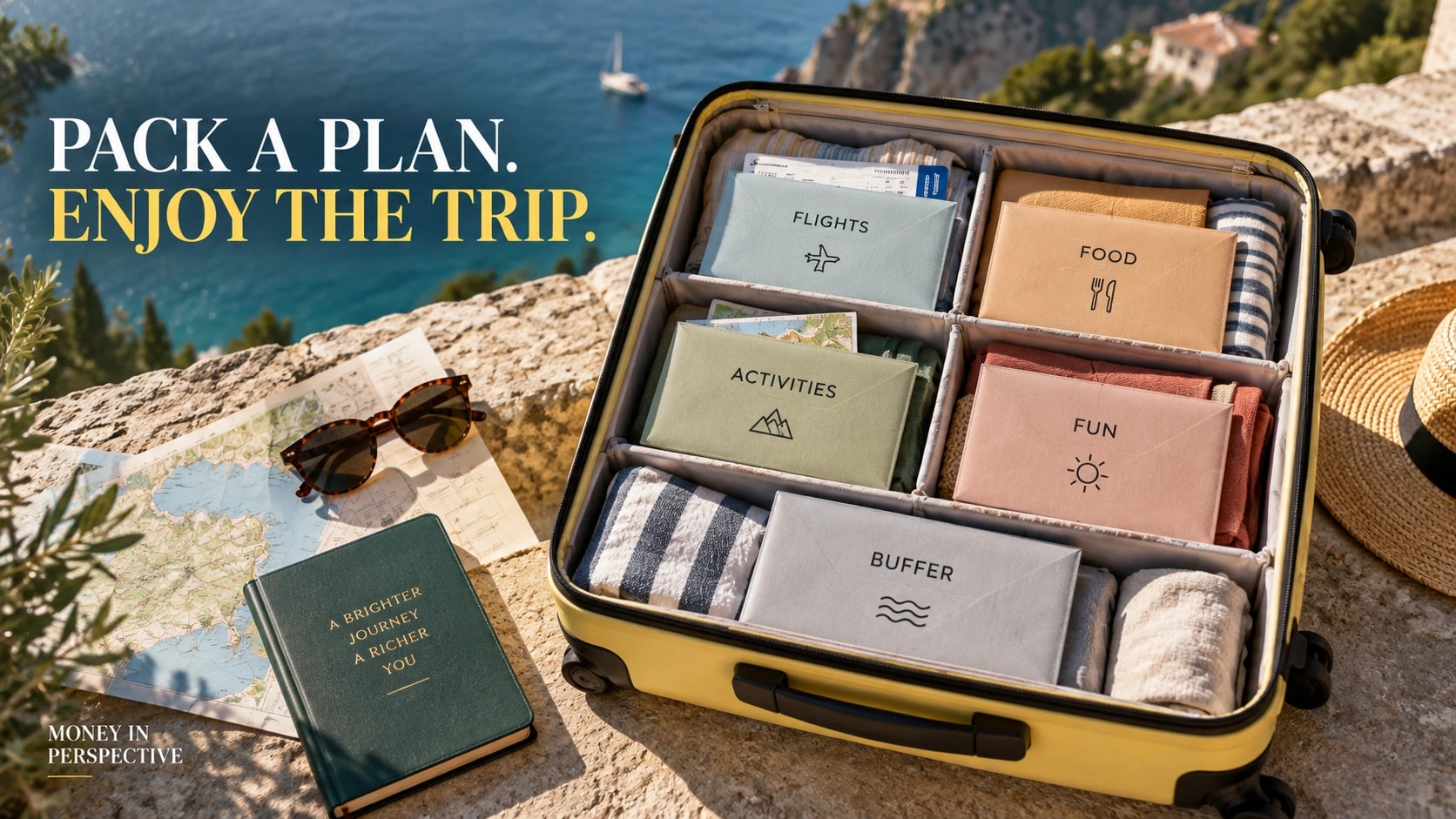
Use broad categories:
Travel to and from the airport at home.
Flights, including the baggage you genuinely need.
Accommodation, including known taxes and fees.
Transfers or local transport.
Food and drinks.
Activities.
Shopping or souvenirs.
A contingency amount for things you cannot predict.
The result will not be perfect. Travel contains surprises. The purpose is not perfect forecasting. It is to replace one misleading number with a realistic range.
This can change which holiday is actually affordable.
Imagine Holiday A has flights and accommodation for £400 but requires expensive transfers, restaurant meals every day and several paid attractions. Holiday B costs £550 upfront but includes breakfast, uses an airport close to the centre and gives you access to many things on foot.
Holiday A is cheaper on the booking page. Holiday B may be cheaper by the time you return home.
This is why package holidays can sometimes provide better value than apparently cheaper DIY trips, and why DIY trips can sometimes beat packages. The structure matters more than the label. Compare the whole experience you are likely to buy.
It also helps to separate holiday saving from emergency saving. If a trip will probably cost £1,100, save toward £1,100 rather than £400. That sounds obvious, but people often save for the booking and then fund the rest from monthly income as the trip approaches. The result is a holiday that technically fits the budget but leaves the following month uncomfortable.
A dedicated travel pot can solve this. Save for the entire expected trip. If you return with money left, excellent. That is better than building a budget that assumes every pound will be spent and then discovering the estimate was optimistic.
There is another useful habit: make one final calculation a week or two before departure. By then, most fixed costs are known. Add the remaining expected spending and compare it with the money set aside. If there is a gap, you still have choices. Reduce activities, lower the food budget, add savings, or simply accept that the trip will cost more and plan around it.
The worst time to discover the true holiday cost is after the holiday.
None of this is an argument for making travel joyless. In fact, realistic budgeting can make holidays more enjoyable because it removes the feeling that every purchase is damaging something back home. If the restaurant, excursion and taxi have already been allowed for, you can spend without repeatedly wondering whether you are being irresponsible.
That is the real benefit of knowing the total.
A £1,100 holiday is not automatically expensive, and a £400 holiday is not automatically cheap. Value depends on what you receive, what you can afford and how much the experience matters to you.
The problem is simply calling a holiday £400 when your behaviour, destination and plans make £1,100 far more realistic.
The booking price is where the holiday begins financially. It is not where the calculation should end.
Before you celebrate the deal, price the trip from your front door to the destination and all the way back again. Include the luggage, the food, the transport, the activities and a little room for real life.
Then if the holiday costs £1,100, it will not feel as though £700 mysteriously disappeared.
You will know where it went.
And, ideally, you will have chosen to spend it.
A useful exercise is to separate fixed holiday costs from flexible holiday costs. Fixed costs are the things you have largely committed to before travelling: flights, accommodation, pre-booked transfers and perhaps insurance. Flexible costs are the choices that can still move: restaurants, drinks, activities, taxis and shopping.
This distinction gives you options when the trip starts to become more expensive than expected. If the fixed side is already high, you can deliberately keep the flexible side lighter. If the accommodation was unusually cheap, perhaps you are comfortable spending more on food and experiences. The categories can balance each other.
It also helps to decide which parts of the holiday deserve generosity. Perhaps you care about one excellent dinner, a particular excursion and staying centrally. Spend properly on those things. Then be relaxed about choosing cheaper breakfasts, walking instead of taking taxis, or skipping souvenir shopping.
This is better than trying to save equally across everything. Holidays are experiences, and value is rarely distributed evenly. Some spending creates memories you will talk about for years. Other spending disappears because you were tired, hungry or standing beside a shop.
Families can benefit from this especially. Children make holiday spending less predictable because small requests arrive constantly. Snacks, drinks, activities and souvenirs can become a second budget running underneath the first. Giving children a defined spending amount, where age-appropriate, can turn repeated negotiations into a simple choice: use it now or save it for something later.
The same principle works for adults. A personal holiday allowance can make spontaneous spending enjoyable without letting it merge invisibly into the main trip cost.
Finally, remember that a bargain only matters if it produces the holiday you actually want. Booking a cheaper hotel forty minutes from everything may create daily transport costs and wasted time. Choosing the cheapest flight may remove half a day through awkward departure times. Saving £100 upfront can sometimes make the whole trip worse.
The best holiday budget is not the smallest possible total. It is the most realistic total for the experience you genuinely intend to have.
The final check is affordability after the holiday, not just before it. If returning home means using next month's salary to cover the card bill, the trip was effectively more expensive than the amount visible during travel. Borrowing can add interest and extend the cost long after the experience is over.
Where possible, aim to have the trip funded before departure, including a realistic spending allowance. Then the money used abroad has already been assigned to travel rather than being borrowed from future bills.
That changes the emotional experience too. A meal can simply be a meal. An excursion can simply be an excursion. You are not mentally calculating how many weeks it will take to undo the spending after you land.
Good holiday budgeting is therefore not about spending less at every opportunity. It is about making the full price visible early enough that you can choose it comfortably.