A great holiday and a healthy bank balance are not enemies.
You do not need to choose between enjoying yourself and coming home financially wrecked.
The problem is that holidays are unusually good at weakening normal spending boundaries.
You are somewhere different.
The trip is temporary.
Experiences feel scarce.
You have already spent money getting there.
Suddenly a £40 meal, £25 taxi or £60 activity can feel easier to justify than it would at home.
That is not necessarily a mistake.
Travel is one of the things many people deliberately save for because they want to spend more freely when they are away.
The goal is not to make a holiday as cheap as possible.
It is to make sure the spending was chosen before the credit-card statement chooses it for you.
The best place to start is before booking.
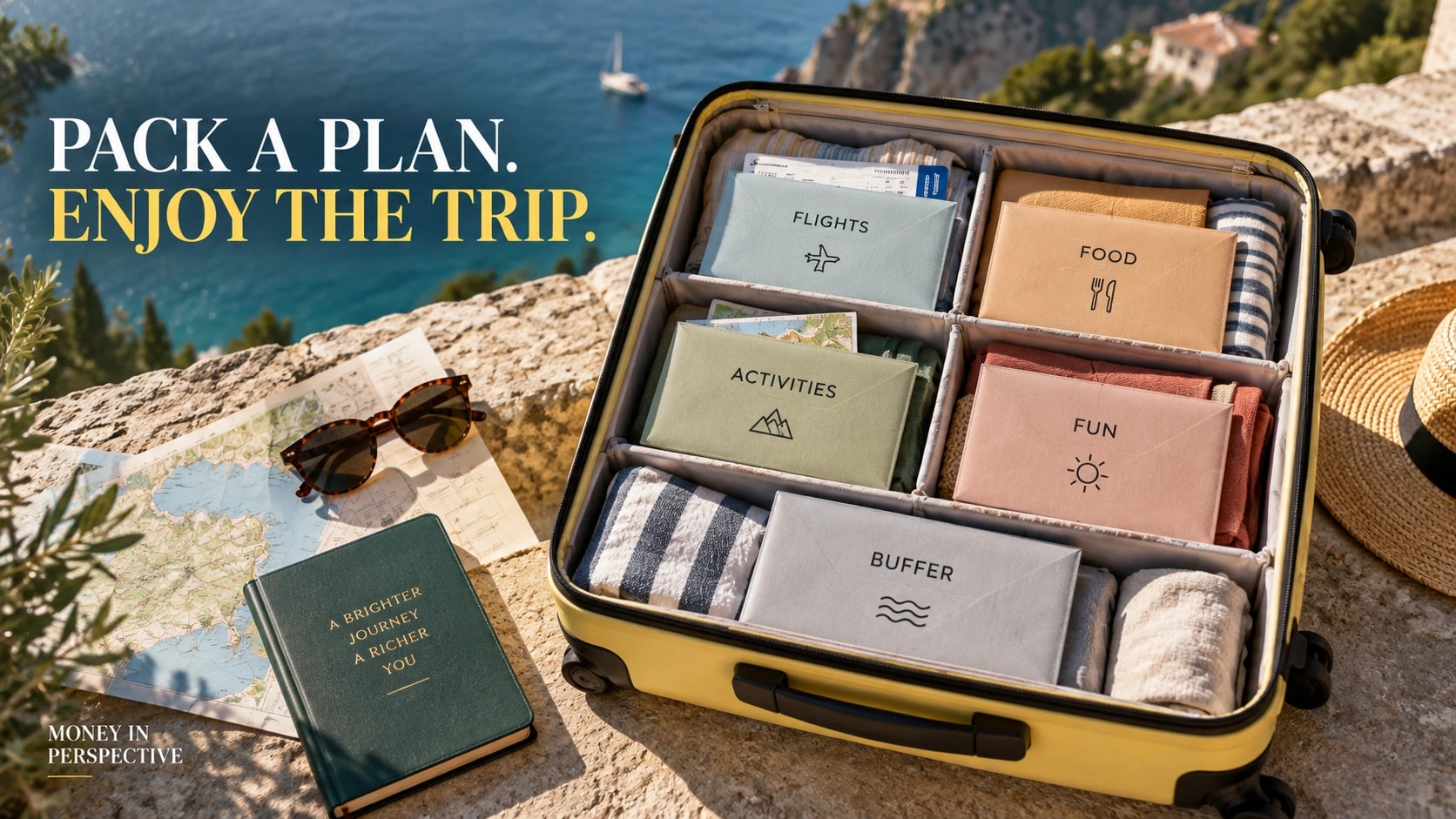
A holiday budget should include the whole trip, not only flights and accommodation.
Travel to the airport.
Baggage.
Transfers.
Food.
Activities.
Local transport.
Insurance.
Shopping.
A buffer.
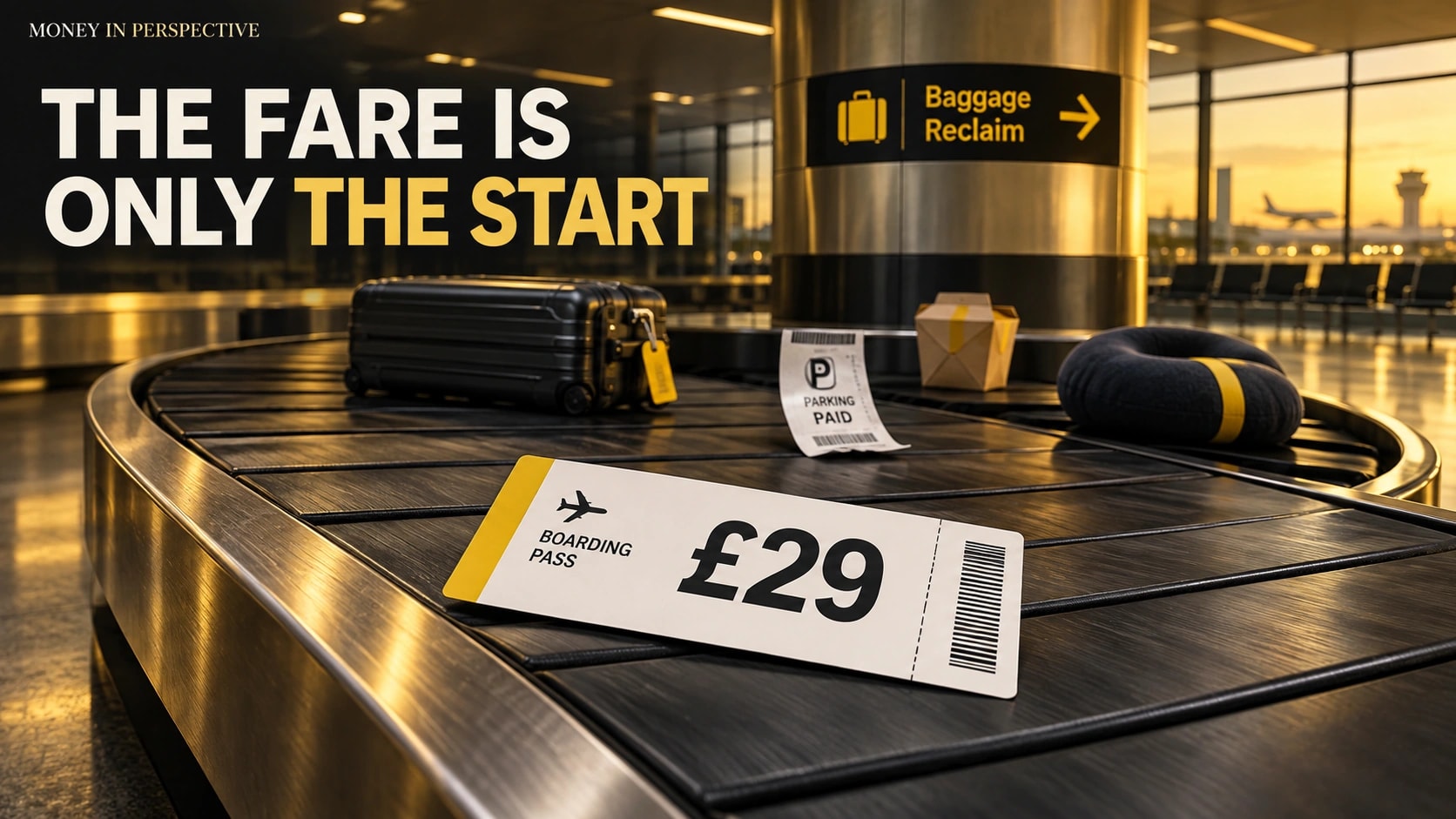
If the trip will realistically cost £1,500, saving only for the £700 booking price creates a problem that appears later.
The holiday was never £700.
That was simply the first payment.
This is why travel funds are so useful.
Rather than saving vaguely for a holiday, estimate the likely complete cost and work backward.
If you need £1,500 in ten months, the target is around £150 a month.
Now the trip is being paid for gradually before it happens.
This changes the experience when you arrive.
Dinner is not stealing money from next month's bills.
The excursion is not becoming future credit-card debt.
The spending already has a job.
A realistic holiday budget should reflect how you actually travel.
If you love restaurants, do not build a plan based on cooking every meal.
If your children want activities, include activities.
If you normally buy drinks by the pool, pretending you will live on tap water for seven days creates a false number.
Budgets fail when they describe ideal behaviour rather than likely behaviour.
You are not trying to impress a spreadsheet.
You are trying to predict yourself.
Food is one of the largest variable costs.
A city break can involve almost every meal outside.
A self-catering holiday can be much cheaper if you genuinely plan to use the kitchen.
All-inclusive can reduce uncertainty if you spend much of the trip at the resort.
The right choice depends on habits.
One useful compromise is deciding which meals matter most.
Perhaps breakfast is simple.
Lunch is casual.
Dinner is where you spend.
Or perhaps the destination is famous for lunch markets and dinner can be light.
Concentrating money on the meals you care about can preserve the experience while reducing forgettable spending.
Airport food deserves its own line.
People often leave it out because the holiday has not started yet.
Financially, it has.
Outbound breakfast.
Coffee.
Water.
Return meal.
For a family, those purchases can become a meaningful total.
Bring what is practical and budget for the rest.
There is no need to begin a holiday annoyed because somebody bought a sandwich.
Activities should also be planned early.
Destinations contain endless opportunities to spend.
Boat trip.
Theme park.
Museum.
Tour.
Show.
Spa.
Water sports.
If there are two experiences you genuinely care about, price them before travelling.
Now you know what deserves money.
Everything else can be decided around those priorities.
This reduces the risk of spending heavily on random activities and then deciding the thing you actually wanted is too expensive.
Another useful idea is a daily average rather than a rigid daily limit.
Suppose you have £700 for discretionary spending across seven days.
That is about £100 a day on average.
You do not need to spend exactly £100 every day.
One day may cost £45.
Another may cost £180 because of an excursion.
The average gives perspective without turning the holiday into an accounting exercise.
Separate spending accounts can help.
Transfer the holiday spending money into one account before leaving.
Use that card for food, activities and local spending.
Now the remaining balance provides an immediate guide.
This can be easier than trying to distinguish holiday transactions from household bills in your main current account.
It also prevents the dangerous feeling that the full bank balance is available because you are on holiday.
A separate card can be useful for security too, depending on your setup.
Just make sure you understand any foreign transaction fees, ATM charges or exchange-rate treatment.
Payment method matters abroad.
A card with poor foreign-exchange terms can add unnecessary cost to every purchase.
Before travelling, know whether your main card charges for foreign currency.
Check ATM fees.
Understand roughly what the local currency is worth.
You do not need to perform mental mathematics before every coffee.
You should know whether 500 units of local currency means roughly £5 or £50.
Dynamic currency conversion can also appear at terminals or ATMs, where you are offered the option to pay in pounds rather than local currency.
The exchange rate used may not always be favourable.
Know your card terms and make deliberate choices rather than pressing the most familiar-looking currency automatically.
Cash still has a place in some destinations.
Markets.
Tips.
Small businesses.
Transport.
A sensible amount can reduce friction.
Carrying large amounts creates other risks.
Again, the right mix depends on the destination.
The goal is not choosing one perfect payment method.
It is avoiding unnecessary charges and keeping access to money secure.
A holiday buffer is essential because travel produces surprises.
Taxi because the bus never arrived.
Medicine.
Lost charger.
Unexpected tourist tax.
Additional baggage.
Weather changes the plan.
A 10% or similar contingency, depending on the trip and your circumstances, can create breathing room.
The buffer is not a bonus spending category.
It is there for things you did not plan.
If nothing goes wrong, bring it home.
That is a successful buffer.
There is no need to spend the last £100 at the airport because it was holiday money.
Returning with money left is not evidence that the holiday was insufficiently enjoyed.
Shopping and souvenirs deserve boundaries too.
Souvenirs can have genuine emotional value.
A small object can remind you of a trip for years.
The problem is the final-day panic where everybody buys things because the holiday is ending.
Decide roughly what you are happy spending on shopping.
Then choose things you actually like.
The same applies to duty-free.
A product does not become a bargain simply because it is in an airport.
Know normal prices for expensive items.
Transport within the destination can become another large category.
Taxi is easy.
Public transport is often cheaper.
Walking is sometimes best.
The right answer depends on distance, safety, weather, luggage and the value of your time.
Do not force yourself into a ninety-minute bus journey to save £8 if it ruins half the day.
Equally, do not take taxis automatically because holiday spending feels exempt from normal arithmetic.
Use convenience where it produces enough value.
Location can save money repeatedly.
A slightly more expensive hotel near the things you want to do may reduce taxis and return time.
A cheap hotel far outside the centre can create transport costs every day.
This is why accommodation price should be considered with location.
The cheapest room is not always the cheapest trip.
The same is true of flights.
A cheap arrival at a distant airport can require costly transfers.
A very early departure may need a hotel or taxi.
Travel decisions connect.
Compare systems rather than isolated prices.
There is also a psychological trap once money has been saved.
People can think, “I saved £2,000 for this holiday, so I should spend £2,000.”
No.
The savings are permission up to a limit, not a target.
If the holiday naturally costs £1,700, returning with £300 is a good outcome.
The money can stay saved, fund another trip or return to another goal.
You do not have to consume the budget simply because it exists.
The opposite problem is under-budgeting and then using credit.
A credit card can be useful for protections and convenience when repaid responsibly.
Using it to extend the holiday beyond what you can afford creates a very different trip financially.
The memory ends.
The payments continue.
If a £1,200 holiday becomes £1,500 because the final £300 is carried on expensive credit for months, the trip effectively costs more and occupies future income.
Where possible, fund the discretionary holiday before departure.
This makes the end of the trip financially cleaner.
Travel insurance also deserves a proper place in the budget.
It is not the exciting part of a holiday.
It manages risk.
Medical costs, cancellation, baggage problems and other events can be expensive depending on destination and circumstances.
Read the policy rather than buying purely on price.
Check exclusions.
Make sure the cover fits the activities and trip.
Cheap insurance that does not cover the risk you actually face is not good value.
Likewise, overly expensive cover for benefits you do not need may be unnecessary.
The holiday budget should also account for life at home.
Bills continue while you travel.
Rent.
Mortgage.
Subscriptions.
Insurance.
The fact you are away does not pause the rest of the household.
This sounds obvious, but people can mentally treat salary around a holiday as more available because they are focused on the trip.
Do not fund holiday spending from money already assigned to ordinary bills.
Another useful habit is prepaying selected activities.
Not everything needs to be booked in advance.
Overplanning can make travel rigid.
But paying for the most important experiences before departure has two advantages.
You secure availability.
And you reduce the amount of spending still to come.
You arrive knowing the major experiences are funded.
This can reduce the temptation to guard the budget so tightly that you avoid the things you travelled to do.
There is also value in free time.
A holiday does not need an activity every morning, afternoon and evening.
Over-scheduling can be expensive and exhausting.
Some of the best travel experiences are walking, sitting somewhere beautiful, using the beach, exploring a neighbourhood or simply resting.
Leaving empty space in the itinerary can save money and improve the trip.
This is especially true on longer holidays.
You do not need seven paid attractions in seven days to prove the trip was worthwhile.
Children can benefit from clear spending boundaries too.
Where age appropriate, give them a souvenir or spending allowance.
Now repeated requests become choices.
Buy this today or save for something later.
This can reduce arguments and teach useful money decisions without turning the holiday into a lesson.
Adults can use the same principle.
Personal discretionary amount.
One person wants shopping.
Another wants cocktails.
The shared holiday budget does not need to fund every individual preference equally.
A small personal allowance can make choices simpler.
The best budget also recognises what is worth splurging on.
Perhaps you have always wanted one particular restaurant.
Book it.
Perhaps a private tour would transform the experience.
Pay for it if the overall budget supports it.
Being financially sensible does not mean choosing the cheapest option every time.
It means spending heavily where the return matters and lightly where it does not.
This is more satisfying than spreading the budget evenly across forgettable purchases.
A useful post-holiday review can improve the next trip.
What did you spend?
What was worth every pound?
What would you skip next time?
Perhaps the central hotel saved enormous time.
Perhaps the expensive transfer was unnecessary.
Perhaps food cost much more than expected.
This is not about judging the holiday after the fact.
It is building a personal travel model.
Everyone spends differently.
Your own history is the best guide.
Over time, budgeting becomes easier because you know your habits.
You know what a city break costs you.
What a resort week costs.
How much food the family typically buys.
How often you take taxis.
The estimates become realistic rather than generic.
That is the secret to coming home without feeling broke.
Not perfect discipline.
Realistic planning.
You save for the trip you actually take.
You give yourself permission to spend within that plan.
You leave room for surprises.
You spend more on the parts you value.
And you accept that returning with money is allowed.
A great holiday should create memories.
It does not need to create a financial hangover that lasts longer than the tan.
Plan the whole trip.
Fund it before you go where possible.
Then use the money for what it was saved for.
Enjoy it.
The best holiday budget is the one you barely need to think about once you arrive because the important decisions were made before the suitcase was packed.