Life
Why Cheap Can Sometimes Cost You More
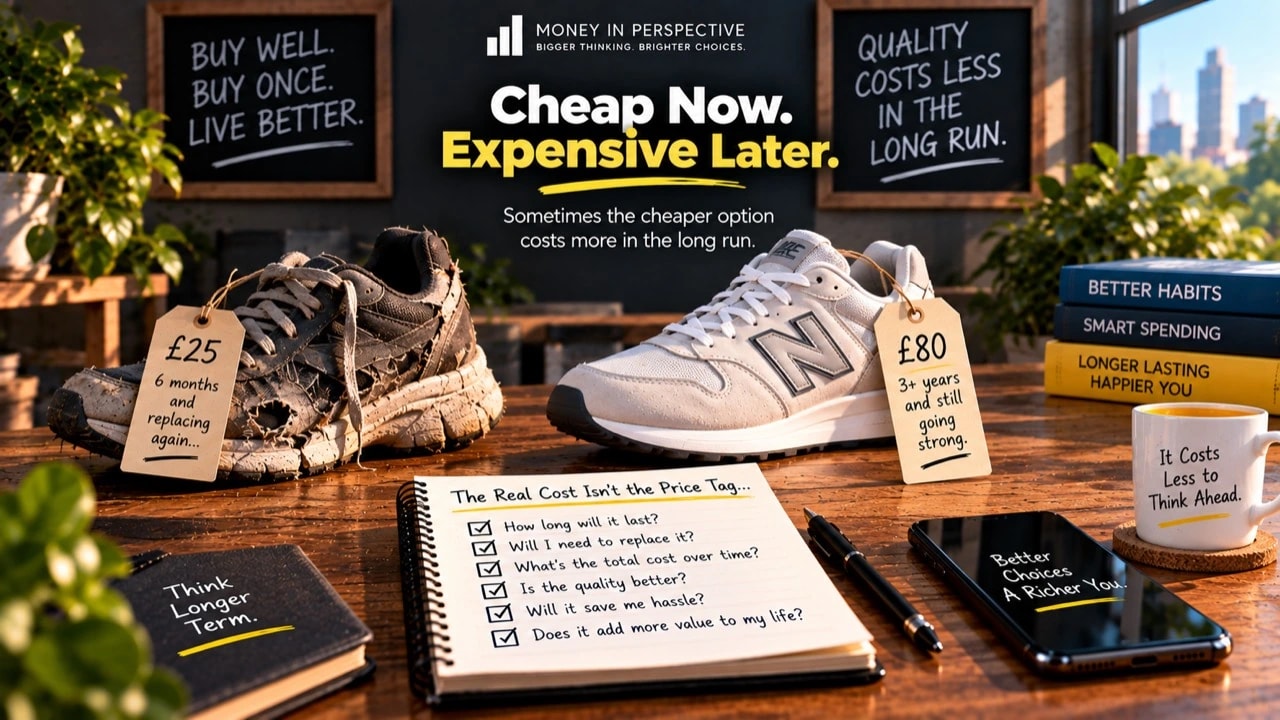
The cheapest option is not always the lowest-cost option. Poor durability, replacement costs, wasted time and missing features can make bargain purchases surprisingly expensive.
Shopping, convenience and social pressures: how everyday life shapes our spending, and how to make choices that work for us.
Life
The cheapest option is not always the lowest-cost option. Poor durability, replacement costs, wasted time and missing features can make bargain purchases surprisingly expensive.
Life
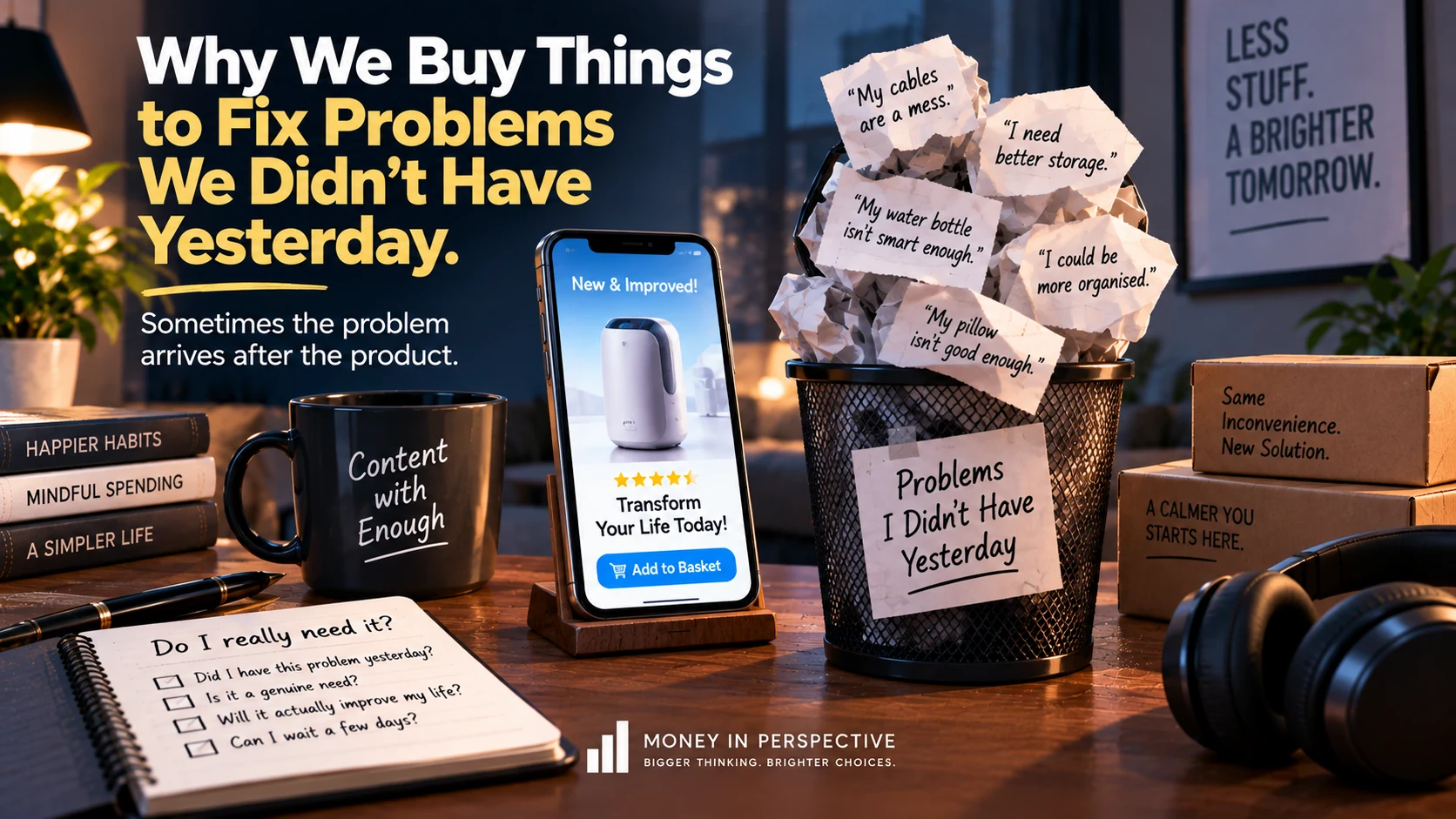
Sometimes a product solves a genuine problem. Other times, we discover the problem only after seeing the product. That distinction can save a surprising amount of money.
Life
From weddings and phones to cars, subscriptions and social plans, many purchases feel necessary because everyone around us makes them too. But normal spending is not always useful spending.
Life
Social comparison can quietly increase spending on cars, homes, clothes, holidays and technology. The problem is that you rarely know the finances behind what you are comparing yourself with.
Life
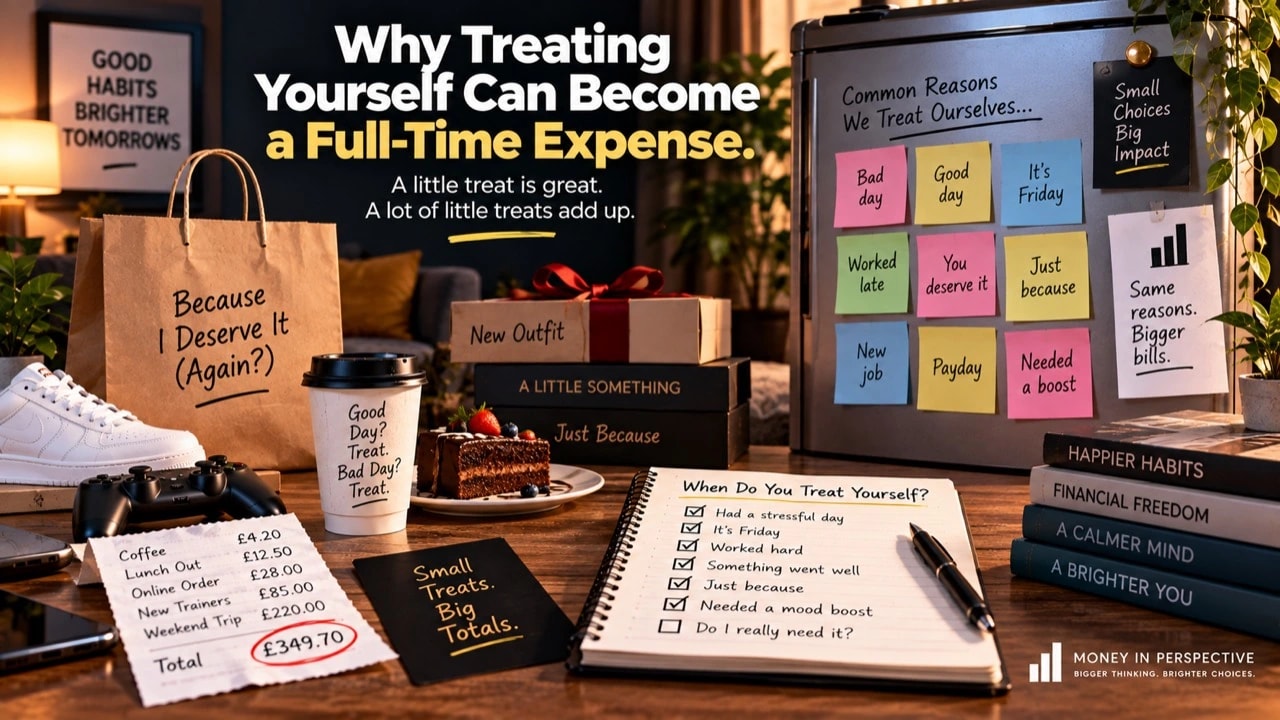
“Treat yourself” can be a healthy way to enjoy money. But when rewards become the automatic response to stress, boredom or inconvenience, an occasional pleasure can quietly become a permanent expense.
Life
As income rises, comfort and convenience often rise with it. That can improve life—but if every extra pound becomes part of the new normal, financial breathing room may never arrive.
Life
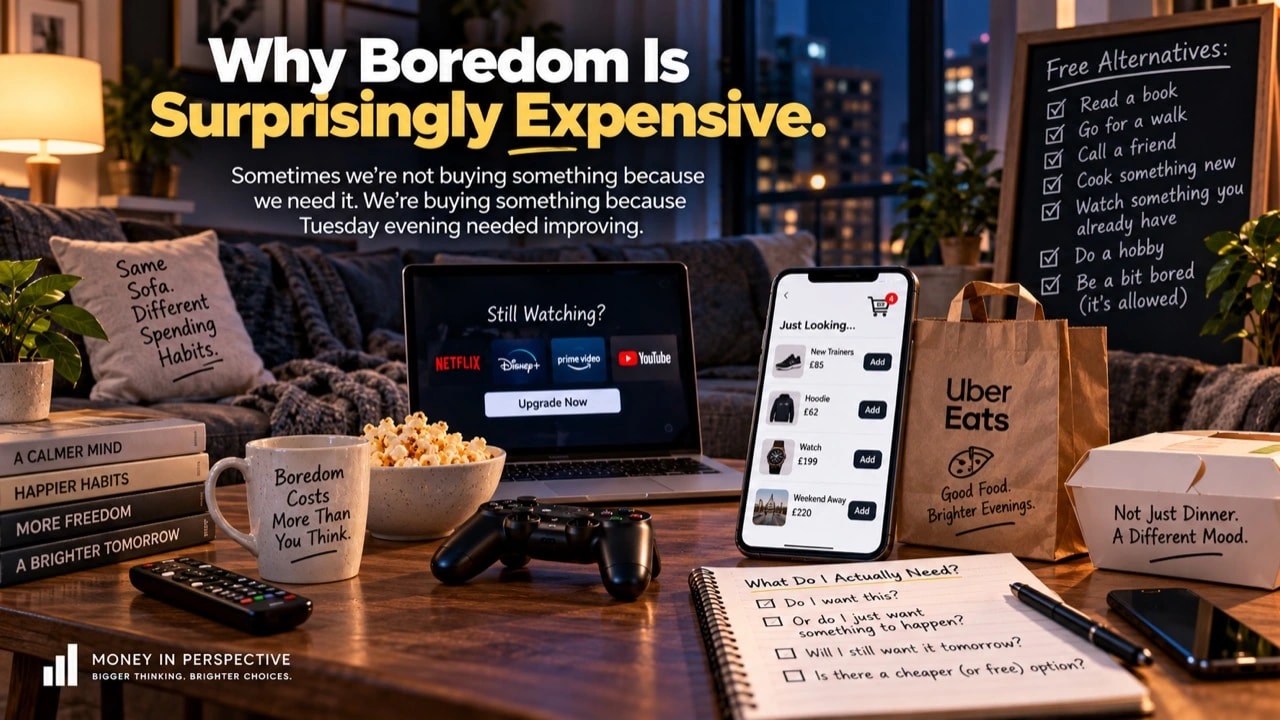
Boredom has become remarkably easy to monetise. Shopping, food delivery, scrolling and entertainment can all turn an empty hour into a transaction before we realise what we were trying to fix.
Life
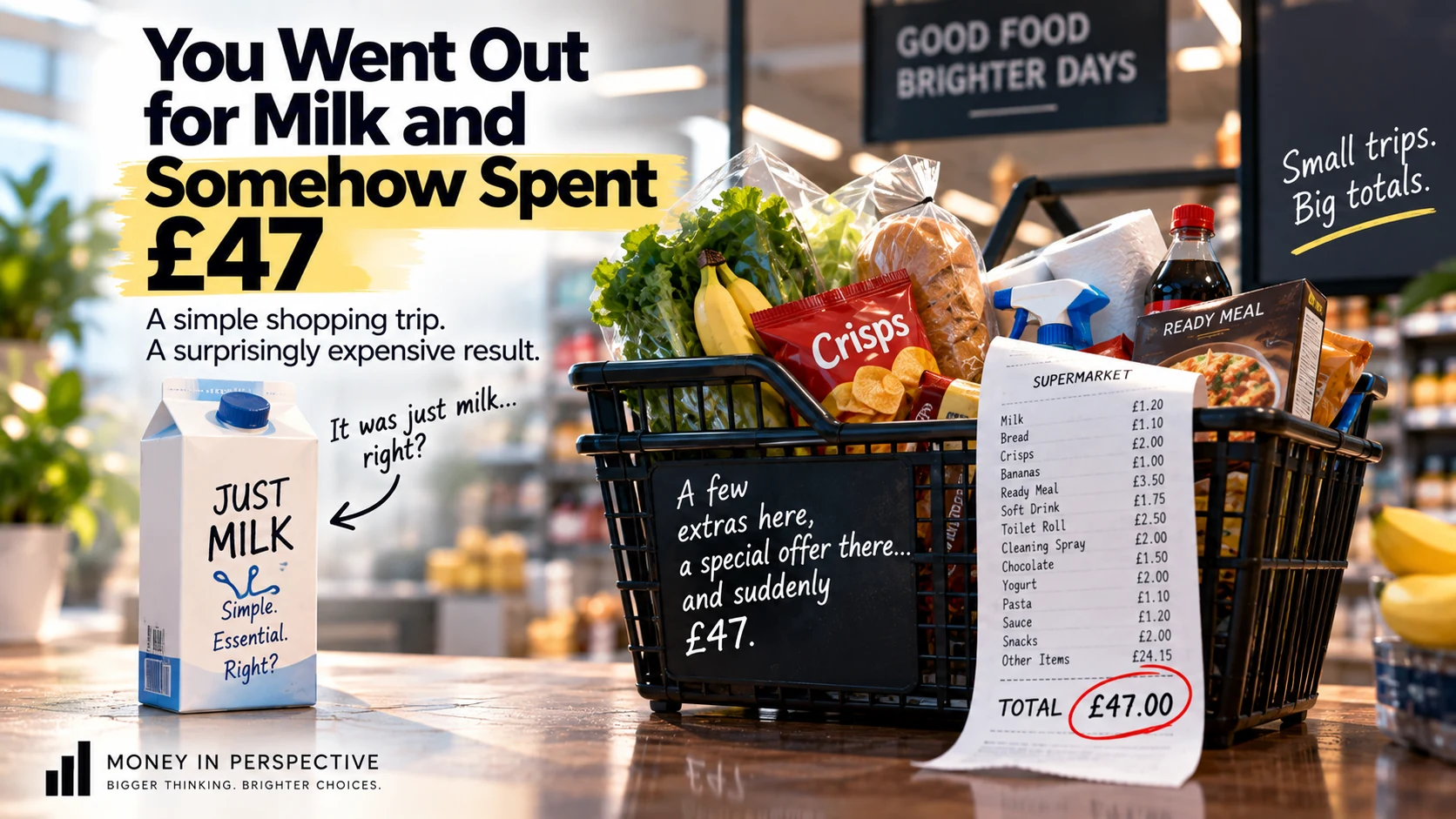
You needed milk. Somehow you came home with snacks, cleaning products, something from the middle aisle and £47 less than you had before. Here’s why small shopping trips expand so easily.
Life
Delivery, taxis, prepared food, premium services and instant access all sell one thing: less effort. Convenience can be valuable, but buying it constantly can become surprisingly expensive.
Life
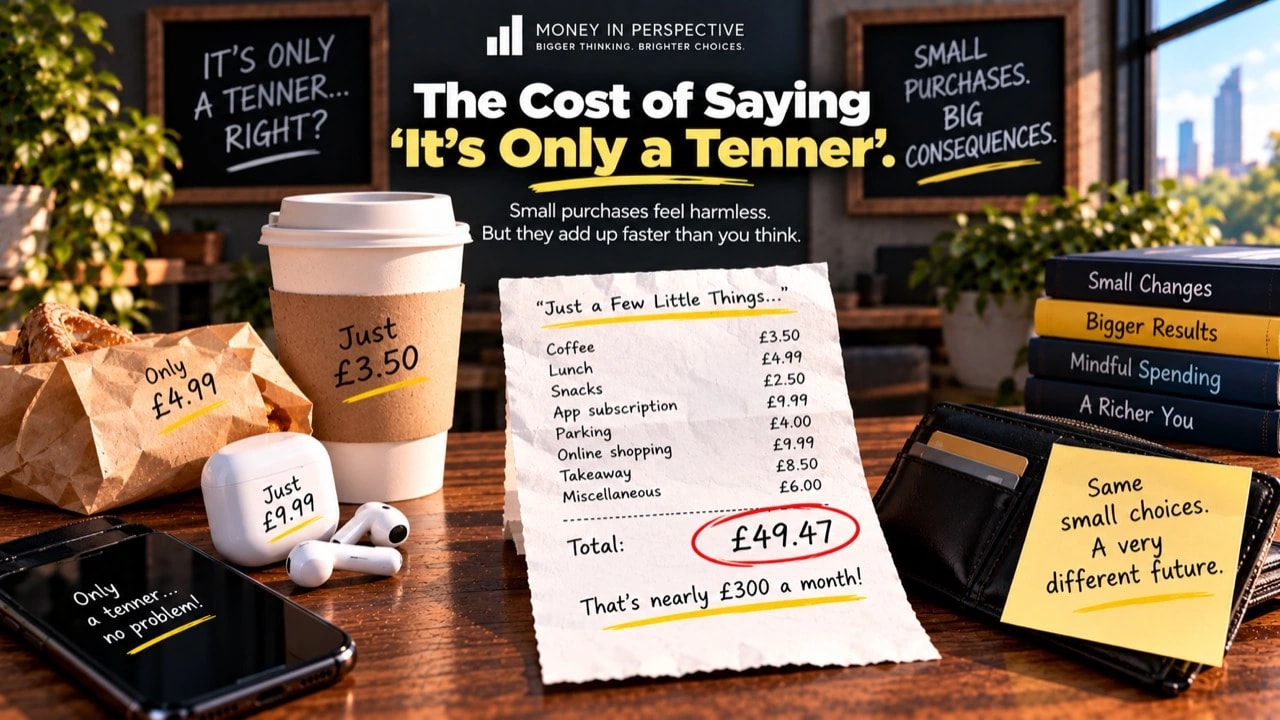
A £10 purchase rarely feels important. The phrase “it’s only a tenner” makes it even easier to dismiss. The trouble starts when the sentence becomes a habit.