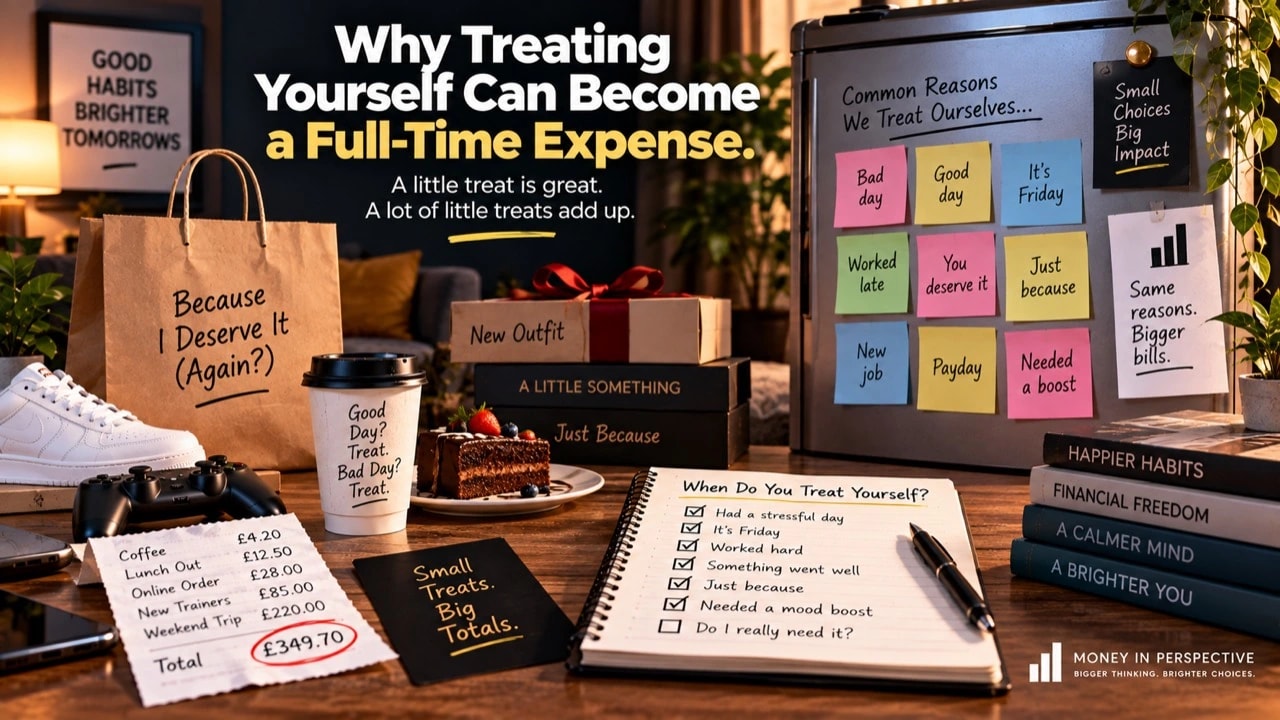
“Treat yourself” is one of the most persuasive phrases in personal spending because it sounds healthy, deserved and temporary.
You worked hard.
The week was awful.
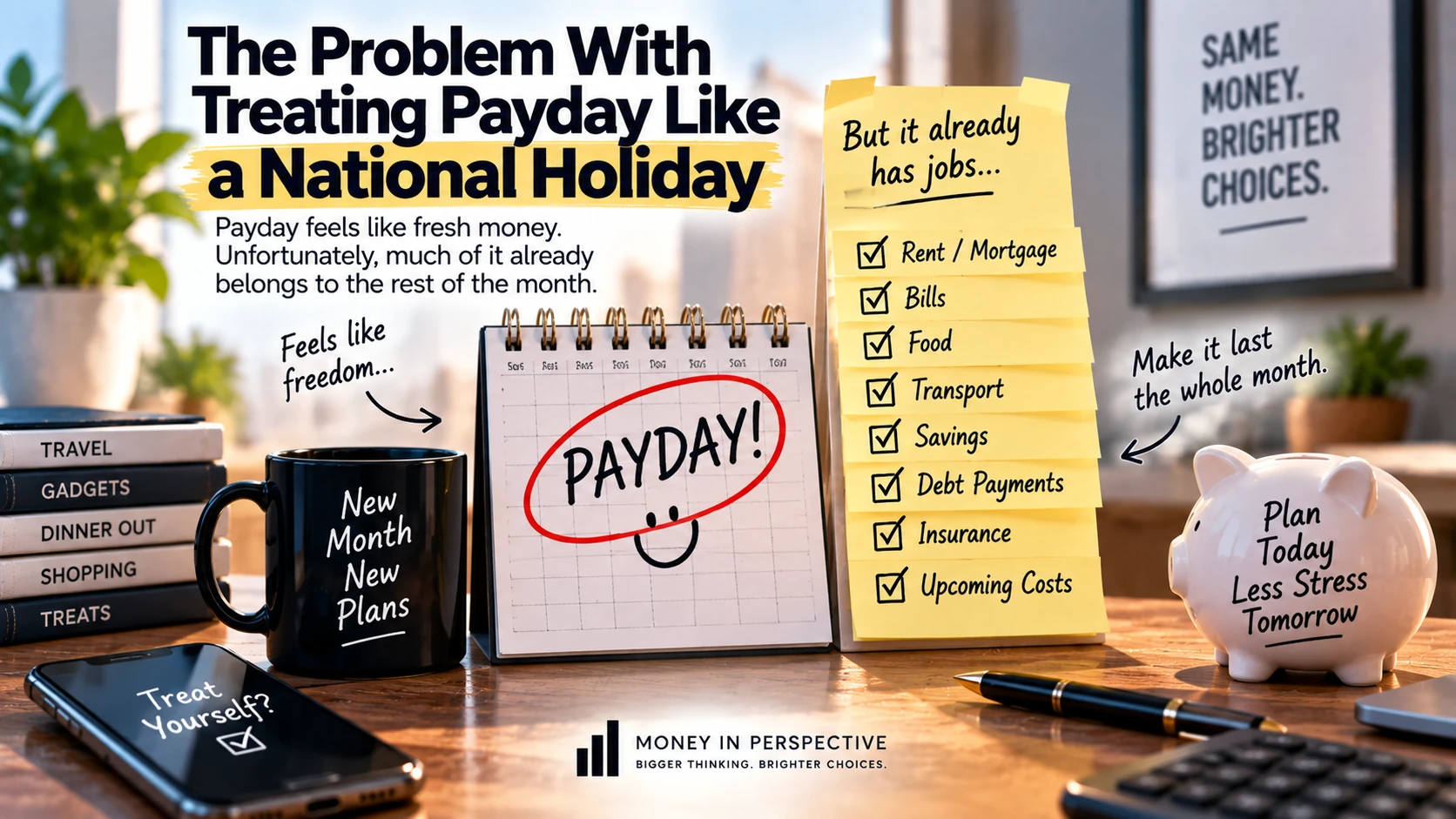
You got paid.
You finished something difficult.
You had a good day.
You had a bad day.
Somehow, almost every emotional state can support the same financial conclusion: buy something.
There is nothing wrong with treating yourself. Money is not only for bills, pensions and emergencies. Enjoyment matters, and a financial plan that leaves no room for pleasure is unlikely to feel sustainable.
The problem begins when the treat stops being occasional.
A takeaway because Friday was difficult.
New clothes because work went well.
Coffee because the morning started badly.
Online shopping because you were bored.
A weekend away because you have been busy.
None of these purchases is necessarily irresponsible. But repeated often enough, “treating yourself” can stop being a treat and become a normal operating expense.
That shift is difficult to notice because each purchase arrives with its own emotional justification.
The takeaway is not connected to the shopping order.
The shopping order is not connected to the taxi.
The taxi is not connected to the new phone case.
Your bank account is less interested in the story. It simply adds the amounts together.
This is one reason emotional spending can be surprisingly expensive. We tend to judge each decision separately rather than recognising the pattern.
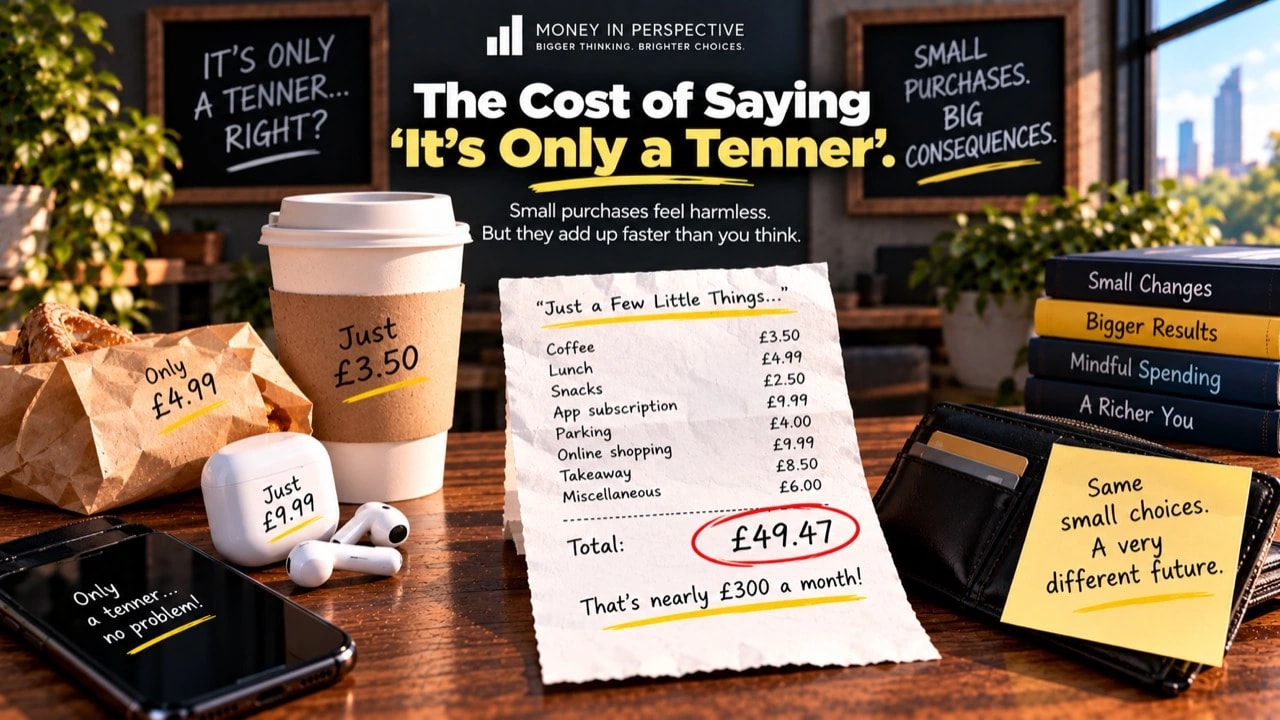
A £20 treat twice a week is more than £2,000 across a year.
That does not mean you should never spend £20 on something enjoyable.
It means frequency changes the financial meaning of a small purchase.
There is also a psychological reason treating yourself works so well. Rewards help us mark effort and progress. They create something immediate after work that may have produced a delayed benefit.
You finish a stressful project. The salary does not change today. The promotion may never come. Buying dinner or a small item provides an instant reward.
This can be useful.
The problem appears when spending becomes the default mechanism for rewarding yourself.
If every hard day requires a purchase, demanding periods become expensive very quickly.
Modern retail makes this particularly easy because the gap between emotion and transaction has almost disappeared.
You feel tired.
Open an app.
Tap.
Done.
The parcel arrives tomorrow.
In previous generations, a purchase might have required walking to a shop, waiting for opening hours or carrying cash. Those inconveniences gave emotions time to cool.
Digital commerce removes that pause.
This is excellent for convenience and less helpful for impulse control.
One practical response is not banning treats but delaying the ones linked to emotion.
If you suddenly want something after a difficult day, save it and check tomorrow.
If you still want it, buy it.
A genuine desire often survives twenty-four hours.
An emotional reaction often does not.
Food is one of the clearest examples because it combines convenience and reward.
A takeaway after a long week can be genuinely enjoyable.
If it happens every Friday, it is no longer financially an occasional treat. It is a weekly food category.
There is nothing wrong with that.
The useful change is naming it correctly.
If a weekly takeaway costs £35, budget roughly £150 a month for it.
Now you can decide whether the routine provides enough value for the annual total.
This is much better than repeatedly spending £35 and describing each transaction as an exception.
The same principle applies to coffee, beauty appointments, shopping, gaming and nights out.
Frequency turns treats into lifestyle.
Lifestyle is not a dirty word. It simply deserves a budget.
Another issue is escalation.
Treats can become larger as incomes rise.
The £10 purchase becomes £30.
The local meal becomes a premium restaurant.
The weekend away becomes a luxury hotel.
This is normal lifestyle inflation, and some of it is exactly why people want to earn more.
The danger is when the reward grows faster than the achievement.
A £200 bonus triggers £400 of celebratory spending.
A pay rise produces a car payment that consumes most of the increase.
The financial reward for progress disappears because the celebration costs more than the progress created.
It can help to decide in advance what percentage of windfalls or increases you want to enjoy.
Perhaps a bonus is split between something fun, savings and debt.
There is no universal formula.
The value comes from preventing the entire amount from becoming an emotional spending event.
Treat-yourself culture also interacts with self-care language.
Some purchases genuinely support wellbeing.
A massage.
Time away.
Exercise.
A meal with friends.
A comfortable home.
But not every product marketed as self-care improves your life.
Buying things can feel like taking action when the real need is rest, connection, sleep, boundaries or time.
A person exhausted by work may buy clothes, food or entertainment because those are purchasable solutions to a problem money cannot fully solve.
This does not make the spending foolish. It means the product may be treating the feeling rather than the cause.
A useful question is: what do I actually need right now?
Sometimes the answer really is dinner delivered because you have no energy to cook.
Sometimes it is an early night.
Sometimes it is talking to someone.
Sometimes it is doing nothing.
Not every difficult emotion needs a transaction attached to it.
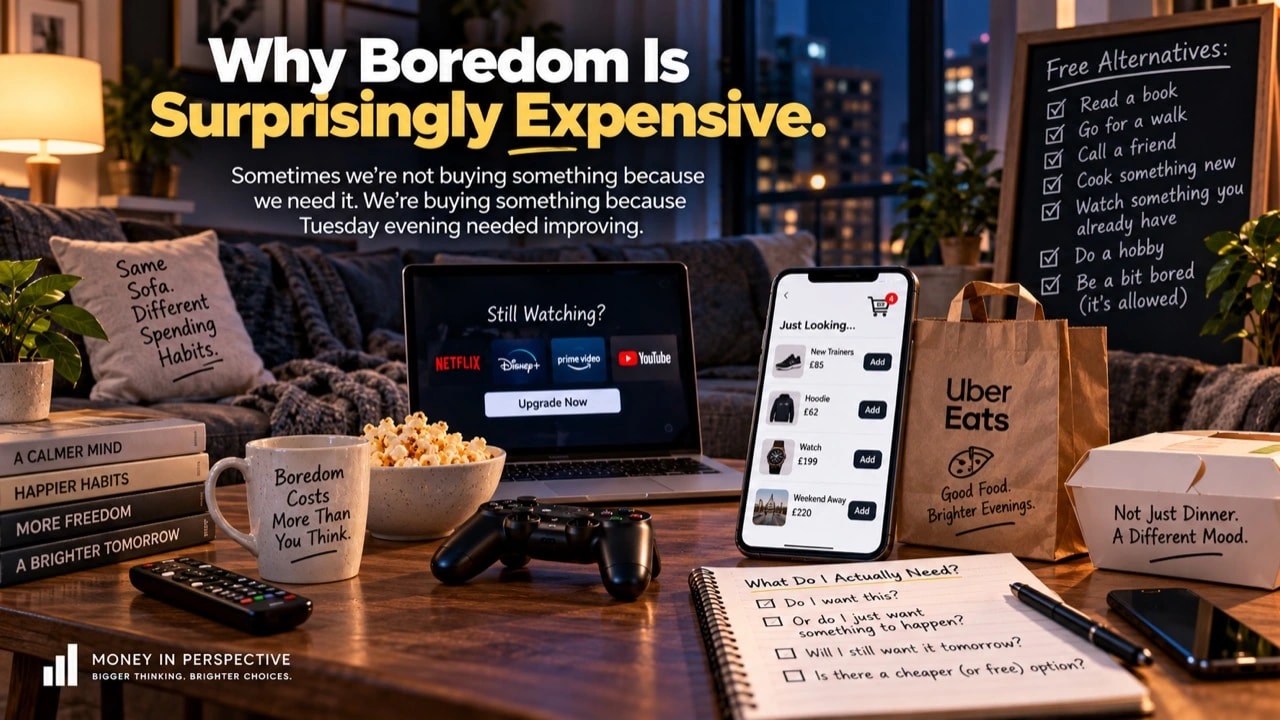
Boredom is another driver.
Online shopping creates entertainment as much as consumption.
Browsing, comparing, adding to basket and waiting for delivery can fill time.
The product is only part of the experience.
If this is a recurring pattern, the spending can become expensive without providing much lasting satisfaction.
Look at what happens after the parcel arrives.
Are you still pleased with the item a month later?
Do you use it?
Or was the enjoyable part mainly the search and anticipation?
Your own purchase history can answer this better than generic advice.
Social media amplifies the problem because it constantly supplies ideas for what a treat could be.
Restaurant.
Trip.
Skin-care product.
Shoes.
New technology.
Home decor.
The message is rarely “buy this because your finances support it.”
It is “you deserve this.”
Deserving something and being able to afford it are separate questions.
You may deserve a month in the Maldives after a terrible year.
That does not automatically make the credit-card balance a good idea.
This sounds obvious, but the language of deserving can make financial limits feel emotionally unfair.
A healthier approach is to give yourself permission to enjoy money inside a clear boundary.
Create a guilt-free spending category.
Perhaps £100 or £200 a month, depending on your circumstances.
That money can be spent on whatever feels enjoyable.
Takeaway.
Clothes.
Coffee.
Games.
No justification required.
This removes the strange cycle where every discretionary purchase has to be morally defended as self-care.
Once the amount is used, later treats wait or come from another planned category.
The boundary is financial, not emotional.
Another useful method is to create different sizes of reward.
Not every achievement needs the same level of spending.
A difficult Tuesday might deserve your favourite snack.
Finishing a major qualification may justify a weekend away.
Reaching a savings milestone may justify a dinner.
Matching the reward to the event prevents ordinary life from producing premium-level treats constantly.
Free and low-cost rewards matter too, not because every enjoyable thing needs to be cheap, but because variety prevents spending from becoming the only reward mechanism.
Long bath.
Walk.
Film already included in a subscription.
Afternoon with friends.
Gaming.
Reading.
Sleeping in.
Favourite meal cooked at home.
These may sound less exciting because marketing does not earn anything from them.
That does not make them less effective.
There is also an important distinction between buying experiences and buying relief.
A planned concert, trip or dinner may create anticipation, memories and lasting enjoyment.
A rushed purchase made because you were stressed may provide only a short mood change.
Both cost money. Their emotional return can be very different.
This suggests a useful review: look back at the discretionary spending you remember most positively from the last six months.
Which purchases were genuinely worth it?
Perhaps the expensive holiday was excellent.
The weekly convenience spending may barely be memorable.
This can help redirect money toward fewer, better treats rather than constant small ones.
Saving for treats can improve them too.
When an enjoyable purchase is funded deliberately, there is less guilt attached to it.
A £500 weekend away paid from a travel fund feels different from the same weekend appearing unexpectedly on a credit card.
The experience is identical.
The financial aftermath is not.
This is why “treat yourself” should not mean “ignore the plan.”
It can mean “the plan contains room for pleasure.”
That is a stronger system.
There is also a risk of compensatory spending after periods of extreme restriction.
Someone aggressively cuts every unnecessary expense for several months.
Eventually they become tired of saying no.
A large spending weekend follows.
Then guilt creates another strict period.
This resembles dieting cycles: unsustainable restriction can produce rebound behaviour.
A moderate budget with regular enjoyment may produce better long-term results than perfection for three weeks followed by chaos.
Income matters too.
For someone with plenty of financial margin, frequent small treats may have almost no impact on important goals.
For someone carrying expensive debt or struggling with essential bills, the same spending pattern matters much more.
This is why personal finance advice should avoid turning every discretionary purchase into a universal problem.
The question is not whether treats are objectively too frequent.
It is whether they fit your circumstances.
A good sign is when you can enjoy them without creating stress later.
A bad sign is when the pleasure lasts hours and the repayment lasts months.
Buy-now-pay-later services can make that mismatch easier. The treat happens now. The cost follows across future paydays.
Spreading payments is not automatically harmful, but using future income to fund frequent discretionary rewards can turn yesterday's emotions into next month's obligations.
If the purchase is truly a small treat, being able to pay for it from current discretionary money is a useful test.
Treats also lose some of their psychological value when they become constant.
A restaurant meal feels more special when it is not every night.
A new item is more exciting when parcels do not arrive daily.
Scarcity can increase enjoyment.
This is one of the pleasant side effects of reducing frequency: you may spend less and enjoy each purchase more.
One final test is to imagine the treat disappearing from the routine for a month. Which ones would you genuinely miss? The answers are useful. Perhaps the Friday takeaway is a family ritual worth protecting. Perhaps the impulsive online orders barely register. This helps distinguish repeat value from repeat spending.
You do not need to eliminate the category. You can concentrate it. Keep the treats that produce real enjoyment and reduce the ones that mainly fill boredom, stress or habit. That is not deprivation. It is using the same money more deliberately.
The strongest financial plans are not the ones with the fewest treats. They are the ones where enjoyment and security can exist at the same time.
The goal is not to become the person who refuses every pleasure because retirement exists.
Life is happening now.
Money should help make it enjoyable.
The goal is to prevent enjoyment from becoming an automatic charge triggered by every emotional fluctuation.
Treat yourself when you choose to.
Budget for it.
Spend generously on the things that genuinely make life better.
But notice when the phrase has become a permission slip used several times a week.
At that point, you may not be buying treats anymore.
You may simply be funding a lifestyle that needs to be understood as one.