Ten pounds is an unusually comfortable amount of money.
It is large enough to buy something useful, enjoyable or convenient, but small enough that most of us do not treat it as a serious financial decision. A £10 purchase rarely requires planning. We do not normally sit down with a calculator, review the household budget and call a family meeting before buying something that costs a tenner.
That is exactly why the phrase “it’s only a tenner” is so powerful.
It removes the need to think any further.
The purchase has already been classified as small. The amount sounds harmless. Whatever we wanted has effectively won the argument before the total cost of the habit has entered the conversation.
The problem is not that £10 is secretly a huge amount of money.
It is that £10 has an impressive ability to appear repeatedly.
Small purchases are judged one at a time
Imagine spending £10 on lunch because you forgot to bring food.
There is nothing particularly significant about that.
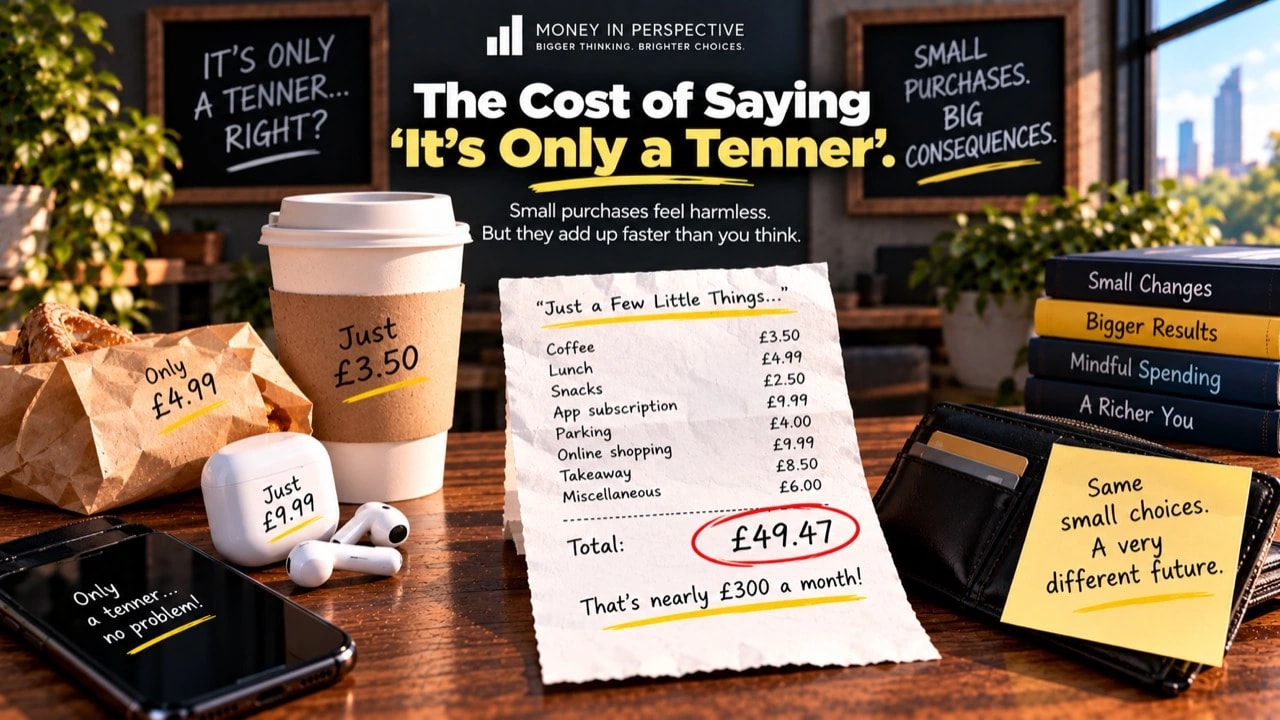
Two days later, you spend £10 on something small online. At the weekend, another £10 disappears on a taxi. A few days after that, £10 goes on snacks, drinks or a quick purchase while you are already in a shop.
Each transaction has its own explanation.
None feels connected to the others.
Your bank account, unfortunately, is less interested in the explanation. It simply adds.
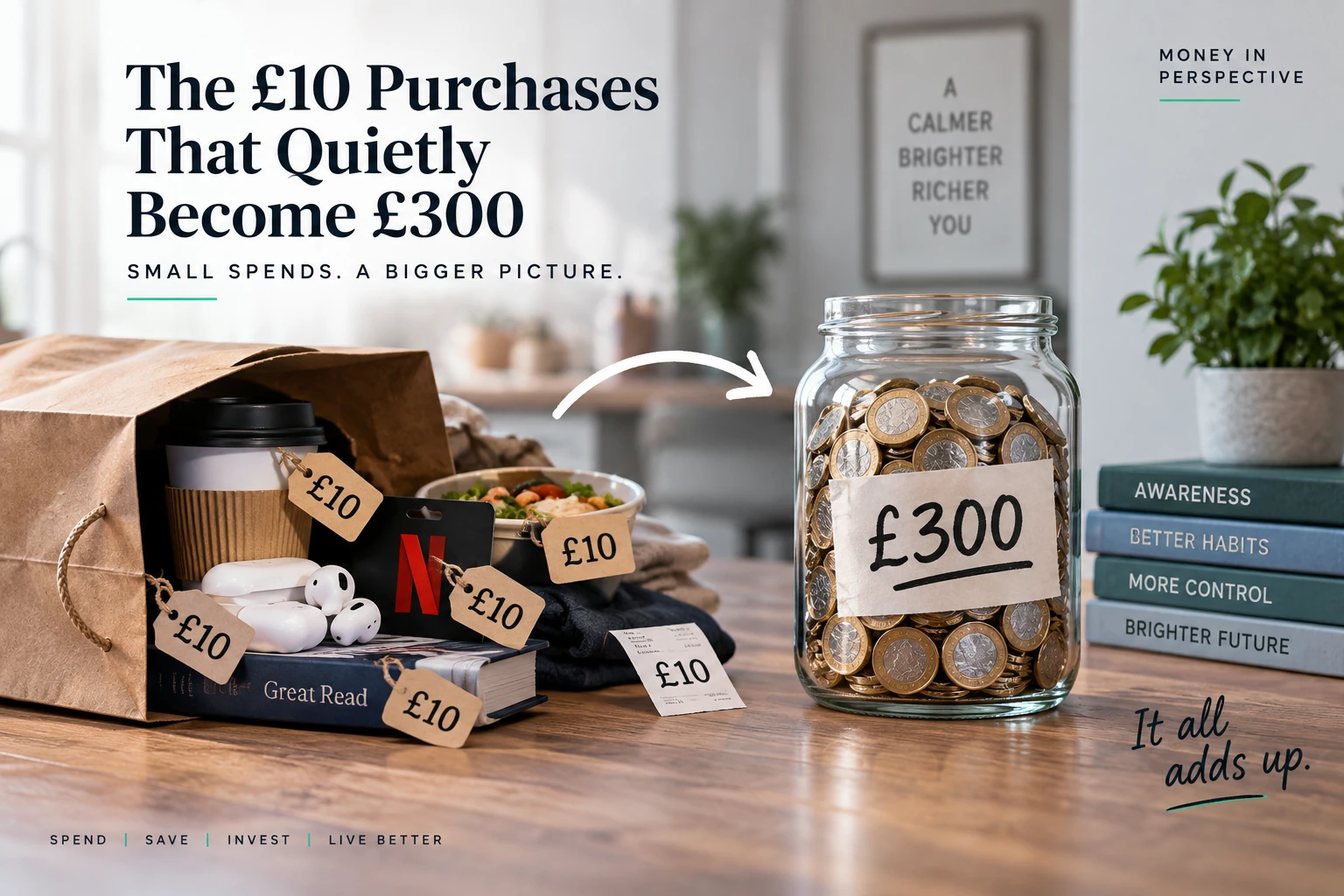
Ten purchases at £10 are £100.
Thirty are £300.
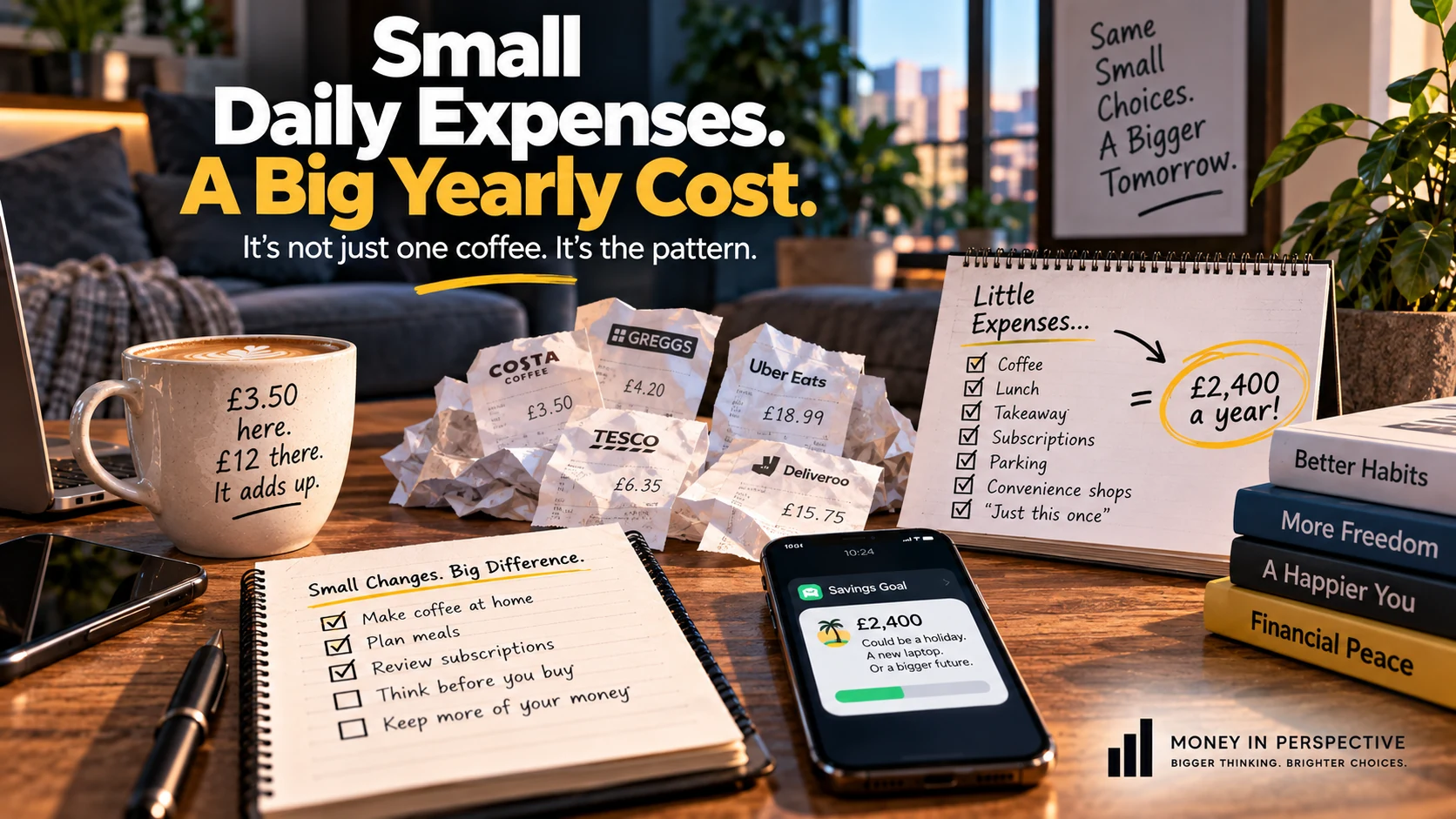
A £10 habit repeated twice each week is more than £1,000 across a year.
The amount remains small at the moment of purchase. The pattern does not.
“Only” is often permission rather than analysis
Listen carefully to when the word “only” appears in spending decisions.
“It’s only £8.”
“It’s only £12.”
“It’s only another £10.”
Usually, we are not performing financial analysis. We have already decided we would like the item, and the small amount is being used to make the decision feel reasonable.
That is human.
People do not evaluate every purchase like accountants examining an investment proposal. Nor should they.
The useful question is whether “only” has become an automatic justification.
If you find yourself repeatedly using the phrase, it may be worth asking whether you are assessing the purchase or simply giving yourself permission.
Frequency matters more than people expect
One of the easiest ways to misunderstand spending is to focus entirely on transaction size.
Large transactions attract attention.
Small ones escape it.
But frequency can be more important than size.
A £100 purchase once every six months costs £200 a year.
A £10 purchase three times each week costs roughly £1,560.
The second behaviour feels cheaper every time it happens.
Across the year, it is dramatically more expensive.
This is why repeated low-value spending can be difficult to identify. There is never one moment where you feel as though you have spent a large amount.
The large amount is assembled quietly from dozens of decisions that individually felt insignificant.
Digital payments make the tenner even easier to ignore
There was a time when spending £10 involved physically handing over a note and receiving change.
You saw money leave.
Today, the experience may be one tap of a card or phone.
That is not a criticism of contactless payments. They are wonderfully convenient.
But convenience removes feedback.
Five £10 purchases no longer leave a noticeably thinner wallet. They appear as five lines in an app that you may not look at until days later.
This makes frequent small spending particularly easy to underestimate.
Nothing dramatic happens at the moment of purchase, even when the monthly total is becoming substantial.
Convenience is where many tenners go
A surprising number of £10 purchases are really payments for convenience.
The taxi instead of walking.
The lunch instead of preparing one.
The delivery charge and minimum order.
The premium shipping because waiting three days suddenly feels unacceptable.
The extra item added because you are already ordering something.
None of this is inherently wasteful.
Time and effort have value.
Sometimes paying £10 to save an hour is one of the best financial decisions you can make.
The point is to notice when convenience has become the default rather than a deliberate choice.
If you pay £10 to remove minor inconvenience several times each week, you may be buying a very expensive lifestyle without ever making one expensive purchase.
Cheap items can create unnecessary ownership
There is another way the phrase works.
An item priced at £10 feels easy to experiment with.
A kitchen gadget.
Phone accessory.
Storage solution.
Small piece of technology.
Something from the middle aisle of a supermarket that appeared unexpectedly useful.
Because the amount is low, we lower our standards for whether the product is actually needed.
This is how homes accumulate drawers and cupboards full of objects that were all inexpensive individually.
Twenty unused £10 items still cost £200.
Low price does not guarantee good value.
The right question is not “can I afford £10?”
Most people with a regular income can technically afford many individual £10 purchases.
Affordability is not the useful test.
The better question is:
Would I deliberately allocate the total amount I spend on this behaviour each month?
Suppose you realise that lunches, taxis and casual online purchases amount to £180 every month.
Would you intentionally create a budget category called “small things I barely notice — £180”?
Perhaps yes.
Maybe those purchases make life significantly easier and more enjoyable.
If so, there is no reason to feel guilty.
If the number feels absurd, the pattern deserves attention.
A weekly review works better than daily guilt
Trying to analyse every £10 purchase in real time can make money management exhausting.
A better approach is to review the pattern once a week.
Open your banking app and look at the discretionary transactions below perhaps £15 or £20.
What do they total?
More importantly, what do you remember?
If £90 disappeared across the week and you can clearly identify enjoyable or useful purchases, that may be fine.
If £90 disappeared and most of it feels forgettable, there is probably room to improve.
This approach avoids turning every coffee into a moral issue.
You are evaluating the group rather than interrogating each individual purchase.
Give small spending its own allowance
Another useful strategy is to deliberately allocate money for casual spending.
Perhaps £100, £150 or another amount appropriate to your finances.
That money can be spent without guilt.
Coffee.
Snacks.
Random small purchases.
Taxis.
Whatever you want.
The purpose is not restriction.
It is to make the overall category visible.
Once the allowance exists, “it’s only a tenner” becomes less relevant because you already know how much money is available for those decisions collectively.
Small spending is not automatically bad spending
This point matters.
An obsession with eliminating every small purchase can make personal finance unnecessarily miserable.
If a £4 coffee gives you half an hour you genuinely enjoy, that may be excellent value.
If £10 spent on lunch means you spend useful time with colleagues or friends, that can be worthwhile.
If a £12 taxi gets you home safely late at night, the financial calculation is hardly the most important one.
Price alone does not determine whether spending is good.
Value does.
The problem is not spending small amounts.
It is spending small amounts repeatedly without noticing whether they are still providing value.
“Only” can hide upgrades too
The phrase becomes particularly powerful when attached to price differences.
The better version is only £10 more.
The larger storage option is only another £8 per month.
The premium seat is only £12 extra.
This shifts attention away from the original cost and toward the incremental amount.
Sometimes the upgrade is worth it.
But repeated upgrades create their own total.
Ten different purchases upgraded by £10 are another £100.
A subscription upgraded by £10 a month is another £120 per year.
Again, the difference is not individually alarming.
That is why it works.
Use an annual lens where the behaviour repeats
For recurring small purchases, annualising the amount can provide useful perspective.
£10 per month is £120 per year.
£10 per week is £520.
£10 three times a week is more than £1,500.
This does not mean the annual number should frighten you into stopping.
It simply reveals the complete decision.
Maybe you willingly spend £1,500 a year on lunches because they save time and improve your working week.
Fine.
At least the habit has now been evaluated at its true size.
There is no prize for spending nothing
Money exists partly to make everyday life easier and more enjoyable.
A good financial system should contain small, unnecessary purchases.
That sounds almost rebellious in some personal-finance discussions, but it is important.
You do not need to extract maximum economic efficiency from every pound.
Sometimes ten pounds should simply buy something nice.
The aim is not to make small spending disappear.
It is to make it intentional enough that you know what the category costs and still choose it.
Small spending often arrives in clusters
There is one more reason small purchases deserve attention: they often arrive in clusters. A difficult day can produce the bought lunch, afternoon coffee, taxi home and evening takeaway. None of those decisions is irrational on its own. Together, they may turn one tiring day into £40 or £50 of extra spending.
This is why small-spending patterns are often connected to circumstances rather than weak self-control. If the same purchases appear whenever work becomes busy, the useful response may be better preparation rather than stricter rules. Keep an emergency meal at home. Leave room in the budget for taxis during late weeks. Accept that some months genuinely require more convenience.
A budget that assumes you will always behave like your most organised self is likely to fail.
It is also worth distinguishing between repeated spending and repeated value. Paying £10 every week for something you genuinely enjoy can be completely reasonable. A weekly football game, hobby, lunch with a friend or favourite takeaway may create far more satisfaction than a larger purchase you barely use.
Frequency alone is not the enemy.
The question is whether the value repeats as reliably as the payment.
This provides a better way to review small transactions. Instead of asking, “How do I stop spending £10?” ask, “Which of my £10 purchases would I happily buy again, and which ones do I barely remember?”
That distinction can produce savings without making everyday life feel smaller.
You may keep the Saturday breakfast because it is a highlight of the week and stop the random delivery fees that provide almost no enjoyment. You may keep the gym class and cancel the small subscription you forgot existed. You may continue buying coffee with a friend while reducing convenience purchases made purely because planning failed.
This is more effective than declaring war on every transaction below a certain amount.
Small money decisions matter because there are so many of them. That also makes them useful. You do not need a dramatic lifestyle change to improve the total. Removing only a few low-value repeats can create meaningful room in the budget while preserving everything you actually care about.
If five forgettable £10 purchases disappear each month, that is £600 a year. You did not give up all small pleasures. You simply stopped funding the ones that were not doing much for you.
That is the real point of noticing “only a tenner.”
The phrase is not dangerous because £10 is large.
It is dangerous because it can make the decision feel too small to deserve any thought at all.
Notice the sentence
The next time you hear yourself saying:
“It’s only a tenner,”
do not automatically cancel the purchase.
Just notice the sentence.
Ask whether it describes a genuinely small one-off expense or whether it belongs to a much larger pattern.
If it is one-off and worthwhile, enjoy it.
If it is the thirtieth “only a tenner” of the month, the transaction is no longer really £10.
Your bank account has already met the other twenty-nine.
And it has been keeping the total.