Convenience rarely looks like luxury.
That is part of what makes it so easy to buy.
A luxury purchase announces itself. A premium watch, expensive handbag or first-class ticket clearly says: you are paying extra for this.
Convenience is quieter.
Four pounds for delivery.
Eight pounds more for the taxi instead of the bus.
A more expensive ready meal because cooking feels like work.
Next-day shipping because waiting until Thursday suddenly seems unreasonable.
A cleaning service because weekends are already full.
Individually, these purchases feel practical rather than indulgent. They solve problems. They save time. They remove effort.
And very often, they are completely worth it.
The problem is not buying convenience.
The problem is how easily convenience becomes the default setting for everyday life.
Convenience sells the absence of effort
When we buy convenience, we are often not buying a better product.
We are buying fewer steps.
Food delivery sells the absence of cooking and collection.
Taxis sell the absence of waiting, walking or navigating public transport.
Premium delivery sells the absence of patience.
Prepared food sells the absence of planning.
Software subscriptions may sell the absence of manual work.
This is important because time and energy are genuinely valuable.
A convenience purchase can be excellent value even when it costs more.
The useful question is whether the effort being removed is worth the premium being paid.
The convenience premium is often hidden
Suppose collecting a takeaway costs £18 while delivery costs £26 after fees.
The convenience premium is £8.
When ordering, you may not think of it that way. You see the final price and decide whether it is affordable.
Separating the product from the convenience can improve the decision.
Would you pay £8 tonight to avoid a twenty-minute round trip?
Sometimes absolutely.
Heavy rain.
Tired children.
No parking.
A long day.
Other times, once the premium is visible, collection suddenly seems much more attractive.
The same approach works across many categories.
Time has value, but not every saved minute has equal value
One of the strongest arguments for convenience is that time is valuable.
That is true.
But the statement is often used too broadly.
Saving thirty minutes on a weekday morning might be extremely valuable.
Saving five minutes while doing nothing else with the time may be worth less.
A useful question is:
What will I actually do with the time this purchase saves?
If the answer is work, rest, childcare, exercise or something genuinely valuable, the convenience may be worth paying for.
If the saved twenty minutes will mostly become twenty additional minutes of scrolling, the premium deserves another look.
Food is where convenience spending becomes particularly visible
Food sits at the centre of modern convenience economics.
Takeaway delivery.
Meal kits.
Ready meals.
Pre-cut ingredients.
Coffee.
Lunch purchased at work.
Grocery delivery.
Rapid grocery delivery.
Each service removes some combination of planning, cooking, travelling and cleaning.
For busy households, these services can be transformative.
But frequent convenience food can also become one of the largest discretionary spending categories without feeling like discretionary spending.
Everyone needs food.
The expensive part is often the method of obtaining it.
Convenience is especially attractive when we are tired
This is why convenience spending often rises during demanding periods.
Long working hours.
New baby.
Illness.
Stress.
Travel.
Busy social schedule.
When energy is low, paying someone else to remove effort feels particularly valuable.
This is not a failure of discipline.
It is a rational response to limited energy.
The financial issue appears when a temporary high-convenience period quietly becomes a permanent lifestyle after the original pressure has passed.
The subscription continues.
The delivery habit remains.
The taxi becomes routine.
Planning often reduces convenience costs
A surprisingly large amount of convenience spending is created by timing.
You need something tomorrow because it was not ordered last week.
You need a taxi because you left late.
You need dinner delivered because nothing was planned.
You need airport parking at a premium because it was booked at the last minute.
Planning cannot remove every inconvenience, and life is never perfectly organised.
But a little preparation can reduce how often you pay emergency prices for ordinary things.
There is such a thing as false frugality
It is possible to take this idea too far.
Suppose you spend two hours travelling across town to save £7.
Technically, you spent less money.
Whether you achieved good value is another question.
If delivery costs £5 and saves ninety minutes on a genuinely busy day, refusing the service purely because it costs more may be poor use of time.
The aim is not to eliminate convenience.
It is to buy convenience where the return justifies the premium.
Premium subscriptions are convenience products too
Convenience spending is not limited to physical services.
Premium software tiers often automate work.
Cloud services remove technical maintenance.
Paid productivity tools save manual effort.
Ad-free subscriptions remove interruptions.
Again, these can be excellent purchases.
But recurring convenience deserves periodic review because small monthly premiums become annual commitments.
A service saving ten hours per month for £20 is likely excellent value.
A service saving two minutes a month for the same price may not be.
Cars are one of the largest convenience purchases
Car ownership itself is often partly a convenience purchase.
In many places it is necessary.
In others, public transport exists but a car provides faster, simpler or more flexible travel.
The financial premium can be enormous when insurance, fuel, maintenance, finance and depreciation are included.
That does not make the car wasteful.
It simply shows how much people are willing to pay for convenience when the improvement is substantial enough.
Convenience can become invisible once it is normal
The first time you use grocery delivery, the convenience is obvious.
Months later, it may simply become “how groceries arrive”.
This is when it becomes useful to reassess.
What would the alternative realistically cost in time and money now?
Has the convenience become more or less valuable?
Would you subscribe again today?
Normality can hide value in both directions.
You may discover the service remains excellent.
Or you may realise you are paying for convenience you no longer need.
Put a price on the time saved
For recurring convenience services, try estimating the time saved.
A cleaner costs £60 and saves perhaps four hours of work.
A grocery delivery fee costs £5 and saves an hour.
A premium software tool costs £25 and saves two hours of administration.
The calculation does not need to be perfect.
It simply makes the trade explicit.
You may decide many convenience purchases are even better value than you thought.
Others may look less impressive.
Do not confuse convenience with happiness
Another subtle issue is that removing effort does not always improve life.
Some effort is satisfying.
Cooking.
Walking.
Doing something yourself.
Waiting can create anticipation.
A service that makes everything frictionless can occasionally remove experiences you actually enjoyed.
This is personal.
One person sees cooking as a chore.
Another sees it as the best part of the evening.
The value of convenience therefore depends not only on time saved but on whether the removed activity was genuinely unpleasant.
Create convenience priorities
Rather than buying convenience everywhere, decide where it matters most.
Perhaps you hate cleaning but enjoy cooking.
Pay for cleaning.
Cook.
Perhaps you value your mornings and dislike supermarkets.
Use grocery delivery.
Perhaps taxis feel like wasted money but meal delivery saves your sanity twice a week.
Spend there.
This creates a lifestyle where convenience is targeted rather than automatic.
Convenience should solve a real problem
The strongest convenience purchases have a clear explanation.
“This saves me two hours every week.”
“This makes childcare manageable.”
“This removes a task I genuinely hate.”
“This allows me to work.”
“This significantly reduces stress.”
The weakest are often:
“I always do it this way.”
That does not automatically mean stop.
It means the purchase is ready for review.
When convenience quietly becomes the default
There is also a difference between convenience that removes low-value effort and convenience that removes useful friction. Automatic bill payments are a good example of excellent convenience: they reduce administration without taking away much that people value. By contrast, paying a large premium to receive an ordinary purchase a few hours sooner may remove waiting but add very little to life.
Thinking in terms of useful and useless friction can improve decisions. Some friction protects us. A twenty-four-hour wait before a discretionary online purchase can reduce impulse buying. Walking to a local shop adds movement. Cooking can create family time. Comparing prices can prevent overpaying. Not every obstacle deserves to be engineered away.
The modern economy often encourages us to interpret any delay or effort as a problem. Same-day delivery replaces next-day delivery. Next-day replaced ordinary delivery. Food arrives without a telephone call, then groceries arrive in minutes. Each improvement is genuinely impressive, but our expectations adjust rapidly. Yesterday's convenience becomes today's minimum standard.
That adjustment can become expensive because once convenience feels normal, using the cheaper option begins to feel like a loss. Waiting three days for a parcel feels irritating even when three-day delivery was perfectly acceptable a few years earlier. Taking the bus feels slow after regular taxis. Cooking feels demanding after several weeks of delivery.
This is lifestyle inflation measured in effort rather than possessions.
One way to prevent it is to keep a cheaper default and use premium convenience deliberately. Standard delivery unless the item is genuinely urgent. Public transport unless time or circumstances justify a taxi. Home-prepared lunch most days, bought lunch on the days when it adds real value. This preserves convenience as something useful rather than turning every premium into the baseline.
It is also worth looking at stacked convenience. A single service may be reasonable, but households often pay for several layers that solve the same problem. Grocery delivery, takeaway delivery, meal kits and frequent ready meals can all coexist. A car, taxis and premium parking can all be used in the same month. Individually, each decision has logic. Together, they may show that the household is paying repeatedly to avoid the same category of effort.
Reviewing the stack is more useful than criticising one transaction.
Convenience can also create financial value when it supports earning. Paying for childcare, software, transport or household help may allow someone to work additional hours, run a business or protect concentration for high-value tasks. In those cases, the convenience is not merely consumption. It can be part of the system that produces income.
Even then, the maths should be honest. If a service costs £200 a month and frees time worth substantially more, it may be a strong decision. If it simply creates extra unstructured time that is not especially valuable to you, the calculation is different.
The best convenience spending usually feels calm rather than compulsive. You know why you are paying. You understand the alternative. You could choose the cheaper route, but you have decided the saved time or reduced stress is worth more.
That is a very different relationship with convenience from automatically pressing the fastest, easiest or most premium option every time it appears.
Convenience should make life easier. It does not need to make your spending invisible.
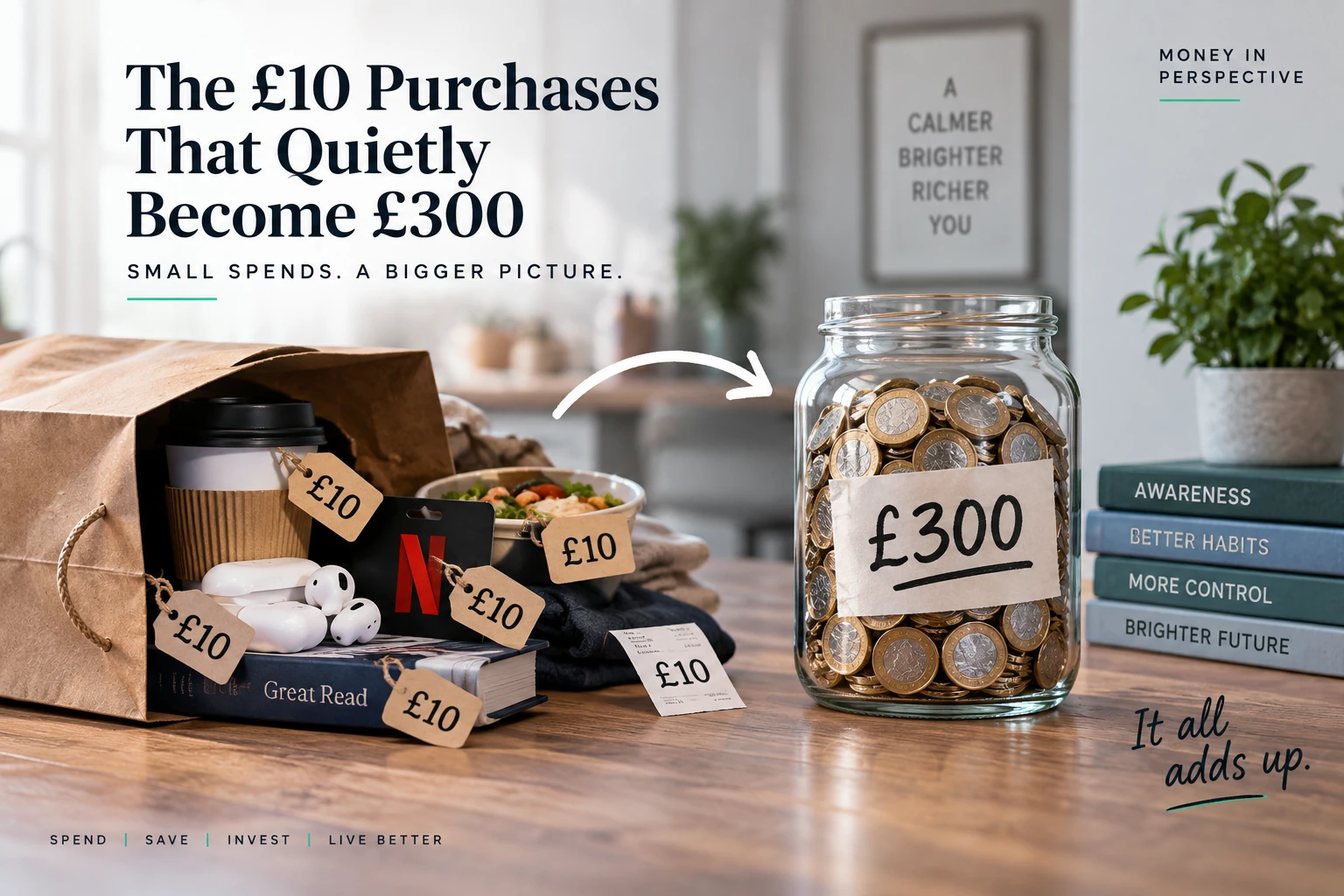
There is a useful annual test for recurring convenience too. Multiply the monthly premium by twelve and ask whether you would willingly pay that amount once for the same benefit. A £25 monthly convenience costs £300 a year. That may still be excellent value, but the annual figure makes the trade-off clearer.
The purpose is not to make monthly services look frightening. It is to compare convenience with the other things the same money could do. If you would still choose it after seeing the annual total, the service has probably earned its place.
Sometimes expensive convenience is worth every penny
Money is not useful merely because it remains in your account.
One of its best functions is removing unnecessary stress and buying back time.
If a convenience genuinely improves your life and comfortably fits your finances, use it.
The goal is not to become impressively inconvenienced.
It is to avoid paying a convenience premium everywhere without noticing.
Because convenience rarely arrives as one enormous luxury.
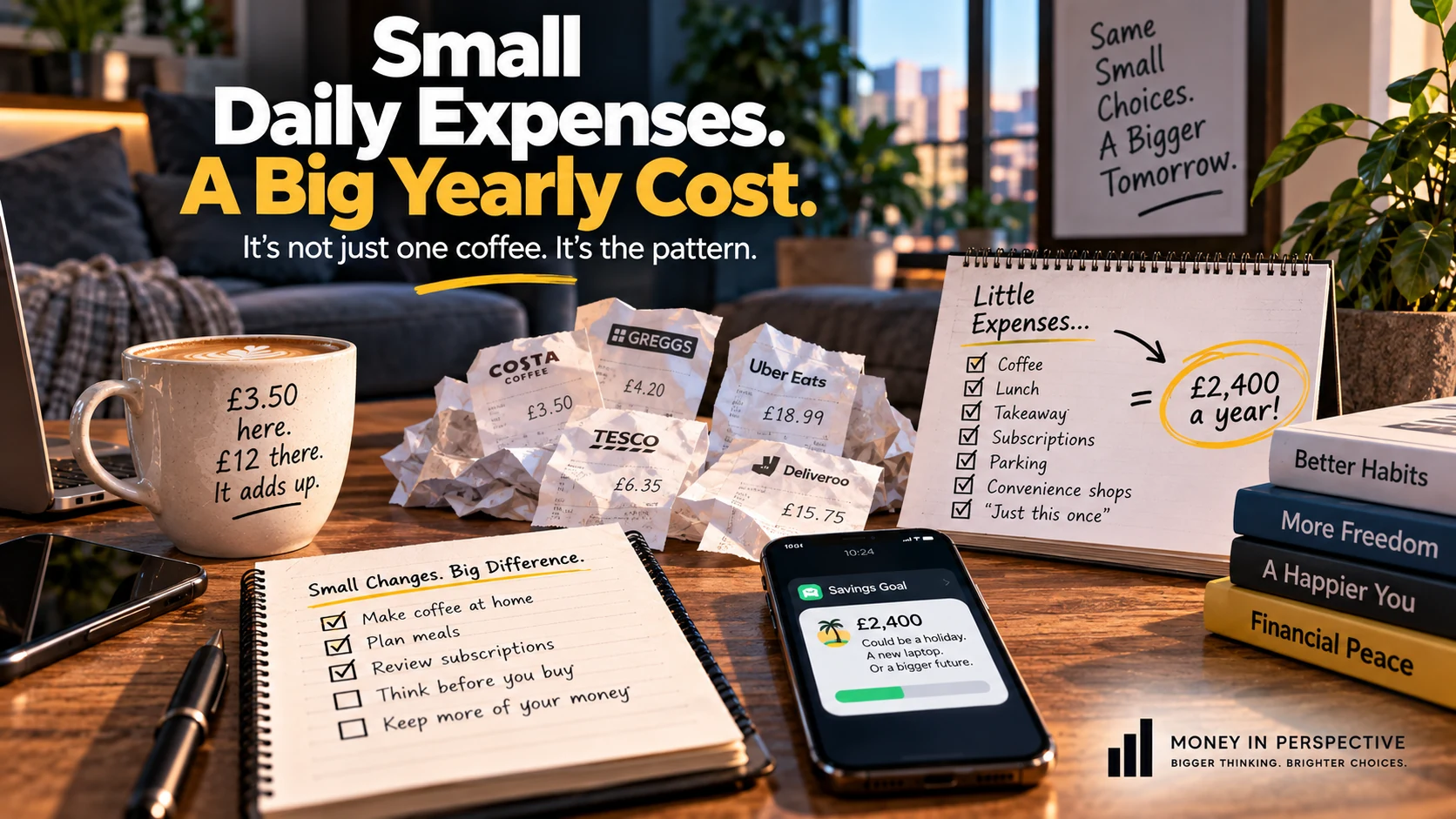
It arrives in £4 delivery fees, £12 taxis, premium subscriptions and hundreds of tiny decisions that all say the same thing:
I would rather not do that myself.
Sometimes that is money brilliantly spent.
Just make sure you are choosing when.