Work
Why £100,000 Is a Financial Fault Line in the UK
A worked 2026/27 guide to the Personal Allowance taper, the effective 60% Income Tax zone, National Insurance, childcare rules and pension planning.
Salary, career decisions and the trade-offs between earning money and having time to enjoy it.
Work
A worked 2026/27 guide to the Personal Allowance taper, the effective 60% Income Tax zone, National Insurance, childcare rules and pension planning.
Work
A worked £50,000 comparison shows why replacing a salary means replacing the whole employment package.
Work
A £6,000 allowance or a £40,000 company EV? Compare what you keep, what you give up and who pays the bills.
Work
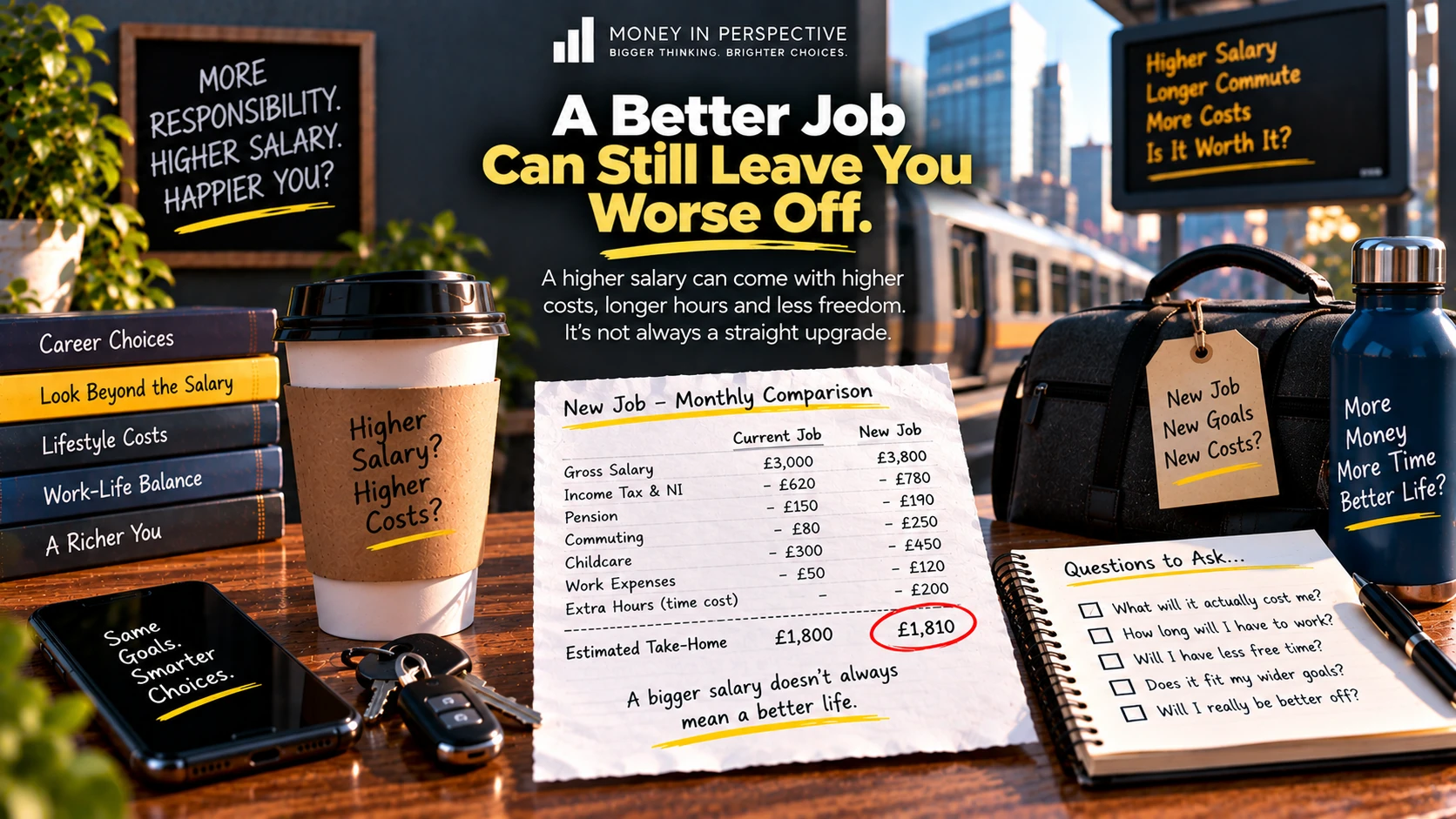
More pay does not automatically mean a better financial outcome. Commuting, childcare, longer hours, relocation and lost flexibility can all change the value of a new role.
Work
Follow one £36,000 salary through tax, National Insurance and household commitments to the margin actually available.
Work
Price a four-day working proposal after deductions and avoided costs, then check whether the workload and household budget support it.
Work
Office work creates expenses that rarely appear as one large bill. Travel, food, clothing and time can turn workplace attendance into a meaningful annual cost.
Work
Extra work can be an excellent way to earn more, but the financial return is sometimes smaller than the headline pay suggests. The full cost of additional hours deserves attention.
Work
Your commute costs more than fuel or fares. Time, parking, car wear and convenience spending can make travelling to work surprisingly expensive.