
A £100,000 salary sounds like a milestone. It is a round number, it carries status, and for many people it marks the point where years of promotions, qualifications or business growth have finally produced a six-figure income.
The tax system gives that number a particular shape. Once your adjusted net income moves above £100,000, your standard Personal Allowance begins to fall. For every £2 above the threshold, £1 of allowance is withdrawn. At £125,140, the standard £12,570 allowance has disappeared.
That creates a stretch of income where an employee in England, Wales or Northern Ireland can face an effective 60% Income Tax rate before National Insurance. For an employee paying the usual 2% NI above the Upper Earnings Limit, the combined marginal deduction is about 62% on that slice.
For some parents, the same £100,000 figure is also a childcare eligibility ceiling. It is based on each parent’s expected adjusted net income, and the rules differ between Tax-Free Childcare and England’s working-parent hours.
So a pay rise from £95,000 to £105,000 is not simply “another £10,000 salary”. The offer letter, tax calculation and household result can tell three different stories.
The number HMRC uses is adjusted net income
Salary and adjusted net income are not always the same figure. Adjusted net income starts with taxable income from sources such as employment, self-employment, pensions, savings interest, dividends, rental income and some foreign income. Certain deductions then reduce it. HMRC explains how to calculate adjusted net income.
Qualifying pension contributions and Gift Aid donations can reduce adjusted net income in the ways HMRC describes. A taxable bonus or employment benefit can increase it. Someone on a £98,000 salary could therefore end the year above £100,000; somebody whose headline income exceeds £100,000 may bring adjusted net income below the threshold through qualifying contributions.
The definitions and mechanics depend on the pension arrangement. A personal pension using relief at source is treated using its grossed-up contribution, while workplace arrangements may work through net pay or a prospective salary sacrifice. Do not subtract the amount that happens to leave your bank account and assume that is the correct adjustment.
Adjusted net income is an individual figure. Childcare schemes also test each parent separately, including a partner where there is one. A household’s combined income is not the number to compare with £100,000.
How the 60% Income Tax effect works
For 2026/27, the standard Personal Allowance is £12,570. In England, Wales and Northern Ireland, the basic-rate band is £37,700 after the allowance, and the higher rate is generally 40% up to £125,140. Scotland has different bands and rates. GOV.UK publishes the 2026/27 rates.
Suppose adjusted net income rises from £100,000 to £102,000. The extra £2,000 is taxed at 40%, costing £800. That increase also removes £1,000 of Personal Allowance. Another £1,000 that had been tax-free becomes taxable at 40%, adding £400.
So the additional Income Tax is £800 + £400 = £1,200. The £2,000 increase leaves £800 after Income Tax: an effective 60% Income Tax rate on this slice.
There is no formal 60% band in the tax tables. The effect comes from the 40% higher rate and the simultaneous withdrawal of tax-free allowance. The calculation applies while the allowance is tapering and assumes the standard allowance, no other reliefs or deductions, and rates for England, Wales or Northern Ireland.
National Insurance takes the combined deduction to about 62%
In 2026/27, a typical employee paying Class 1 National Insurance pays 8% between the Primary Threshold and Upper Earnings Limit, then 2% above the Upper Earnings Limit. Both thresholds are £12,570 and £50,270 respectively. HMRC sets out the 2026/27 payroll thresholds and rates.
At income around £100,000, an additional £2,000 of ordinary salary is generally above the Upper Earnings Limit. Employee NI on that increase is therefore about £40. Combine it with the £1,200 Income Tax effect and the employee keeps about £760 of the extra £2,000.
That is a 62% marginal deduction in this example. It is not a 62% deduction on the whole salary. It applies to the relevant slice of employment income while the allowance is tapering, assuming the usual NI category and no other payroll deductions. Scottish Income Tax rates are different, so the combined result can differ substantially for Scottish taxpayers.
Earning more still increases take-home pay in this example. The point is that the next pound can be worth much less than a pound of salary below the taper.
The £100,000 to £110,000 example
Consider an illustrative employee in England, Wales or Northern Ireland, on an ordinary NI category, with no pension contributions, student loan, benefits, other income or special tax reliefs. This is a simplified annual estimate, not an individual PAYE quotation.
At £100,000, the full £12,570 Personal Allowance remains. Income Tax is £7,540 on the £37,700 basic-rate band plus £19,892 on the remaining £49,730 at 40%, totalling £27,432. Employee NI is approximately £4,010.60: 8% on £37,700 and 2% on the £49,730 above the Upper Earnings Limit.
Estimated take-home before other deductions is therefore £100,000 − £27,432 − £4,010.60 = £68,557.40. You can compare a different salary and pension setup in the UK Take-Home Pay and What-If Calculator.
At £110,000, adjusted net income is £10,000 over £100,000, so £5,000 of Personal Allowance is withdrawn. The remaining allowance is £7,570. Income Tax is £7,540 at 20% plus £25,892 at 40%, totalling £33,432. Employee NI is approximately £4,210.60.
Estimated take-home is £110,000 − £33,432 − £4,210.60 = £72,357.40. The £10,000 gross increase adds about £3,800 to annual take-home in this simplified comparison. The remaining £6,200 is additional Income Tax and NI.
A real payslip can differ because of pension method, student loans, benefits, tax code, pay periods and other income. Use the example to understand the shape of the calculation, not to predict a particular payslip.
Childcare adds another threshold
Tax-Free Childcare can add £2 for each £8 paid into an eligible childcare account, up to £500 every three months per child (£2,000 a year). A higher maximum applies for an eligible disabled child. The family must meet other conditions, including using an approved provider and reconfirming eligibility. GOV.UK explains Tax-Free Childcare and its limits.
The scheme is unavailable where either parent expects adjusted net income above £100,000 in the tax year. The test is individual: in a couple, both parents must meet the relevant conditions. Check the current Tax-Free Childcare eligibility rules.
England’s Free Childcare for Working Parents has a similar £100,000 adjusted-net-income ceiling for each parent. Eligible working parents can receive up to 30 hours a week for 38 weeks for children aged 9 months to 4 years, subject to the other rules. This scheme applies in England; Scotland, Wales and Northern Ireland have different arrangements. GOV.UK sets out the English scheme’s eligibility and the hours available.
Crossing the limit does not mean every free hour vanishes for every child. In England, the universal 15 hours for three- and four-year-olds remain available regardless of parental income. The means-tested working-parent entitlement is the additional support that may be lost. There can also be a grace period for an existing funded place after eligibility ends; the timing depends on the funding block and circumstances. The Department for Education's current guidance explains the universal hours and grace period. Tax-Free Childcare has its own account and reconfirmation rules. Check the current position before making a family budget.
The maximum Tax-Free Childcare top-up is not a guaranteed payment. It depends on eligible childcare spending and the family meeting the conditions. The value of funded hours depends on the place, hours used and any optional extras. Tax-Free Childcare cannot be used at the same time as Universal Credit childcare, although it can be combined with the eligible working-parent hours in England.
Child Benefit has a lower threshold
The High Income Child Benefit Charge uses adjusted net income too, but its threshold is different. It starts above £60,000; the charge increases by 1% of the Child Benefit for each £200 above that amount and reaches the full benefit at £80,000. By the time adjusted net income reaches £100,000, a family receiving Child Benefit may already be repaying all of it through this charge. The household circumstances and who claims still matter. This charge is separate from the £100,000 childcare eligibility rules and the Personal Allowance taper. HMRC explains the High Income Child Benefit Charge.
That difference is easy to miss when “the £100,000 threshold” is used as shorthand for every family support rule. Child Benefit, Tax-Free Childcare and the working-parent hours have separate conditions and thresholds. Check each one on its own.
A £99,500 to £101,000 bonus example
Suppose an employee’s adjusted net income rises from £99,500 to £101,000 because of a £1,500 bonus. Assume the same standard tax position, ordinary employee NI, and no pension or other deductions. The person passes through two different marginal zones.
The first £500 takes income to £100,000. It is taxed at 40% Income Tax and 2% NI, leaving about £290. The remaining £1,000 falls within the Personal Allowance taper. It is subject to the effective 60% Income Tax effect plus 2% NI, leaving about £380.
Together, the £1,500 bonus adds around £670 of take-home in this simplified calculation. The draft’s suggestion that the entire bonus would leave about £570 treated all £1,500 as though it sat within the 62% zone; that misses the first £500 below the taper.
Childcare is a separate question. Expected adjusted net income above £100,000 can affect eligibility for Tax-Free Childcare and the English working-parent hours when a parent applies or reconfirms. A family may be using enough Tax-Free Childcare to receive up to £4,000 across two eligible children, but that is a maximum, not an automatic loss. Existing funded hours may continue for a grace period; free universal hours for three- and four-year-olds remain. Household impact needs the family’s actual childcare use, eligibility dates and other support.
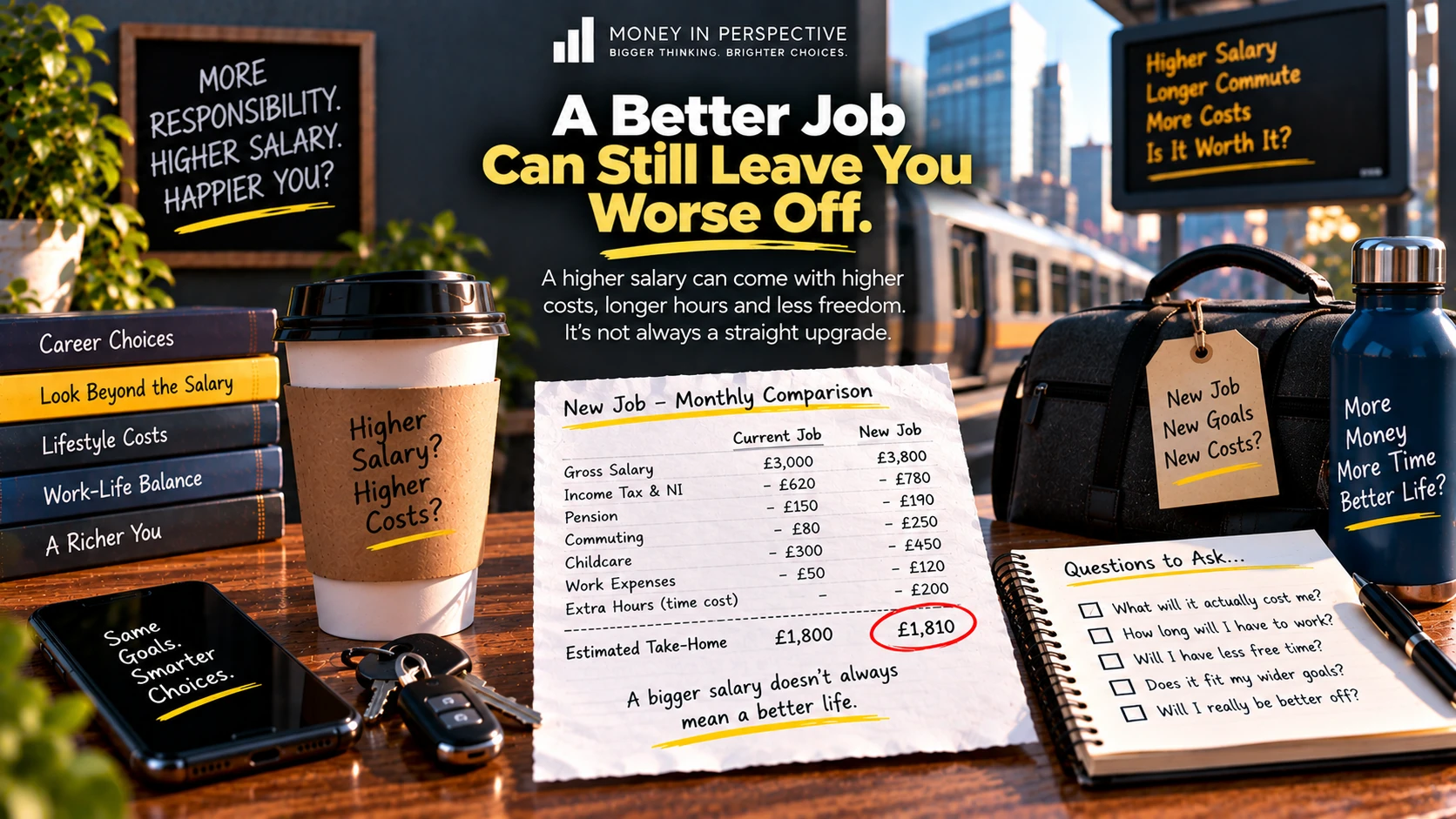
A relatively small bonus can therefore produce a modest net cash gain and still change a childcare decision. Work out both effects rather than treating the bonus as having one universal tax rate. This is one specific example of the wider trade-offs explored in why a better job can still leave you worse off.
A salary below £100,000 can still cross the line
A £96,000 salary may look safely below the threshold. Add a £7,000 bonus, taxable benefits, savings interest, dividends or rental income, and adjusted net income may pass £100,000. The calculation looks at the relevant tax year as a whole, not simply contractual salary.
This is why someone with variable commission, several income sources or a strong year in self-employment may need to estimate the position before the year ends. The £100,000 test is about adjusted net income, not the headline salary in a job offer.
Pension contributions can change adjusted net income
Qualifying pension contributions can reduce adjusted net income. In a simple case, someone expecting £110,000 of adjusted net income who makes a qualifying gross contribution of £10,000 may bring adjusted net income towards £100,000. That can restore Personal Allowance and may bring a parent within the income ceiling for childcare schemes, subject to each scheme’s other requirements.
The contribution method matters. With relief at source, a person might pay £8,000 net and the provider adds £2,000 basic-rate relief, making a £10,000 gross contribution for relevant calculations. Higher-rate relief may need to be claimed separately. Workplace net-pay arrangements and salary sacrifice work differently. HMRC’s adjusted-net-income calculation should be followed for the actual arrangement.
Pension contributions do not make money available for today’s bills. They move it into retirement savings, where access is normally restricted until the applicable minimum pension age. A contribution may be sensible for long-term goals and tax reasons, but first consider emergency savings, expensive debt, near-term spending and the effect on take-home pay.
The standard pension annual allowance is £60,000 in 2026/27 for most people, counting employer and employee pension inputs across schemes. It can be lower after flexible access or for very high incomes. The tapered annual allowance can apply when threshold income exceeds £200,000 and adjusted income exceeds £260,000. Unused allowance may sometimes be carried forward from the previous three tax years, subject to the rules. GOV.UK explains pension annual allowance and tapering.
Salary sacrifice must be agreed before the pay is due
A valid salary-sacrifice arrangement changes contractual pay in exchange for an employer pension contribution. It can reduce taxable salary and employee NI, and may reduce adjusted net income, depending on the arrangement. It must be agreed prospectively with the employer; it cannot simply be applied retrospectively to salary already earned. HMRC describes how salary sacrifice must be set up.
A lower contractual salary can affect salary-linked benefits, statutory payments, life cover or mortgage assessments depending on the employer’s terms. Ask whether the employer uses a notional reference salary for those purposes, how contributions count towards the annual allowance, and what happens if you change or leave the scheme.
The useful question is not “How much can I sacrifice to avoid tax?” It is how much you actually want to put into retirement savings, and whether the rest of your financial plan still works.
Gift Aid can help, when you intended to give
Gift Aid donations can reduce adjusted net income by their grossed-up amount. A £1 qualifying donation is treated as £1.25 for this calculation because the charity can reclaim basic-rate tax. That can matter if you already intended to donate and meet the declaration rules.
It is not a way to make yourself wealthier: the donation still leaves your finances. Nor should a donation be made solely because a tax calculation makes the cost look smaller. Record eligible donations and use the HMRC method when estimating adjusted net income. HMRC explains Gift Aid.
Do not confuse two different pension tapers
The Personal Allowance taper begins once adjusted net income exceeds £100,000. The tapered pension annual allowance operates at much higher income levels and uses separate definitions of threshold income and adjusted income. Someone at £110,000 can be in the Personal Allowance taper while remaining far below the pension taper thresholds.
Confusing the two can lead to the wrong pension estimate. Check both sets of rules if your income is high enough for the pension annual allowance taper to be relevant.
Benefits can compare differently from cash salary
An employer might offer a £5,000 salary increase or a £5,000 pension contribution. Cash salary in the Personal Allowance taper may face the effective 60% Income Tax effect and, for many employees, 2% NI on the relevant slice. An employer pension contribution may receive different tax and NI treatment, but it is not cash in your bank account and counts toward pension limits.
Compare what each offer does for your immediate budget, retirement savings, childcare position and workplace benefits. The answer depends on how the arrangement is structured and what the employee needs. A headline salary figure alone is not a full comparison.
The £100,000 threshold does not make earning more a mistake
A person moving from £100,000 to £110,000 remains better off from salary in our simplified example. The extra take-home is about £3,800, not zero. If childcare support is relevant, the family’s total outcome may change further, subject to its circumstances and the scheme rules.
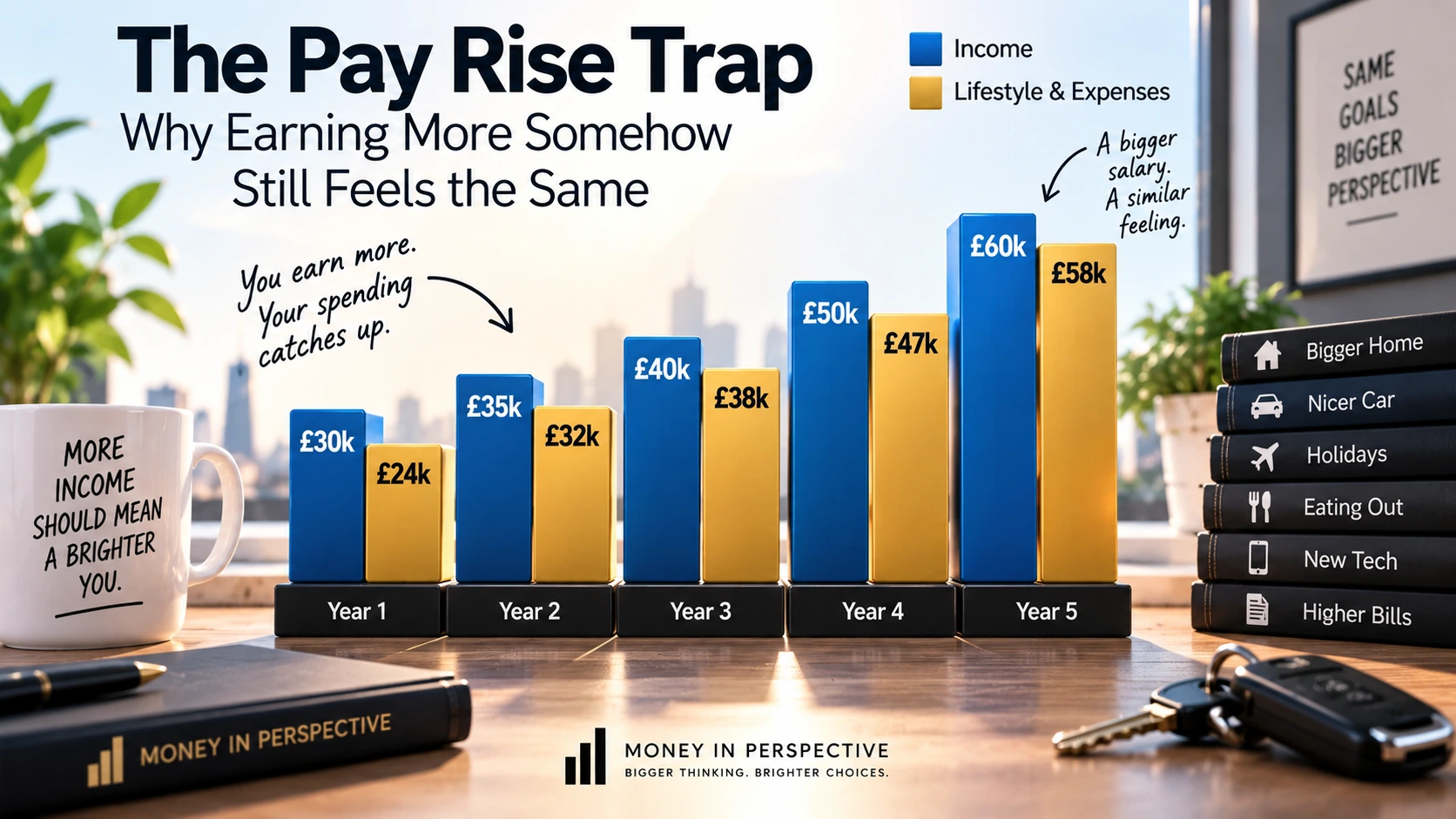
A promotion may also bring experience, future opportunities, pension funding or greater security. Rejecting it solely because of a marginal tax rate can ignore those benefits. Equally, planning a new household budget around the whole gross rise can overstate what will be available to spend.
Estimate adjusted net income before the year ends
If income may approach £100,000, make an estimate during the tax year. Start with salary and likely bonus, then include taxable benefits and other relevant taxable income. Apply legitimate pension and Gift Aid adjustments using the correct method.
Revisit the estimate when pay, bonus, investments or business income change. Parents should check eligibility at application and reconfirmation, including childcare place deadlines and any grace period. A forecast helps identify choices while they are still available; it does not guarantee a particular tax result.
For a parent, check the support actually used, which child qualifies, and whether the place is the universal entitlement or the working-parent extension. For a pension contribution, check the annual allowance and how much cash the household needs to keep accessible. A calculation that only solves one threshold can create a different problem elsewhere.
The real pay rise is the household result
Imagine an offer moving salary from £98,000 to £108,000. The headline increase is £10,000. The household should also ask what happens to Income Tax, NI, the Personal Allowance, childcare eligibility, pension choices and any student-loan or benefit deductions.
The number that matters for the monthly budget is the change in spendable cash after those effects. The longer-term decision may also include pension wealth, childcare hours and the value of the new role. Those are different parts of the same decision, so show them separately before combining them.
The threshold is not a reason to fear earning more. It is a reason to notice that the next pound may behave differently from the last one. At £100,000, adjusted net income matters, pension planning may deserve attention, and some childcare support has an eligibility ceiling.
Sometimes the right choice is to make a qualifying pension contribution. Sometimes a bonus is still worthwhile despite the tax. Sometimes a family can preserve some support while losing another part. And sometimes the best answer is simply to take the promotion and plan from the real net increase.
Ask what the next pound of income will do to your household. Then use the rules that apply to you, rather than treating £100,000 as a magic salary number.
Sources
- Income Tax rates and Personal Allowances — HMRC / GOV.UK.
- Personal Allowances: adjusted net income — HMRC / GOV.UK.
- Rates and thresholds for employers, 2026 to 2027 — HMRC / GOV.UK.
- Tax-Free Childcare — GOV.UK.
- Tax-Free Childcare eligibility — GOV.UK.
- Free Childcare for Working Parents eligibility — GOV.UK.
- What you get through Free Childcare for Working Parents — GOV.UK.
- Early education and childcare guidance, valid from 1 April 2026 — Department for Education / GOV.UK.
- Pension tax relief and annual allowance — HMRC / GOV.UK.
- Salary sacrifice and PAYE — HMRC / GOV.UK.
- Gift Aid — HMRC / GOV.UK.
- High Income Child Benefit Charge — HMRC / GOV.UK.
Rules checked on 30 October 2026. Figures and examples are illustrative, not personal tax calculations. This article provides general information; check your own figures and scheme conditions.