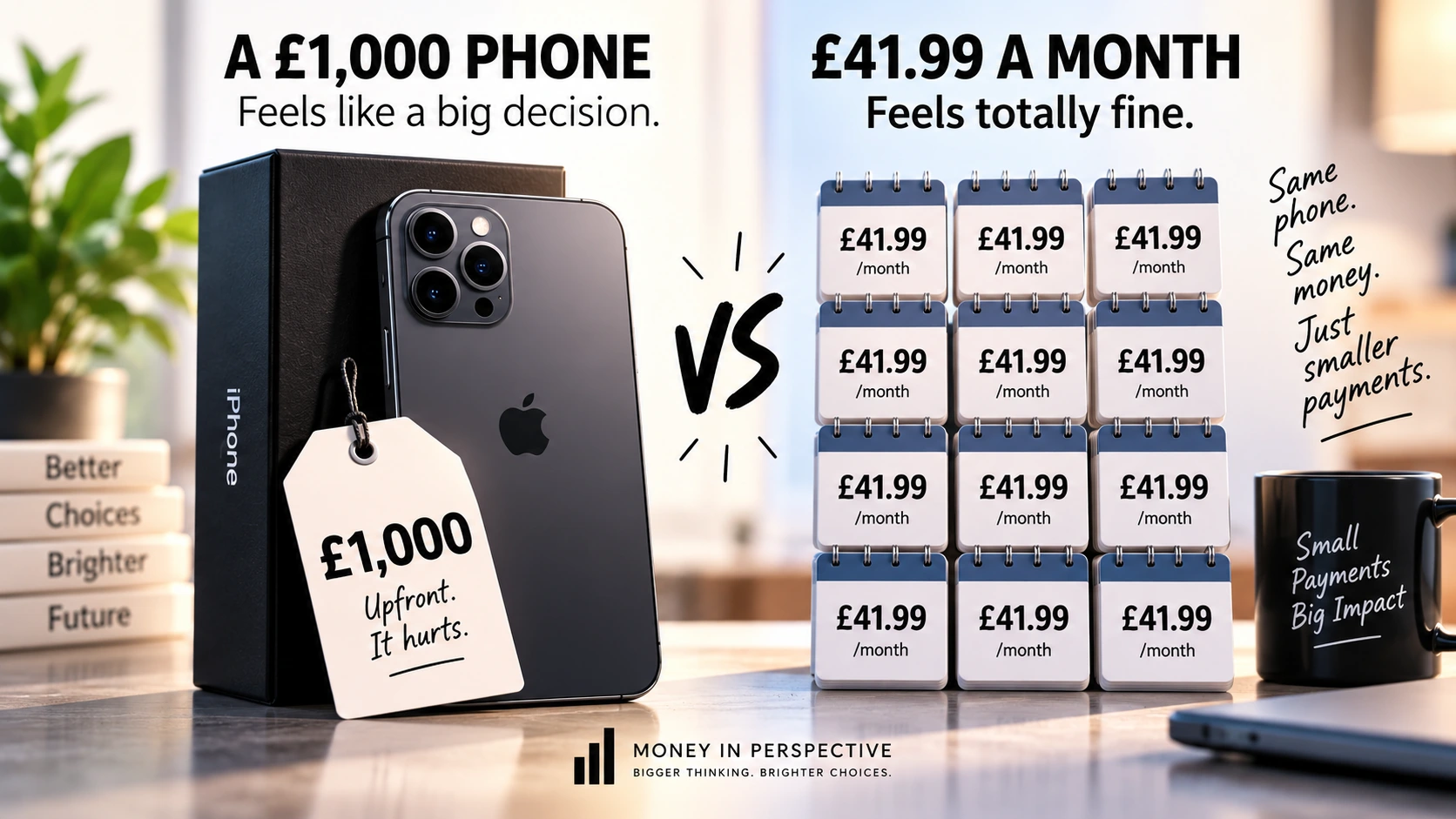

A monthly car payment has one very useful quality: it makes a large number look small. A £25,000 car can feel like an expensive purchase. £299 a month feels like a manageable outgoing. That difference in presentation matters because you rarely experience the full cost of car finance in one moment. You experience the deposit today, the monthly payment next month, the insurance separately, the service plan later, and the final payment somewhere in the distant future.
That is how a car can become “£299 a month” in conversation even when the real financial commitment is much larger. The number is not necessarily wrong. It is simply answering a narrower question than the one you need to ask.
Personal Contract Purchase, or PCP, is built around a deposit, regular payments and a substantial amount left until the end. The FCA explains that deferring the car's assessed future value is what allows lower monthly repayments. There is nothing inherently wrong with that. PCP can suit people who genuinely value changing cars regularly and understand the contract. The problem starts when the monthly payment becomes the only number that matters.
What PCP actually does
A PCP agreement normally has four moving parts: the car price, the deposit, the monthly payments and the optional final payment, often described using a Guaranteed Minimum Future Value. The final payment is not a surprise fee added later. It is part of the structure from the beginning, leaving a significant sum unpaid by the regular instalments.
That is why comparing two cars by monthly payment alone can be misleading. In an illustrative comparison, one might be £260 a month with a £5,000 deposit and a £12,000 final payment. Another might be £340 a month with a smaller deposit and no large balloon. The first looks cheaper every month, but the agreements are doing different things. Without the number of payments and the end position, you cannot decide which costs less.
The right comparison is not simply which monthly payment is lower. It is what you pay in total, what you own at the end and what restrictions come with the agreement. The same problem appears when monthly phone payments obscure the full purchase price, but a car can commit a much larger part of your future income.
A real finance example puts the whole deal on the page
Official example checked on 3 October 2026: Lookers Volkswagen's Polo 1.0 TSI Match offer, advertised for orders from 1 October 2026 to 5 January 2027, subject to status, availability and changes.
| Finance item | Published figure |
|---|---|
| Cash price | £21,979 |
| Customer deposit | £269 |
| Manufacturer contribution | £3,000 |
| Amount of credit | £18,710 |
| Term | 49 months |
| Regular payments | 48 × £269 |
| Optional final payment | £10,372.50 |
| Purchase fee | £10 |
| Representative APR | 7.9% |
| Published total payable, including contribution | £26,563.50 |
| Annual mileage / excess rate | 5,000 miles / 4.36p per mile |
To own it, the customer's payments reconcile as £269 + (48 × £269) + £10,372.50 + £10 = £23,563.50. Adding the manufacturer's £3,000 produces the advertised £26,563.50. The contribution is not money leaving your account.
Customer outlay is £1,584.50 above the stated cash price; the full payment schedule exceeds that price by £4,584.50 before allowing for the contribution. Neither comparison includes running costs. This is a dated example, not a recommendation or a promise that today's offer will remain available.
The monthly figure is doing a job here: it makes the commitment easy to place beside your salary. The full schedule reveals a different question—whether that combination of upfront cash, instalments and final ownership payment is how you actually want to spend the money.
APR is a rate, not an extra receipt item
APR helps compare borrowing costs on an annualised basis. It is expressed as a percentage, not a pound amount, and relevant charges can affect it as well as interest. The FCA's credit-advertising rules distinguish the interest rate, APR, repayments and total amount payable. They are related figures, not interchangeable labels.
A representative APR is also not a personal promise. Your actual quotation and eligibility matter. Comparing APRs is useful, but a lower APR on a more expensive car or a longer agreement does not automatically produce a lower household outlay. You still need the price, deposit, term, payment schedule and outcome.
When you add up that schedule, do not add the interest again if it is already included in the instalments and final payment. The difference between the cash price and the financed total can help explain the cost of borrowing, but it is not another bill to put on top. Manufacturer contributions complicate that comparison further, which is why the example separates your money from the manufacturer's.
The useful habit is to reconcile the figures once. If you cannot make the deposit, payments, fees and final amount agree with the quotation, ask for an explanation before signing. A spreadsheet should clarify a finance agreement, not require you to become its detective.
The deposit belongs in the monthly comparison
People often compare car finance using monthly figures while treating the deposit as though it happened in a different universe. It did not. If you put £4,000 down and then pay £300 a month, £300 is not a complete description of the commitment.
That upfront money could have stayed in savings, reduced another debt or paid for something else. You do not need to invent an investment return to recognise that spending it removes an option. A useful comparison spreads the deposit over the period for which you expect to use the car.
Illustrative deposit calculation: £4,200 over 42 months is £100 a month. If a separate example has 42 monthly payments of £299, the deposit plus instalments totals £16,758, equivalent to £399 a month across that period. This is a budgeting illustration, not a lender quotation; real agreements can have fewer regular payments than the stated number of months, so use the actual schedule.
That £399 still excludes any final purchase payment and running costs. It is not an attempt to redefine the contract. It is a way of putting the upfront and monthly money into the same conversation. Otherwise, a larger deposit can make a deal look cheaper without reducing what you have committed by anything like the amount the monthly headline suggests.
The balloon is why the payment can feel cheaper than ownership
Suppose, illustratively, a car costs £30,000, you put down £3,000 and the optional final payment is £14,000. You have not arranged to repay the whole £27,000 borrowing through the regular instalments. A substantial balance remains at the end. Deferring it lowers those instalments; it does not make the balance disappear.
Toyota's explanation of PCP sets out the usual end choices: return the car subject to the agreement, pay the final amount to keep it, or consider another car using any available equity. Equity is not guaranteed. It depends on the car's value compared with the amount needed to settle the finance, and the next agreement remains a separate decision.
If you want ownership, plan for the final payment from the start. As an illustrative budgeting exercise, setting aside £14,000 over 48 months requires about £291.67 a month, ignoring savings interest. That is not an additional lender instalment, and it is not a second balloon payment. It is the reserve you would need if your aim is to meet that future bill from cash.
If you expect to refinance it instead, you are making another borrowing decision later, with approval and terms that are not guaranteed today. If you plan to return the car, do not budget as though you will then own something you can sell. The deposit and regular payments have bought use of the vehicle during the agreement, subject to any further charges.
This is what makes PCP a different experience from buying and keeping a car for years. The question can quietly become “What monthly payment can I move into next?” rather than “When will I stop needing a car payment?”
Mileage and condition are part of the price decision
Mileage is not a detail to settle by choosing whichever allowance produces the prettiest payment. It affects the expected value of the returned car and the contract you are agreeing to. Start with the journeys you actually make: commuting, family visits, holidays and ordinary weekend driving.
For a current manufacturer example, Toyota's October–December 2026 offers include a Yaris 42-month PCP promotion at 6.9% representative APR with a £3,500 deposit contribution. The published terms specify annual mileage limits, an 8p-per-mile excess charge and ownership only after all applicable payments. These are offer-specific conditions, not universal PCP terms, and offers can change or be withdrawn.
Illustrative mileage calculation: an allowance of 8,000 miles a year against actual driving of 12,000 creates a 4,000-mile annual difference. Over three years that is 12,000 excess miles. At an assumed 8p per mile the bill is £960; at 15p it is £1,800. These are alternative rates applied to the same excess, not charges to add together. Check the actual agreement and whether a quoted rate includes VAT.
Those costs generally matter when handing the car back under the relevant contract terms; do not automatically add return charges to an ownership scenario. Keeping the vehicle, changing it and returning it are different outcomes, and early termination introduces separate questions. Before relying on any exit route, get the lender's settlement or return terms.
Condition matters too. The Financial Ombudsman Service explains how it examines excess-mileage and damage disputes, including what was disclosed, the agreement, inspection evidence and whether charges are reasonable. Age, mileage and the quality of damage reports can all be relevant. A charge is not automatically fair merely because it appears on an invoice.
If returning the car is your plan, understand the permitted condition standard, servicing obligations and inspection process at the beginning. Keep maintenance records and photographs of the vehicle's condition. “Hand it back” is a convenient description of the option, but not a guarantee that there will be nothing to discuss at the end.
PCP versus HP depends on what you want to own
Hire Purchase normally spreads repayment towards ownership without PCP's large optional final payment. The Ombudsman's explanation of the finance types makes the ownership distinction clear: the finance provider owns the car during the agreement, and completing the applicable payments is what allows ownership to transfer.
For a similar car, deposit, term and borrowing rate, repaying more of the price through the instalments generally means a higher monthly payment. That does not automatically make HP worse value. You are paying towards a different end position.
Asking why one quotation is £420 a month while another is £295 therefore misses part of the point. After three or four years, do you own a car, face a balloon or have no car because you returned it? How much cash has left your account, and what is the vehicle worth if it belongs to you? Those are ownership questions, not merely monthly-payment questions.
You can compare the cash paid across the same period and then consider the value of anything you own at the end. Keep that estimated resale value separate from certain contractual payments: it is an assumption, not a guaranteed refund. Equally, do not add depreciation on top of purchase payments and then also subtract resale value in the same calculation. That would count the loss of vehicle value twice.
A cheaper car changes more than the first payment
There is another comparison finance advertising does not naturally encourage: buying a cheaper car and keeping it longer. Consider an illustrative newer-car arrangement with a £4,000 deposit and 48 monthly payments of £320, before any optional final payment. Deposit plus instalments is £4,000 + £15,360 = £19,360. Returning it leaves you needing another vehicle; keeping it requires the final amount as well.
A £14,000 used car bought outright starts from a different position. It may need more maintenance as it ages, have less recent technology and fail to make your neighbour pause while taking the bins out. But you own it, and there is no finance instalment once the cash purchase is complete. If you borrow to buy it, include the loan's interest and repayments instead of treating that version as a cash purchase.
Neither £19,360 nor £14,000, by itself, proves which route is better. Compare running and repair costs, your remaining cash reserve and the vehicle value at the end over the same period. The difference can become especially important in years five, six and seven, when one route may mean another agreement while the other means continuing to use the car you own.
That is also why the cost of changing a device every year is a useful smaller-scale comparison: frequency of replacement changes the economics. Choosing a car and choosing how often to replace it are connected decisions.
A temporary payment can become a permanent household habit
A £350 monthly car payment can become part of normal baseline spending. Over ten years, £350 × 120 months is £42,000. That is an illustrative total of monthly payments alone, excluding deposits, final payments and running costs.
It does not mean the driver has wasted £42,000. They received transport, and perhaps convenience and enjoyment, during those years. But affording a payment for one contract is different from organising household finances around always having it. The recurring commitment deserves to be weighed against what the same cash might otherwise do.
It could stay accessible, build savings or reduce mortgage interest, subject to charges and liquidity needs. None of those alternatives is automatically superior. They simply belong in the comparison. A car can be affordable and still represent a choice to make less room for something else.
The monthly payment is useful because it fits neatly into a budget. It becomes less useful when its neatness stops you seeing the years for which you expect to keep making it.
Budget for transport, not just the finance agreement
The finance payment does not remove insurance, fuel or electricity, tyres, servicing, repairs, applicable vehicle tax, parking or breakdown costs. Some agreements include particular services; others sell them separately. Use what your quotation actually includes so you neither omit costs nor count the same service twice.
If an illustrative £299 finance payment sits inside a £650 monthly motoring budget, the other costs are £351. Being comfortable with £299 tells you little about whether the whole £650 fits. Annual bills can be converted into monthly reserves for planning, even when they are paid in one lump sum. Avoid counting both the reserve and that same annual bill as separate costs.
Before signing, put the whole agreement on one page: cash price, your deposit, any contribution from the dealer or manufacturer, number and amount of payments, APR, final payment and fees. Reconcile the total, record the mileage and return conditions, and add realistic running costs separately. Then compare the outcome with HP, a personal loan, a cash purchase, a cheaper car or keeping your current one.
Finally, decide what you actually want. Regular access to a newer vehicle is a different objective from reaching a point where you own a car without monthly finance. High mileage, irregular income and a thin cash reserve can change what is suitable even when the headline payment looks comfortable.
When a salesperson says a car is £299 a month, that answers the question of how much one monthly payment is. It does not tell you the upfront cash, the ownership outcome or the cost of repeating the arrangement for a decade. Put those numbers back into view before deciding.
Because £299 a month might genuinely be affordable. But affordable each month and good value overall are two different questions.