
A mortgage overpayment has an obvious emotional appeal. You send extra money to the lender, the balance falls, and for a brief moment it feels as though you have taken a small bite out of one of the biggest numbers in your financial life.
Savings feel less dramatic. The money is still sitting there, the mortgage statement still looks annoyingly large, and nothing appears to have happened. That can make overpaying sound like the disciplined choice and keeping the cash sound like procrastination.
But the better decision is not really about which option feels more responsible. It is about the interest you avoid, the savings return you keep after tax, the charges involved and the access to cash you give up. Sometimes the mortgage deserves the money. Sometimes savings do. And sometimes the sensible answer is to do a bit of both.
This comparison is about a mortgage on your own home, rather than a rental property's financing. The rates and household figures below are illustrative, not current product offers. Tax information is checked against the 2026/27 rules, with the forthcoming savings-tax change noted separately.
Compare the return you keep, not the rate you see
Imagine you have £10,000 available. Your mortgage rate is 4.50%, while a savings account pays 5.00%. At first glance, savings wins. Five per cent is higher than 4.5%.
But that comparison only works if the 5% is genuinely yours to keep. Reducing mortgage debt avoids interest; savings earn interest that may be taxable. Comparing one figure before tax with another after tax is a surprisingly effective way to reach the wrong answer confidently.
For 2026/27, the Personal Savings Allowance is £1,000 for basic-rate taxpayers and £500 for higher-rate taxpayers, with none for additional-rate taxpayers. Your income, including interest, determines which band applies. People with lower incomes may also benefit from an unused Personal Allowance or the starting rate for savings.
The allowance is not a fresh allowance for each account. You need to consider interest across your savings. Interest within qualifying ISAs is tax-free, so it does not use up the Personal Savings Allowance. Two accounts offering the same headline rate can therefore produce different usable returns for the same person.
Start with the money you will actually retain. A higher advertised rate is useful only if it survives the rest of the calculation.
What £10,000 actually does in each place
Illustrative worked example: assume £10,000 stays available for a full year, a 4.50% mortgage rate, a 5.00% gross savings return and no fees. The mortgage saving below is a simple first-year estimate, not a repayment schedule: actual results depend on payment timing, interest calculation and how the lender adjusts the loan. For the tax cases, assume the interest falls entirely within 2026/27 and does not change the saver's tax band.
| One-year comparison | Calculation | Approximate amount |
|---|---|---|
| Gross savings interest | £10,000 × 5.00% | £500 |
| Mortgage interest avoided | £10,000 × 4.50% | £450 |
| Savings advantage if all interest is tax-free | £500 − £450 | £50 |
Now suppose the saver has already used their allowance elsewhere and all £500 is taxable at the 2026/27 higher savings rate of 40%. Tax is £500 × 40% = £200, leaving £300. Against approximately £450 of mortgage interest avoided, overpaying is ahead by £150.
The same £10,000. The same mortgage. The same account. A different tax position changes the conclusion.
There is a middle case too. If £200 of allowance remains, only £300 of the £500 interest is taxable. At 40%, that is £120 of tax, leaving £380. The mortgage's approximate advantage is now £70, not £150. Applying your tax rate to every pound of interest when some allowance remains exaggerates the benefit of overpaying.
You can also work backwards. Where all additional interest is taxable at 40%, a savings account would need to pay 4.50% ÷ (1 − 40%) = 7.50% gross to match a 4.50% mortgage saving. That is a break-even calculation, not a suggestion that such an account is available. It does not apply unchanged to ISA interest or interest covered by unused allowances.
There is an important date boundary here. HMRC's published changes raise savings-income rates to 22%, 42% and 47% from 6 April 2027. Do not treat this 2026/27 illustration as a forecast for the next twelve months from today. Check the tax year in which your interest arises and the rules applying then. At 42%, for example, fully taxable £500 interest would leave £290 rather than £300.
A smaller mortgage is not an emergency fund
Overpaying has a cost that does not appear in the interest-rate comparison: the money becomes harder to access. Cash in an easy-access account can deal with a failed boiler, redundancy or an urgent family expense. Cash paid into an ordinary mortgage becomes home equity. That may feel reassuring, but it does not necessarily help when the car needs replacing next Tuesday.
MoneyHelper's emergency-savings guidance suggests three to six months of essential outgoings as a rule of thumb. Its mortgage guidance recommends retaining at least three months' money before paying down the loan. These are starting points, not identical targets for every household. Two secure incomes and low fixed costs create a different situation from one irregular income, dependants and an older property.
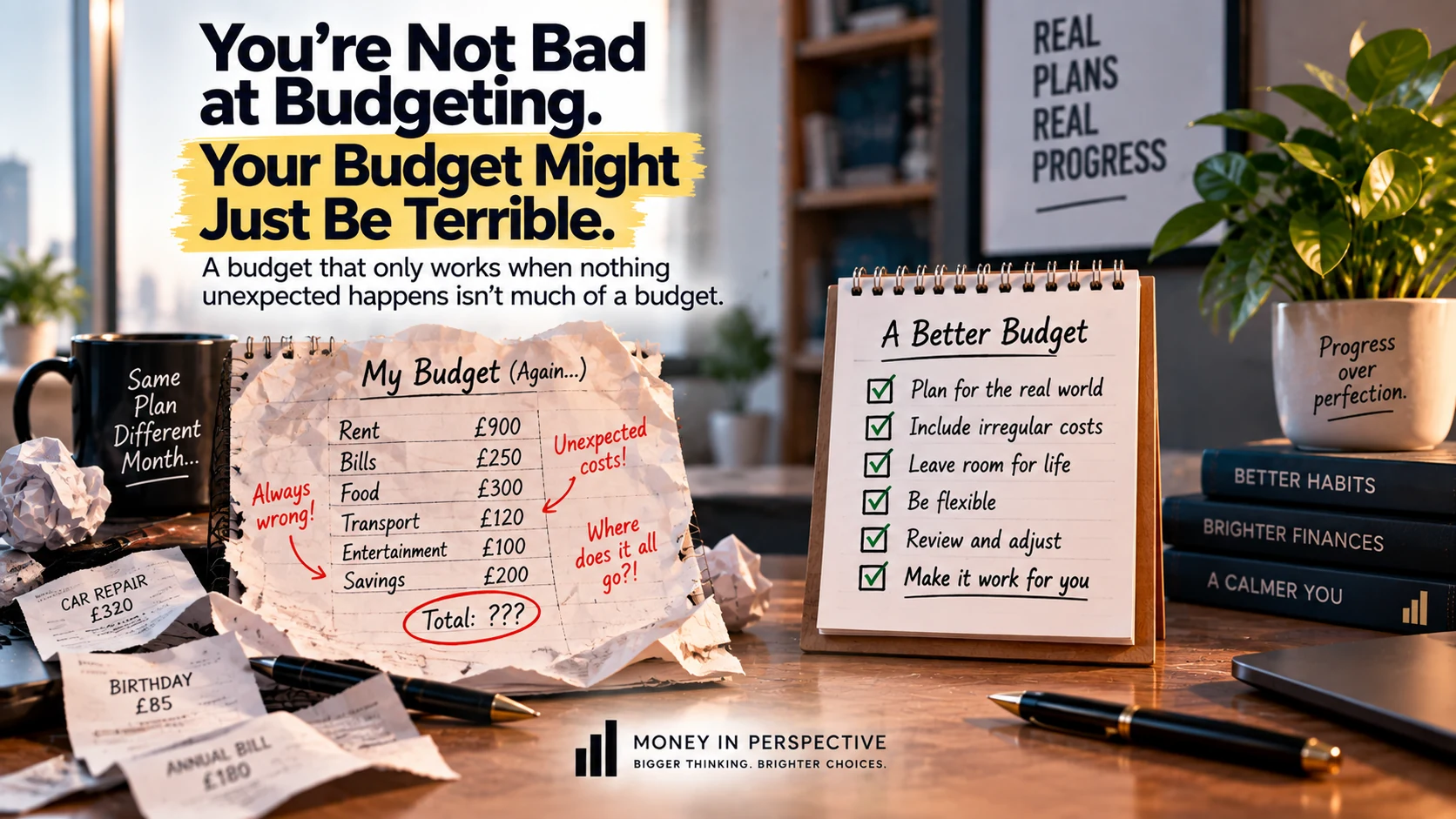
Make the reserve concrete. If your essential outgoings are an illustrative £2,000 a month, three months is £6,000 and six months is £12,000. Add any known near-term commitments separately: an insurance renewal is not an emergency merely because you would rather forget about it. A budget that reflects the bills you actually face is a better starting point than choosing a reassuring round number.
Consider two otherwise identical households, each with the same home value. Household A owes £190,000 and has £20,000 in accessible savings. Household B uses that £20,000 to reduce the mortgage to £170,000 and has almost no cash left.
Immediately after the payment, ignoring fees, their net worth is the same. Household B's cash and debt have both fallen by £20,000. The overpayment has changed the composition of its finances; future interest savings are where the financial benefit emerges.
If both households lose income tomorrow, however, only Household A has that £20,000 available to pay bills. Household B cannot buy groceries with a lower mortgage balance. It is the household version of the distinction between a financial result and money available to spend: a stronger-looking number does not automatically mean usable cash.
Some flexible or offset mortgages allow access to overpaid funds, subject to their terms. MoneyHelper discusses these exceptions. Check your own product before assuming either that money is permanently inaccessible or that you can simply withdraw it later. A possible future remortgage is not an emergency account.
Put the early repayment charge into the calculation
Before sending a large payment, check the contract. The FCA explains that fixed or discounted deals can carry early repayment charges, often expressed as a percentage and reducing as the deal approaches its end. MoneyHelper notes that many lenders allow some penalty-free overpayment, often 10% a year, but that is not a universal entitlement.
Ask which balance the allowance uses, when its allowance year resets, how regular overpayments count and what happens if you exceed it. Ten per cent of an original balance and ten per cent of today's balance are not necessarily the same amount. The phrase “I thought it was allowed” is not much use after the charge appears.
Suppose an illustrative £15,000 overpayment avoids roughly £675 a year at 4.5%, but making it now incurs a £900 charge. It is tempting to divide £900 by £675 and call that the recovery period. That misses the interest the money could earn while you wait.
To see the difference, assume a 5% savings return taxed entirely at 40%, no unused allowance, unchanged rates and a charge that disappears in six months. These are simplified assumptions using the 2026/27 tax rate, not a product quote or a forecast across tax years.
| Illustrative six-month decision | Calculation | Approximate amount |
|---|---|---|
| Mortgage interest avoided by paying now | £15,000 × 4.5% × ½ | £337.50 |
| Net savings interest earned by waiting | £15,000 × 5% × ½ × 60% | £225.00 |
| Extra interest benefit from paying now | £337.50 − £225.00 | £112.50 |
| Charge for paying now | Assumed lender charge | £900.00 |
On those assumptions, paying £900 to gain £112.50 of extra interest benefit makes little sense. Waiting until the charge ends is ahead by about £787.50. Change the rates, tax, fee or waiting period and the answer changes too.
The lesson is not that an overpayment during a charge period is always wrong. It is that the relevant benefit is the advantage over your realistic alternative, over the period you are comparing. Ignoring the fee because paying off debt sounds responsible is incomplete arithmetic.
Ask what happens after the payment reaches the lender
An overpayment can reduce the term, reduce the monthly payment or interact with the loan in another way depending on the product and your instructions. Do not assume that the outcome you picture is the one the lender will apply.
The FCA's mortgage illustration rules, including MCOB 5.6.90, address overpayment restrictions and whether the balance used to calculate interest falls immediately. Ask your lender when interest is recalculated, what happens to the contractual payment and whether shortening the term requires a separate request.
If becoming mortgage-free sooner is your objective, a smaller monthly payment may not be the result you wanted. Continuing to pay the previous amount could help, but check whether that counts towards future overpayment limits. An illustrative £150 reduction in required monthly payments is useful cash-flow relief; it is not automatically a £150 monthly saving in interest.
While your mortgage rate is fixed, the interest avoided is relatively predictable, subject to fees and the loan mechanics. Once the rate changes, the value of further overpayments changes with it. That is why comparing a mortgage with cash savings is also different from comparing it with investments: potential investment returns are uncertain and capital can fall. A hopeful investment forecast should not be placed beside a contractual borrowing cost as though both were promises.
Savings, overpayments and the perfectly reasonable middle
Keeping cash can be stronger when its after-tax return exceeds the mortgage cost, an early repayment charge is about to expire or accessible reserves are still thin. An illustrative 2.5% fixed mortgage with six months remaining deserves a comparison over those six months, followed by another decision at the new rate. You do not have to commit today's answer for the remaining twenty years of the loan.
Overpaying becomes more attractive when the mortgage costs more than savings earn after tax, reserves are adequate and charges do not undo the benefit. It can also suit someone who knows that cash left within reach tends to become money available for spending.
If £10,000 in savings will remain £10,000 in savings, compare the numbers. If it will gradually become a sofa, two weekends away, an upgraded phone and a mysterious collection of transactions labelled “small”, putting some against the mortgage may protect it from you. That does not justify emptying an emergency account. It suggests you need a way of separating reserves from spending money, particularly when saving feels less rewarding than buying something.
There is no requirement to choose only one destination. With an illustrative £20,000 available and a properly considered £12,000 reserve, you could retain the reserve and overpay £8,000, assuming the terms permit it. Or make smaller monthly overpayments while continuing to save. Check that known upcoming spending is covered before treating everything above the reserve as spare.
That approach gives up the drama of one enormous payment. In return, you get a household that still has options when life declines to follow the spreadsheet.
Check the debts and pension contributions competing for the money
The mortgage may not be the most urgent use of spare cash. Arrears on priority commitments need attention because of their consequences; expensive unsecured borrowing can also cost much more than the mortgage. Those are related but different reasons for putting another debt first. Do not reduce a relatively cheap mortgage while ignoring a problem elsewhere simply because the mortgage balance is larger.
Pensions introduce another comparison. Workplace pension contributions can include employer money and tax relief. Check what your particular scheme offers: an employer does not necessarily match every extra pound you contribute.
If reducing your contributions would lose an employer contribution, include that lost benefit before directing the money to the mortgage. An immediate contribution into a pension is not the same thing as an annual investment return, however. The money is normally inaccessible until the relevant pension-access age, and its eventual value depends on what happens within the pension. Savings, pension contributions and mortgage overpayments solve different problems over different time horizons.
A useful order is to address urgent debts, decide what accessible cash the household needs, preserve worthwhile employer pension benefits, then compare genuinely spare money against the mortgage terms and net savings return. None of those steps requires you to become a person who enjoys reading mortgage conditions. Unfortunately, one of them does require reading them.
Keep enough flexibility to make the saving worthwhile
Before overpaying, write down the mortgage rate, the date it changes, the penalty-free allowance and any charge. Beside those, put the realistic savings rate, the tax you would pay and the cash reserve you intend to retain. Compare the same amount over the same period. If a fee expires or a rate changes halfway through, account for that rather than pretending the year is uniform.
Then ask what access to the money is worth to your household. Two people with identical rates can reasonably choose differently. One has secure employment and substantial reserves. The other is self-employed and owns a roof that has recently begun making expensive noises.
Mortgage overpayments are tangible and satisfying. Savings are quieter, but flexibility has value too. When the numbers are close, retaining cash is not a failure of discipline; when the mortgage clearly costs more and the reserve is secure, reducing it can be an excellent use of the surplus.
Keep enough cash to remain resilient, then decide what the genuinely spare money should do. Quietly chipping away at the mortgage may not feel like a financial masterstroke. Being able to afford the boiler as well is a better result than an impressive balance and nowhere to turn.