A Premier League ticket has an impressive ability to make a matchday look cheaper than it really is.
You see the ticket price first.
Perhaps £40, £50 or considerably more depending on the club, seat and fixture.
That becomes the number your brain associates with going to the football.
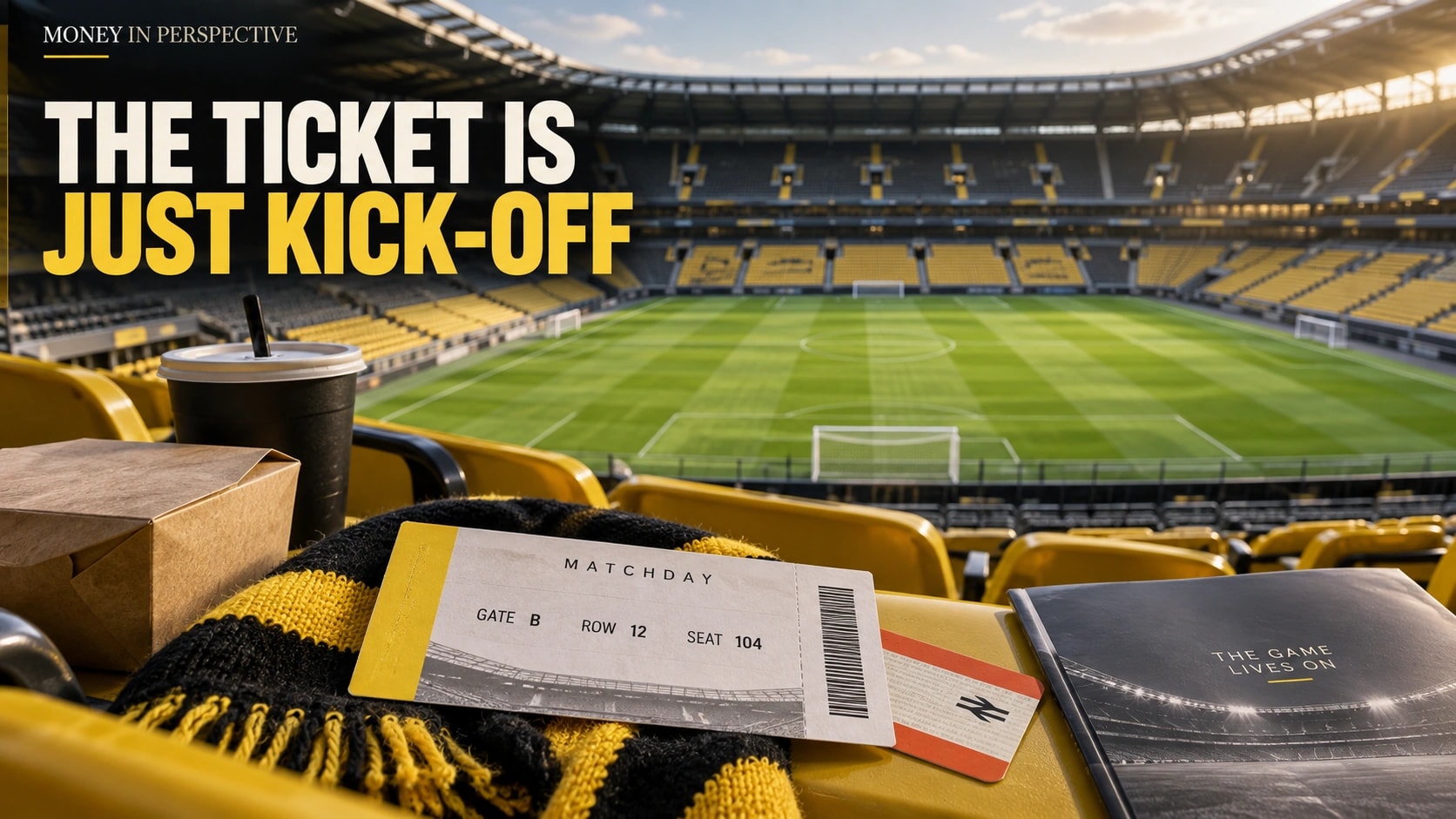
But the ticket is only the cost of entering the stadium.
The actual matchday can begin several hours earlier and finish several hours later.
Between leaving home and returning, money can disappear into transport, parking, food, drinks, membership fees, programmes, merchandise and the collection of small purchases that feel completely normal when you are following your team.
This is why the real cost of Premier League football is better measured by the day than by the seat.
For a supporter living close to the ground, the difference may be modest.
Walk to the stadium, buy the ticket, perhaps get something to eat and go home.
For someone travelling from another town or city, the economics change completely.
A £45 ticket can sit beside a £60 train fare.
Now the match is £105 before you have eaten anything.
If the fixture moves for television, transport can become even more expensive.
A late kick-off may remove cheaper train options.
A Sunday match may involve reduced services.
A night game can make a hotel or taxi necessary.
Football scheduling is therefore not only inconvenient for supporters.
It can have a direct financial effect.
Driving creates a different set of costs.
Fuel is obvious.
Parking may not be.
Stadium parking can be expensive or restricted, which may mean paying for private parking further away.
Add congestion charges or other city-centre costs where applicable and the journey can become a significant part of the day.
Then there is vehicle wear.
Supporters rarely calculate depreciation, servicing and tyres every time they drive to a match, nor should they.
But if following a club involves thousands of miles each season, fuel is not the only cost created by travel.
The social part of football adds another layer.
Many supporters do not arrive at 2:55pm for a 3pm kick-off, sit silently for ninety minutes and leave immediately.
The day may include meeting friends at a pub, café or restaurant.
That is part of the experience.
A few drinks.
Lunch.
Perhaps another drink after the match.
None feels extraordinary.
Across twenty home fixtures, routine social spending can become substantial.
Imagine spending an average of £20 outside the ticket at each match on food and drinks.
Across twenty games, that is £400.
At £30 per match, it becomes £600.
This is before transport.
Again, this is not an argument against spending the money.
Football is a social activity, and the hours around the match can be just as enjoyable as the match itself.
The point is simply that the true price of supporting the club includes the whole ritual.
Inside the stadium, captive pricing can add more.
Food.
Soft drinks.
Beer where available.
Programmes.
A family buying several items can spend a meaningful amount before the game even begins.
For some supporters, a programme is not an impulse purchase.
It is a collection built over years.
That creates value beyond the paper itself.
For others, buying one every match is simply habit.
The difference matters when looking for ways to reduce the cost without reducing enjoyment.
Football merchandise can transform an occasional day out into a much larger expense.
The club shop is often positioned perfectly for matchday emotion.
You are already at the ground.
The team is everywhere.
Children are excited.
A shirt, scarf or other item feels connected to the event.
Again, nothing wrong with that.
But a family of four entering the club shop after a match can add hundreds of pounds to what began as a ticket purchase.
Membership fees are another hidden cost.
At many clubs, membership may improve access to tickets or be effectively necessary for purchasing popular fixtures.
A supporter may therefore pay an annual fee simply for the opportunity to buy match tickets later.
Families may need multiple memberships.
That amount should be spread across the matches attended when calculating the real cost.
Season-ticket holders have a slightly different calculation.
The ticket cost is paid upfront, which can make each individual match feel free when the day arrives.
It is not free.
The cost was simply paid earlier.
A season ticket divided by the number of included games provides a useful baseline.
Then add matchday travel and spending.
This matters because season tickets can encourage people to attend fixtures they might otherwise skip.
That is usually part of the value.
You bought access to the season.
But if every attendance creates another £40 or £50 of transport and food, missing one match may sometimes save more than people realise.
This is especially relevant for supporters who live far from the stadium.
The season-ticket cost is sunk.
Travel for the next fixture is not.
That does not mean you should miss games merely to save money.
It means the financial decision for each match still contains new costs.
Away games make the calculation much larger.
Ticket.
Train.
Fuel.
Coach.
Food.
Potential hotel.
For some fixtures, an away day can cost several times the match ticket.
European football moves this into another category entirely.
Flights.
Hotels.
Airport transport.
Travel insurance.
Food.
A football match becomes an international trip.
For many fans, these are among the best experiences of supporting a club.
They should simply be budgeted like travel, not treated as a £30 football ticket with a few extras attached.
Children multiply matchday costs in ways that junior ticket prices do not always capture.
A child's ticket might be discounted.
Travel still exists.
Food still exists.
Merchandise becomes particularly tempting.
A parent may be paying for two, three or four supporters rather than one.
This is why family football can become an expensive hobby even when clubs make efforts to keep children's entry affordable.
There is also the opportunity cost of time.
A match may last ninety minutes.
The full day can take six, eight or even twelve hours depending on travel.
For most supporters, that time is not a negative.
It is the point.
Football provides community, routine and entertainment.
But it explains why cost per match should not be compared too simplistically with a cinema ticket or streaming subscription.
You are buying a day, not only ninety minutes.
This also helps explain why supporters can rationally spend large amounts on football while still viewing it as good value.
If the experience provides friendships, family traditions and something to look forward to every week, the financial return cannot be measured solely in pounds.
Hobbies are not investments.
They are allowed to cost money.
The useful question is whether the cost is visible and affordable.
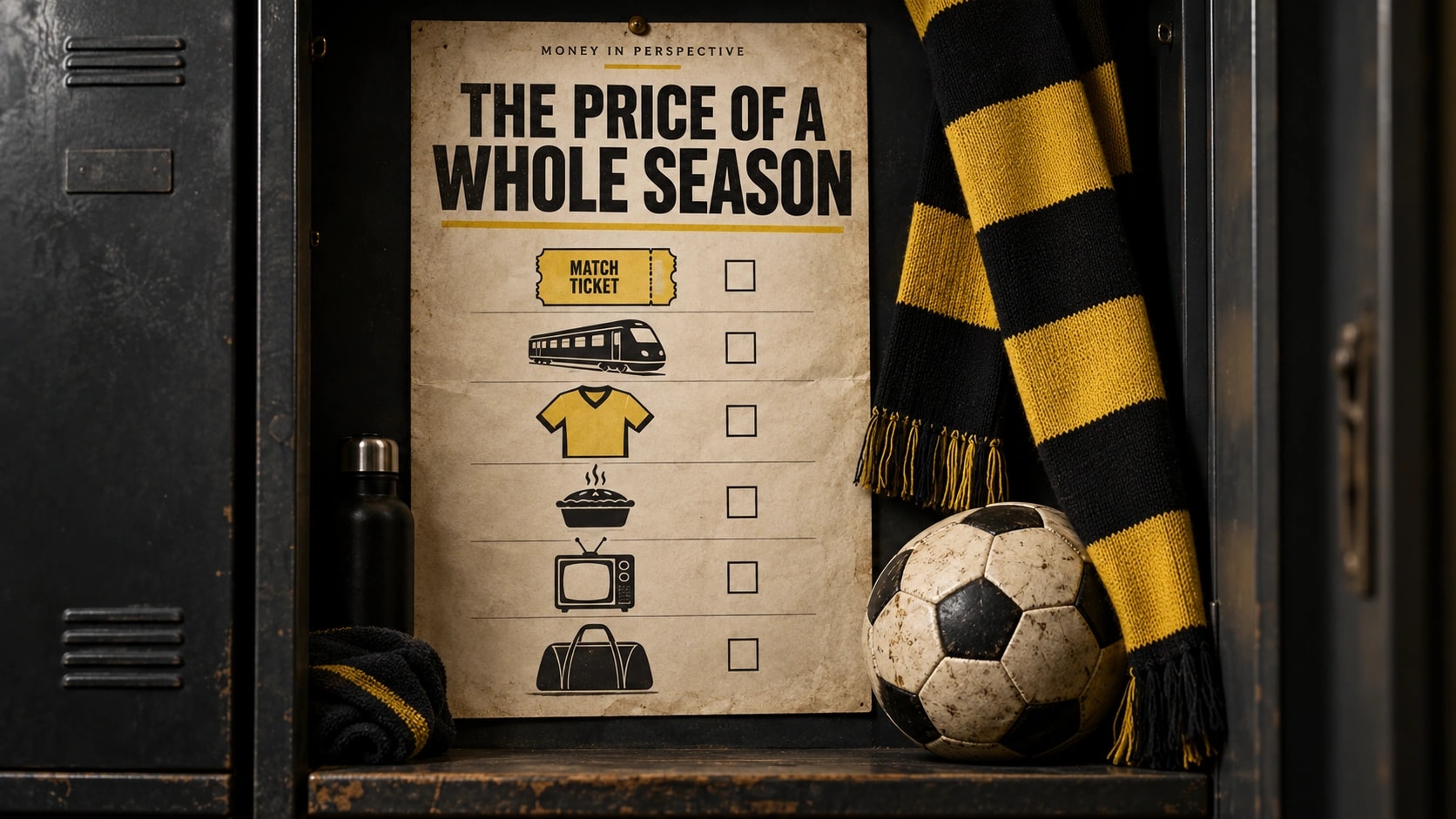
One of the best exercises a regular match-going supporter can do is track an entire season.
Not just tickets.
Record football-related spending under one category:
tickets or season ticket,
membership,
transport,
parking,
food and drinks,
merchandise,
subscriptions used mainly for football,
and away trips.
At the end of the season, look at the total.
It may be £1,000.
It may be £3,000.
It may be much higher.
The number is not a judgement.
It tells you what the hobby actually costs.
Now ask whether the value still feels right.
Perhaps absolutely.
Then the spending is doing exactly what discretionary money is supposed to do.
If the figure feels uncomfortable, there are many ways to reduce it without giving up football.
Travel can often be the largest opportunity.
Booking trains earlier where practical.
Sharing fuel.
Using supporters' coaches.
Choosing fewer away matches.
Walking part of the journey instead of paying for premium parking.
Food is another.
Eating before entering the stadium can reduce repeated purchases.
Not every match needs the full pub-and-restaurant experience.
You can vary it.
A major fixture may be a full day out.
A routine midweek match may simply be travel, game and home.
Merchandise can be occasional rather than automatic.
One shirt every few years still contains the same badge.
Children's shirts can be bought after launch discounts or second-hand where appropriate.
The sport does not become less enjoyable because the shirt is from last season.
Another useful strategy is to create an annual football budget.
If you know you are comfortable spending £2,000 over the season, allocate it across the things you value most.
Perhaps home matches are essential and away games are occasional.
Perhaps merchandise matters little but European trips matter enormously.
The budget allows you to spend heavily on the best parts rather than letting every football-related purchase happen independently.
This is especially useful because sports spending is emotionally charged.
A normal shopping purchase can be postponed easily.
A cup final or major away game feels unique.
The scarcity is real.
Having money reserved for football means these opportunities do not automatically collide with rent, bills or savings goals.
Premier League football is frequently discussed in terms of affordability, and reasonably so.
Ticket prices matter.
But supporter affordability cannot be understood through tickets alone.
Transport infrastructure matters.
Fixture scheduling matters.
Membership structures matter.
Food and retail pricing matter.
A £40 ticket can produce a £150 day.
That is the number households experience.
There is also a difference between affordability and value.
A supporter may believe a £120 matchday is excellent value and still be unable to afford doing it twenty times per year.
Another may be able to afford it easily and decide it is not worth the money.
These are separate questions.
Good financial planning does not decide what football should be worth to you.
It helps you see whether your chosen level of support fits alongside everything else.
The most dangerous version of football spending is not usually one expensive final.
It is routine spending becoming invisible.
£15 here.
£20 there.
Another train.
Another shirt.
Another subscription.
Because each payment belongs emotionally to football, it can avoid the scrutiny another £2,000 annual category might receive.
Once the number is visible, you can make better decisions without reducing the passion.
You may discover that football is one of the best uses of your discretionary income.
That is a perfectly good conclusion.
A season provides dozens of matches, social contact and experiences that matter.
There is no requirement for hobbies to be cheap.
It also helps to budget for the season rather than only for individual matches.
Regular supporters can spend substantial amounts before the season even starts.
Season tickets, memberships and advance travel can require hundreds of pounds months before the actual fixtures happen.
That affects cash flow even when the annual total is affordable.
Putting aside a monthly amount throughout the year can smooth the cost of renewals and reduce the temptation to use credit when several football expenses land together.
It can also help to separate routine football from exceptional football.
Home matches and normal travel can sit inside the regular annual budget.
Cup finals, European knockouts or a rare hospitality experience can come from a separate big-match fund.
Those events are unpredictable, but they are predictable in one sense: football occasionally produces an opportunity that feels too important to miss.
Planning for that possibility is better than pretending it will never happen.
Supporters should also be careful with the idea that a match is “already paid for” simply because the ticket was bought months ago.
The ticket may be sunk.
The train, parking, food and drinks are new costs.
If finances are tight, deciding not to attend one fixture can still save meaningful money even though the seat cannot be refunded.
That is not disloyalty.
It is simply recognising that matchday spending continues after the ticket purchase.
The best way to keep football enjoyable is to prevent the cost from becoming a source of stress.
When the season has a realistic place in the household budget, the supporter can enjoy the match for what it is rather than mentally adding up every transaction on the way home.
The ticket gets you through the turnstile.
The matchday includes everything around it.
And when people ask what it costs to watch Premier League football, the honest answer is rarely printed on the ticket.