Spending money has become almost frictionless.
Tap your phone.
Tap your card.
Click “buy now”.
Use Face ID.
The transaction is finished before the feeling of spending has had much time to arrive.
This is incredibly convenient.
It is also one reason people can spend more when money is not physically in their hands.
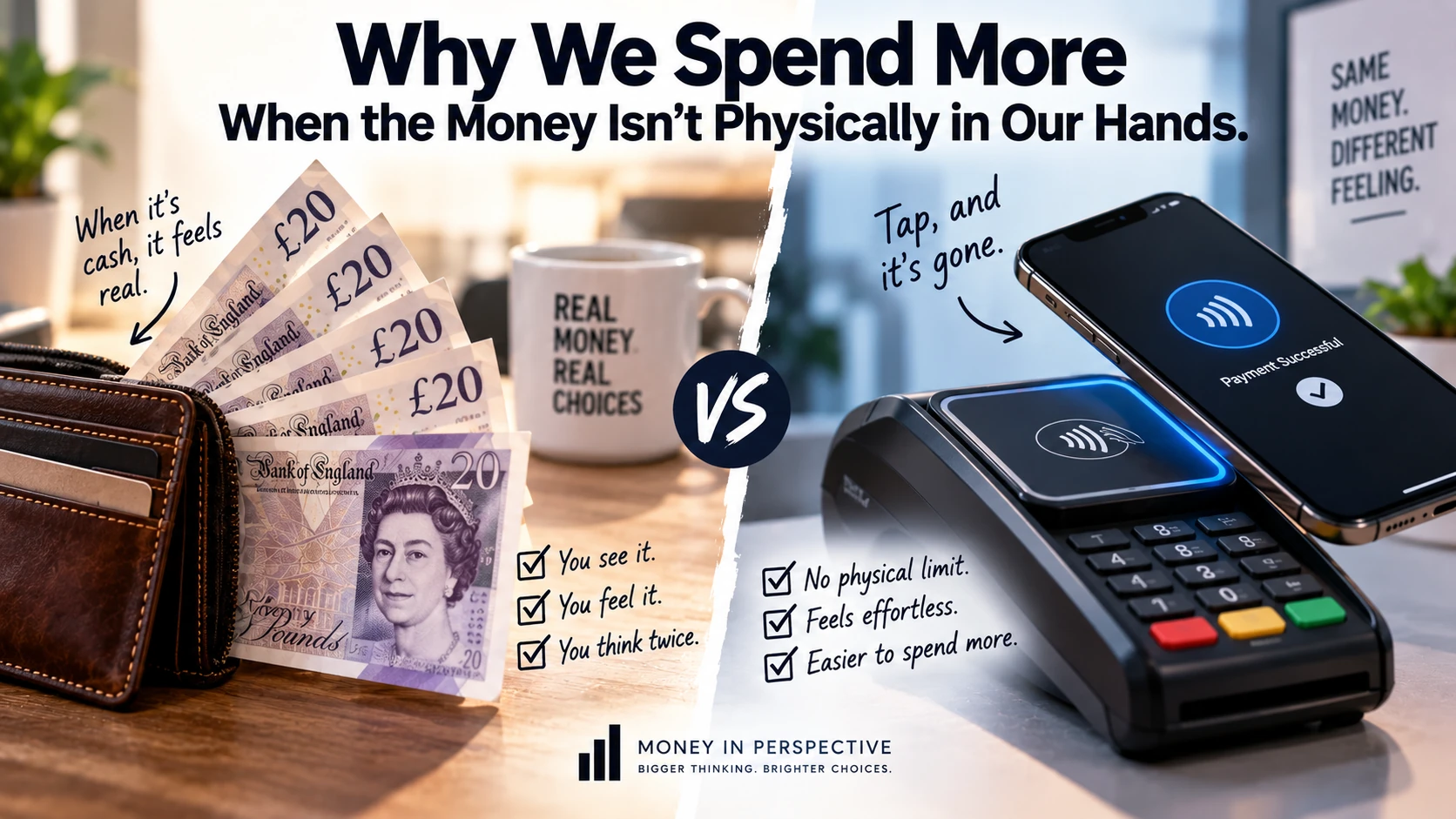
Cash creates feedback.
You open a wallet.
You see notes disappear.
You receive change.
The amount left is visible.
Digital payments remove most of that experience.
The money still leaves, but the physical sensation is gone.
This does not mean cash is morally superior or that everyone should return to carrying envelopes of notes.
Contactless payments are faster, safer in many situations and easier for online life.
The interesting question is what happens to behaviour when payment becomes almost invisible.
Imagine going out with £40 in cash.
After spending £28, you can see £12 left.
There is no app to open and no mental calculation required.
Now imagine using a contactless card all day.
Coffee.
Lunch.
Train.
Small shop.
Another drink.
Each transaction takes seconds.
You may not know the total until you check later.
The spending can feel separate even though the bank account experiences one combined amount.
This matters because people do not respond to money only through logic.
We respond to cues.
Cash provides an immediate cue that resources are declining.
Digital payments provide weaker feedback.
Economists and behavioural researchers have long discussed the “pain of paying” — the idea that paying can create a small psychological cost that affects spending.
The easier and less visible payment becomes, the weaker that signal can feel.
You do not need academic terminology to recognise the difference.
Handing someone a £50 note can feel more significant than tapping a card for £50.
The number is identical.
The experience is not.
This is particularly powerful with small purchases.
A £4 coffee paid in cash removes part of a note.
A £4 contactless payment barely interrupts the conversation.
A £7 snack.
£11 lunch.
£6 transport.
None of these is financially dramatic.
The total can be.
Digital payments make accumulation easy because each purchase feels self-contained.
Online shopping takes this further.
The product appears.
Your address is saved.
Payment details are saved.
One button completes the order.
Convenience removes time from the decision.
That can be excellent when buying something you already planned to purchase.
It can also shorten the distance between desire and transaction.
Before saved payment details, you might have needed to find the card, type the number and enter an address.
Those small inconveniences created time to reconsider.
Today, the whole process can be faster than deciding what to watch on television.
Again, this is not inherently bad.
The technology is doing exactly what users want: making payment easier.
But easier payment can require stronger systems elsewhere.
One useful response is to make spending visible after the transaction.
Banking notifications can help.
If every payment produces an immediate alert, the digital purchase regains some feedback.
£5.20 spent.
£18.99 spent.
£42.00 spent.
The phone that made payment easy now reminds you that money actually left.
This is especially useful with contactless spending because the balance can otherwise become abstract.
A daily or weekly review can do something similar.
You do not need to interrogate every transaction.
Look at the total.
How much did you spend outside bills this week?
Which purchases do you remember positively?
Which were forgettable?
The goal is not guilt.
It is reconnecting individual taps with the combined result.
Another technique is using separate spending accounts.
Transfer a set amount for discretionary spending each week or month.
Use that card for everyday optional purchases.
Now the balance has a clear meaning.
If £120 remains, you know roughly how much flexible money is left without mentally subtracting rent, utilities and future direct debits.
This recreates some of the boundary cash used to provide without requiring physical notes.
Digital wallets can also make multiple cards too easy to access.
Personal card.
Credit card.
Buy-now-pay-later.
Business card.
The payment screen may show several options with very little emotional difference between them.
But the financial consequences differ.
Spending £50 from a current account is not the same as borrowing £50 on expensive credit.
The tap feels identical.
This is why knowing which card is selected matters.
Default settings can shape behaviour.
If a rewards credit card is the default and you always repay it in full, that may work perfectly well.
If credit balances are already growing, making the debit card the easiest option can add useful friction.
The same principle applies to shopping apps.
Remove stored cards from sites where impulse spending is a problem.
Log out.
Delete an app.
Add a waiting period.
These actions sound tiny because they are.
That is exactly why they work.
You are not banning yourself from buying.
You are restoring a few seconds between wanting and paying.
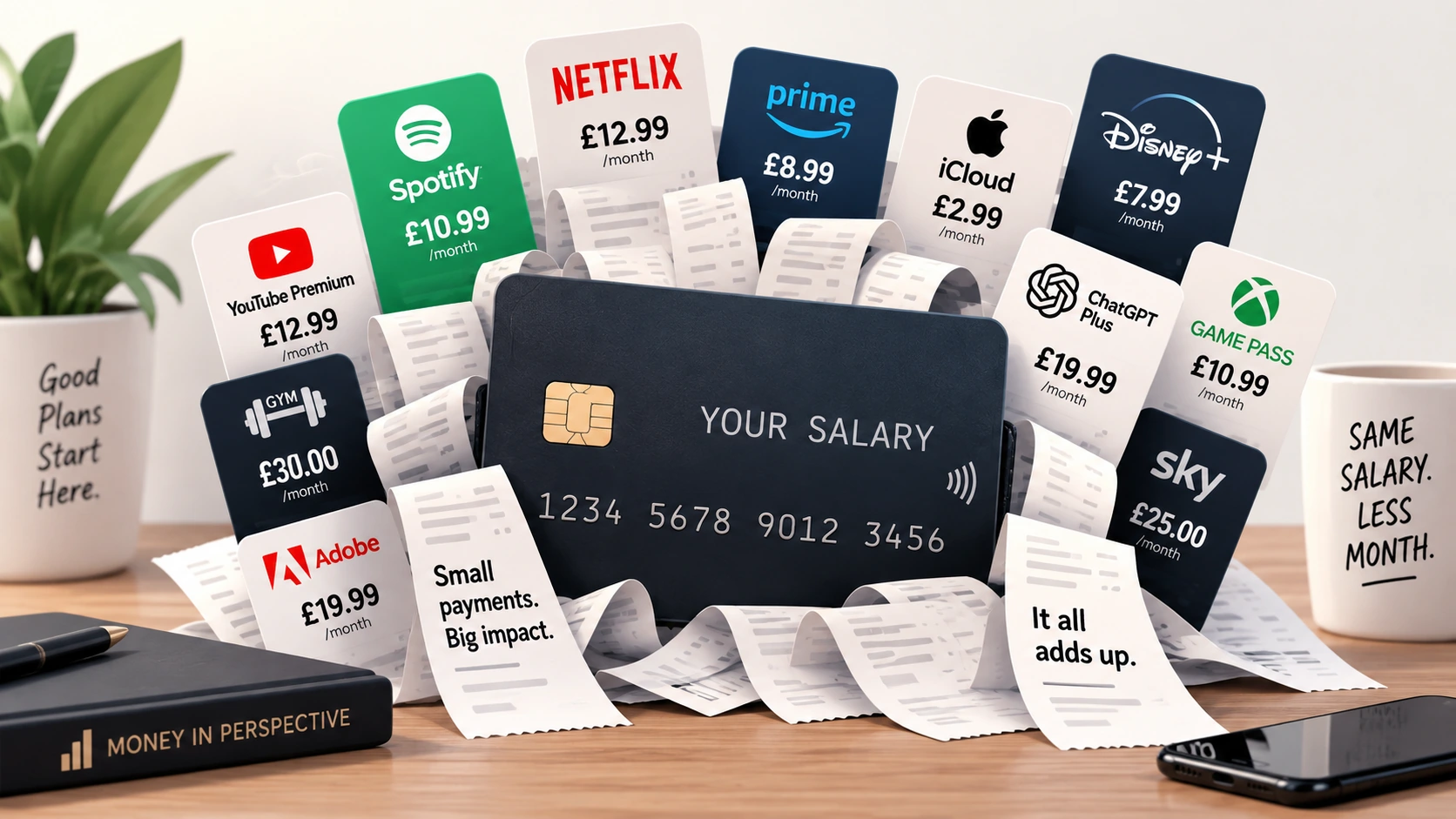
Subscription spending is another form of cashless invisibility.
Money leaves without any action at all.
Streaming.
Software.
Cloud storage.
Memberships.
The payment does not even require a tap.
Automatic billing is extremely useful for services you genuinely want.
It is also easy to ignore after the value falls.
This is why recurring payments deserve periodic review.
Would you sign up again today at the current price?
If yes, keep it.
If no, the automatic system may be preserving a decision you would not actively make now.
Cash also creates natural category limits.
If you take £100 on a night out and decide that is the budget, the physical amount provides a boundary.
Digital payments can make the evening financially open-ended.
One more round.
Taxi instead of bus.
Food on the way home.
The card never visibly empties.
You can recreate the boundary digitally.
Move a set amount to a spending account.
Use a banking app with category limits.
Decide the maximum before going out rather than after.
The best method is whichever creates a meaningful signal for you.
There is also a social reason contactless spending can expand.
Splitting costs becomes easy.
One person pays.
Everyone transfers later.
Rounds are easier.
Group bookings happen quickly.
This can reduce awkwardness and make social life smoother.
It can also weaken the connection between the initial decision and the final amount.
A £35 transfer to a friend three days later may feel detached from the meal that caused it.
Again, visibility is the solution.
Not refusing to socialise.
Cashless spending can also change how children learn about money.
Physical money is concrete.
A child can see five £1 coins become three.
A card looks the same before and after spending.
Parents increasingly use digital accounts and apps designed for children, which can teach balances and transactions effectively.
The important thing is ensuring the number remains meaningful.
If spending always means “tap this card”, the concept of limited resources can be harder to feel.
Adults experience a milder version of the same thing.
Credit makes this even more pronounced.
A credit card allows spending without an immediate reduction in the current-account balance.
The cost appears later.
This can be useful for cash flow and consumer protection where used responsibly.
But it separates purchase from payment.
The meal happens now.
The statement arrives later.
That delay can weaken the emotional link.
If the card is repaid in full every month and spending is tracked, the system can work well.
If balances roll forward, yesterday's convenience becomes tomorrow's fixed cost plus interest.
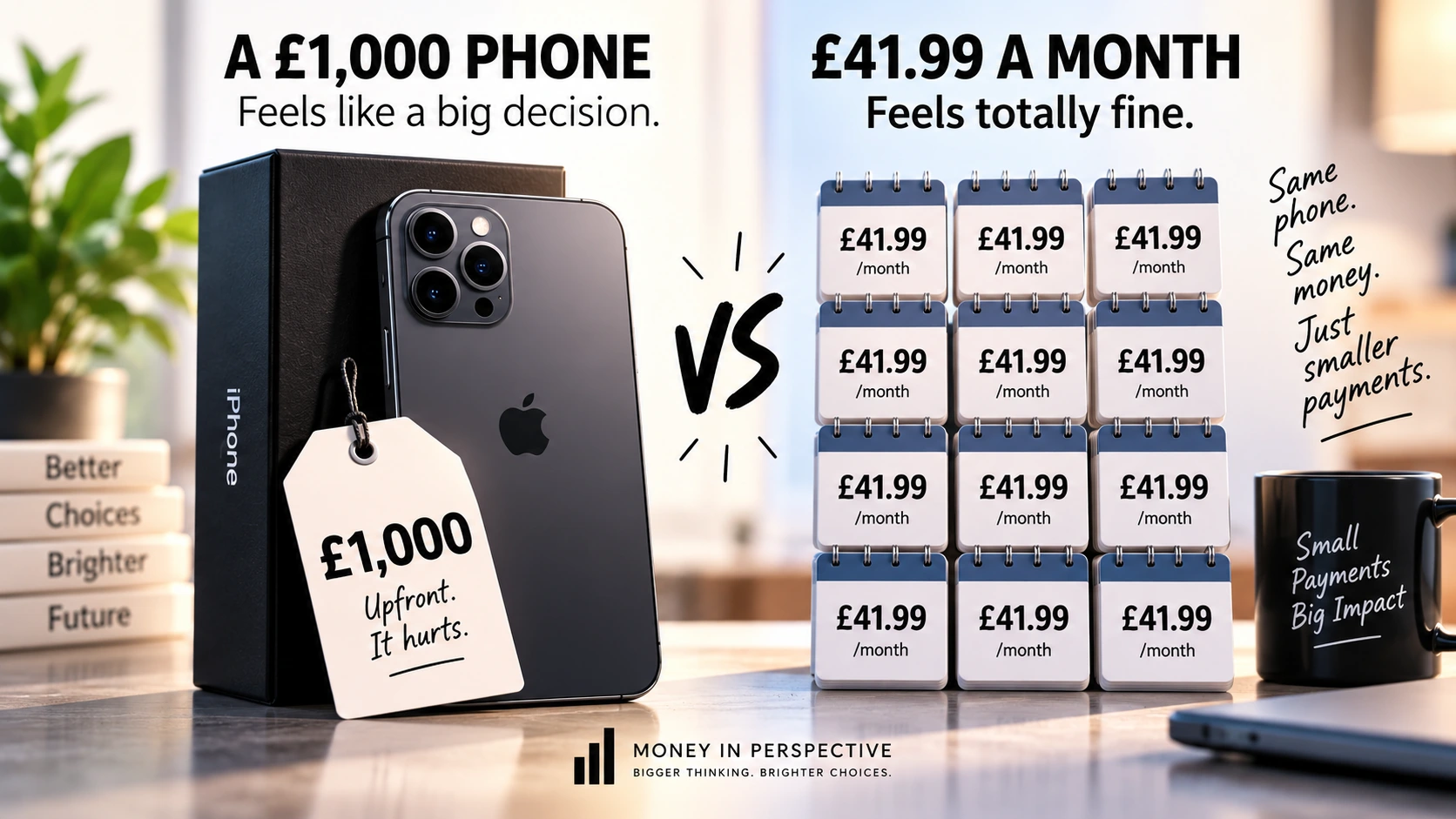
Buy-now-pay-later adds another layer.
A £300 purchase becomes three £100 payments.
The product arrives immediately.
Only part of the cost leaves now.
This can make expensive purchases feel more manageable.
It can also lead to several payment schedules overlapping.
Each one looked affordable when agreed.
Together they can consume future income.
The useful habit is to count all outstanding instalments as already-spent money.
The future payment date does not make the purchase future spending.
The decision already happened.
Cashless systems can also encourage tipping, upgrades and add-ons because digital interfaces present them at the moment of payment.
A screen may offer 10%, 15% or 20%.
A checkout suggests insurance.
An app offers faster delivery.
These options are not necessarily inappropriate.
The important thing is noticing when the payment interface is also a sales interface.
The final step of a purchase is increasingly another opportunity to increase the purchase.
Pause before confirming.
What was the original thing you intended to buy?
Which extras genuinely matter?
This simple check can prevent the convenience of payment from becoming the convenience of upselling.
There is no need to abandon digital payments to spend intentionally.
In fact, digital systems provide tools cash never offered.
Real-time notifications.
Searchable transaction history.
Automatic categorisation.
Spending limits.
Savings pots.
Instant transfers.
The same technology that reduces friction can improve visibility if you use it that way.
This is why the answer is not “cash good, cards bad”.
It is understanding your own behaviour.
Some people spend less using cards because every transaction is recorded and easy to review.
Others find cash more effective because physical limits are clearer.
Some use a combination.
Perhaps fixed and planned spending stays digital while a weekly discretionary amount is moved to a separate account.
The method matters less than the feedback.
Good money management requires knowing that a purchase happened and how it affects what remains.
There is also a difference between financial friction and inconvenience.
You do not need to make every purchase difficult.
Nobody benefits from typing card numbers manually for groceries every week.
Add friction where behaviour is weak.
If late-night shopping is the problem, remove saved payment from those apps.
If social spending is the problem, set the night's budget before leaving.
If subscriptions are the problem, review renewals.
Targeted friction works better than making your entire financial life annoying.
It can help to create one simple cashless rule: never use the ease of payment as evidence that something is affordable.
A tap tells you the payment system works.
It tells you nothing about whether the purchase fits your budget.
That sounds obvious, but payment technology is designed to make the final step feel effortless.
Affordability should be decided before that step.
The future will probably become even more frictionless.
Watches.
Phones.
Biometrics.
Automatic checkout.
Embedded payments.
The physical act of paying may continue disappearing.
That does not mean financial discipline must disappear with it.
The responsibility simply moves from the moment of payment to the system around it.
Set limits.
Review totals.
Keep commitments visible.
Know which account is paying.
Build pauses where impulse is strongest.
Cash made spending visible automatically.
Digital money asks us to create visibility deliberately.
Once you do that, the convenience becomes an advantage rather than a trap.
The money may not be physically in your hands.
It is still very real when it leaves them.
One final exercise can make the difference obvious.
For one week, write down the total of every discretionary contactless or online purchase at the end of each day.
Do not change your behaviour while doing it.
Simply observe.
You may discover that your spending is already exactly where you expect.
That is useful confirmation.
Or you may find that the individual taps are small but the daily total is surprisingly large.
That does not mean the card caused every purchase.
It means the payment method made the pattern easier to overlook.
Visibility is often enough to change behaviour without creating rigid rules.
When the numbers are clear, you can decide which spending was worth it and which merely happened because paying was so easy.