A salary can feel large when it first lands and surprisingly small by the time the month settles down. The money arrives in one clean number. Everything that claims a piece of it arrives separately.
Rent or mortgage. Council tax. Utilities. Insurance. Phone. Broadband. Streaming. Music. Cloud storage. Gym. Software. Car finance. Parking. Childcare. Food. Delivery memberships. An app you meant to cancel. Another app you forgot existed. By the time the account quietens down, it can genuinely feel as though your salary disappeared.
It usually did not disappear. It was allocated.
That distinction matters because “Where did all my money go?” sounds like a mystery. “Which commitments did my money fund?” is a much more useful question.
One of the biggest changes in modern spending is that more of life arrives as a monthly charge. Services that once required a deliberate purchase can now become permanent background costs. You no longer buy an album. You subscribe to music. You do not necessarily buy software. You rent access each month. You do not always buy a phone outright. You finance it. Entertainment, storage, fitness, deliveries, technology and even cars can all become recurring payments.
Monthly pricing is powerful because it makes expensive things feel small.
£600 sounds significant.
£12.99 a month sounds manageable.
Both can describe the same financial commitment over time.
The problem is not the subscription model itself. Subscriptions can provide excellent value. A music service may cost less than buying several albums each month. Cloud storage can protect thousands of photographs. A gym membership may be one of the best purchases in the household if it is used consistently.
The problem is accumulation.
Each individual payment can pass the affordability test while the collection quietly becomes large.
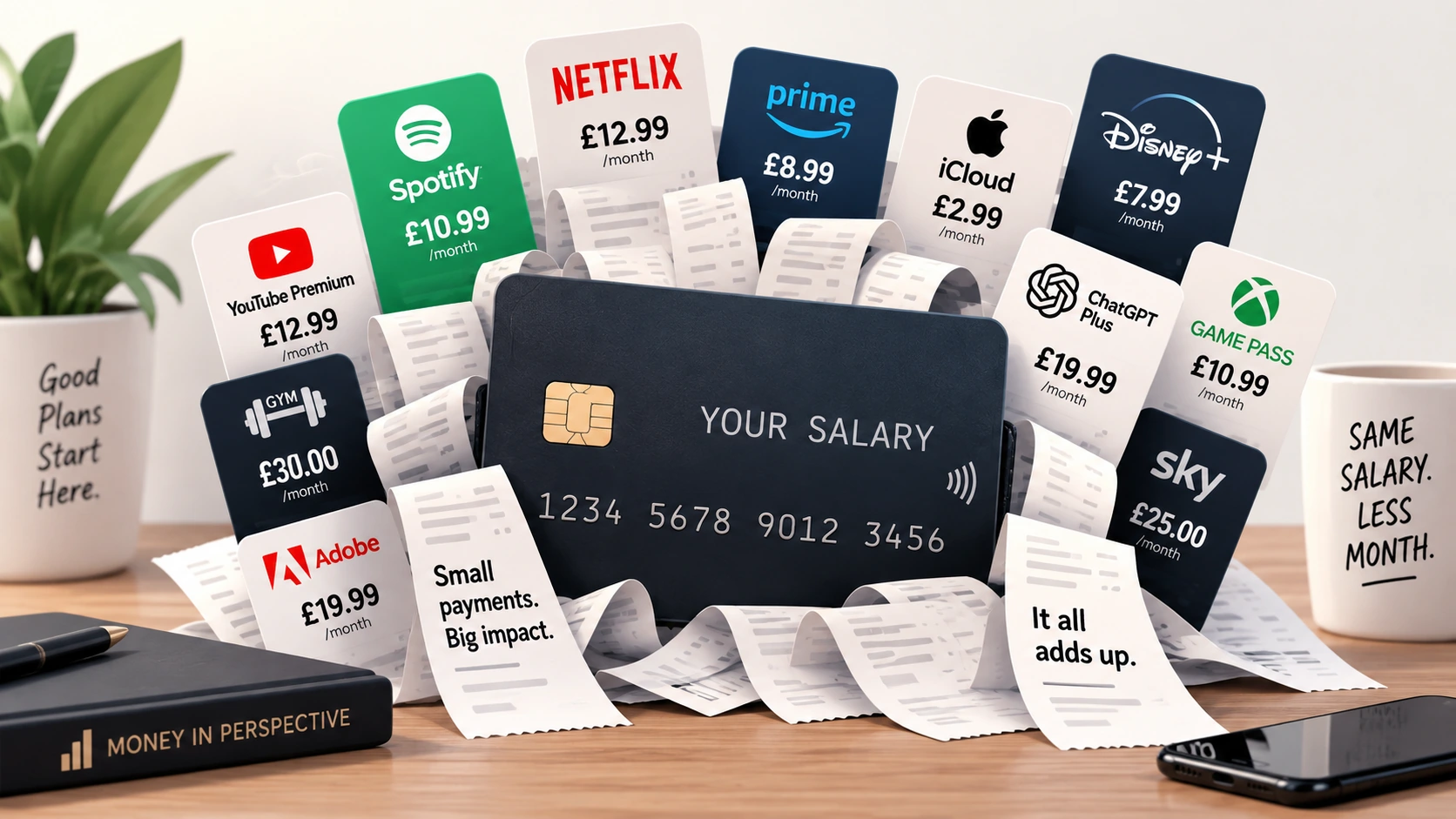
Imagine a household with £11.99 for music, £15.99 for video, £8.99 for another video service, £6.99 for cloud storage, £20 for software, £35 for gym membership, £10 for a delivery membership and £65 for phone finance and service.
Nothing there looks outrageous on its own.
Together, it is almost £175 a month.
That is more than £2,000 a year.
Add car finance, memberships, children's activities and other contracts and the fixed monthly base can become much larger before food, fuel or social spending begins.
This is why salary can feel as though it disappears even when day-to-day spending is relatively sensible. The month may already be heavily committed before you make a single discretionary decision.
Subscriptions also benefit from invisibility.
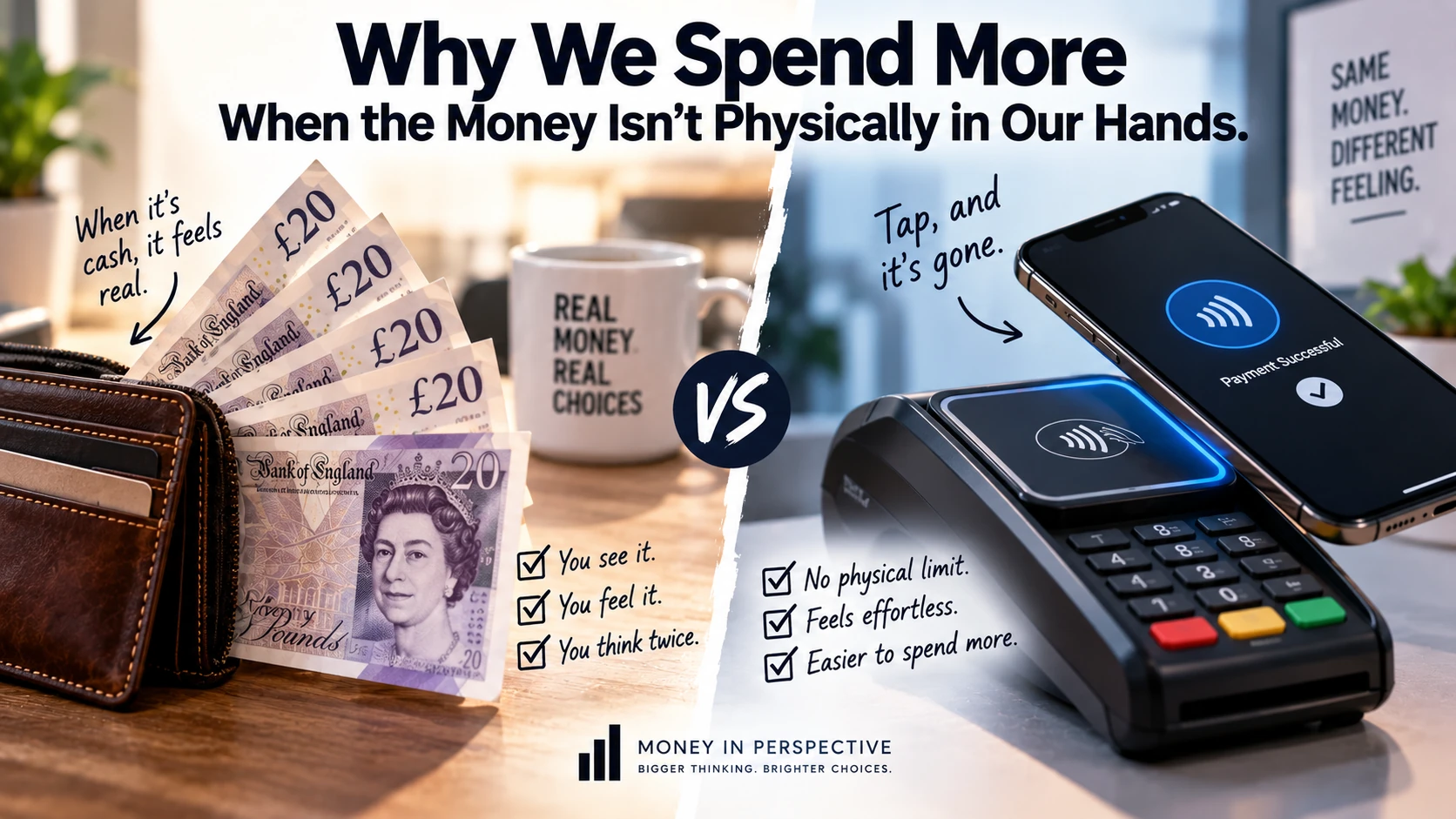
A cash purchase creates a moment. You decide, pay and feel the money leave.
A recurring payment often begins with excitement and then becomes part of the plumbing of the account. Three months later, you may barely notice it. Twelve months later, the service can still be charging even if the original reason for subscribing has gone.
Free trials make this easier. The first decision is “Would I like this for free?” The second decision, the one that costs money, is outsourced to future you. Future you is busy, forgets the renewal date and discovers three months later that the free trial became a £30 expense.
Again, the answer is not avoiding every free trial. It is treating the end date as part of the sign-up. Put a reminder in the calendar before the renewal. The service can then earn the right to stay.
There is another psychological feature of subscriptions: cancellation feels like loss.
Once something becomes part of routine, removing it feels more painful than never having bought it. You may not use the service much, but cancelling means giving up access. That can be enough to keep weak subscriptions alive.
This is why “Do I use it?” is sometimes too generous a question. A better one is: “Would I sign up again today at this price?”
That resets the decision.
If the answer is yes, keep it confidently.
If the answer is no, inertia may be doing more work than value.
Annualising the cost helps too.
£9.99 a month is around £120 a year.
£19.99 is around £240.
£49.99 is around £600.
The monthly figure is not dishonest. It is simply one way of presenting the price. Converting recurring costs back into annual numbers makes them easier to compare with other goals.
Would you pay £240 today for another year of this service?
Would you pay £600 today for the convenience this product provides?
If yes, good. The subscription may be excellent value.
If the annual total suddenly feels uncomfortable, that is useful information.
Phone contracts are a strong example because they blend several costs into one familiar payment. A premium device, data plan, insurance and extras can create a bill that feels like “what phones cost now.” When the device finance eventually ends, upgrading immediately can keep the payment permanent.
Keeping the phone for another year can release hundreds of pounds without changing much about daily life.
Cars can create the same effect at a larger scale. A £450 monthly payment becomes normal because it is predictable. The household stops thinking of it as a major purchase and starts thinking of it as “the car payment.” At renewal, moving to another financed vehicle can preserve the expense indefinitely.
This is where fixed costs become more important than occasional spending.
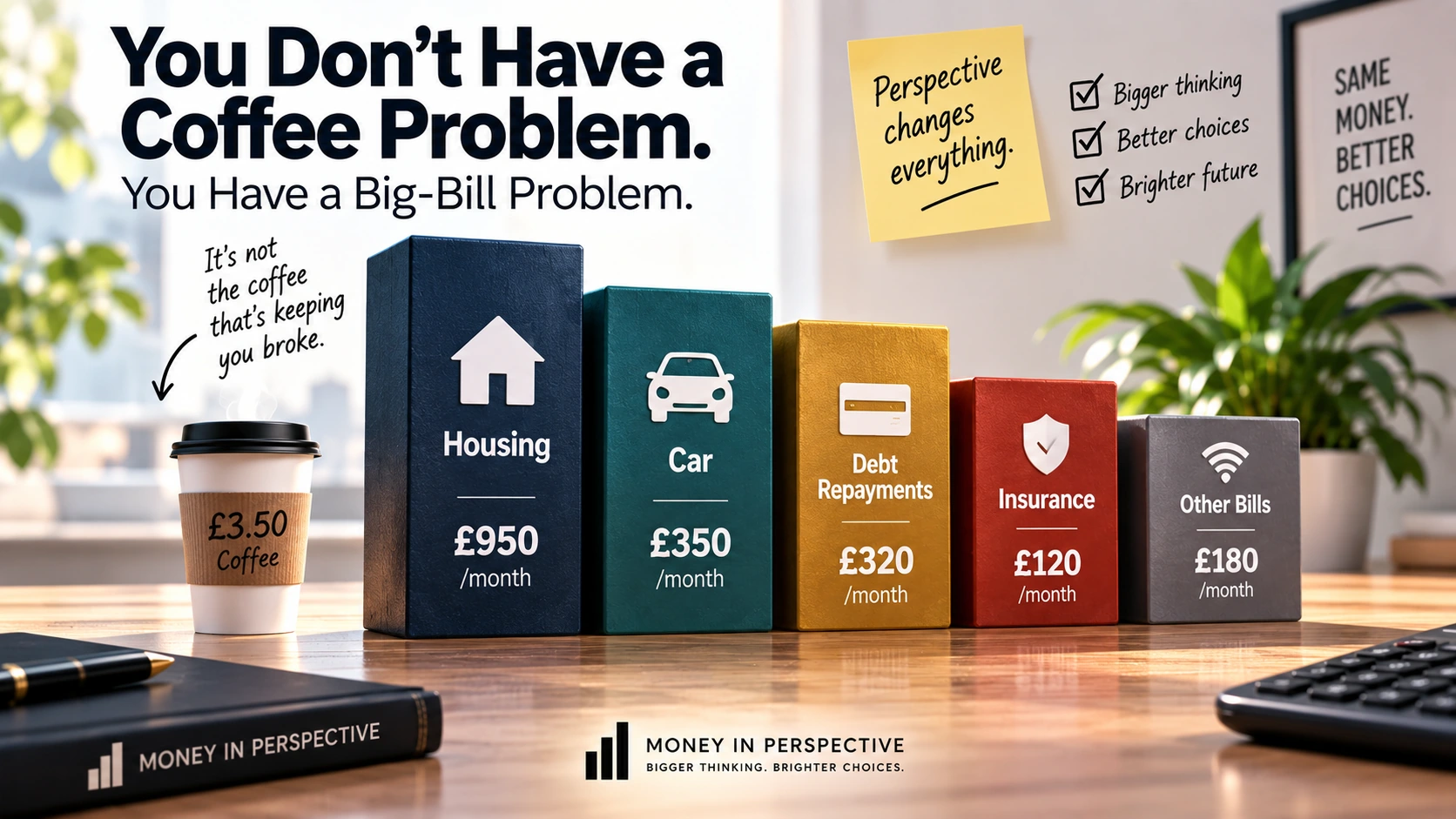
A £4 coffee can be skipped tomorrow.
A £450 finance agreement is still due.
That does not make the car a bad decision. It means large recurring commitments deserve more thought because they reduce flexibility.
The more of your salary that is promised before payday, the less room you have for everything else.
That is the real issue with subscription-heavy lifestyles: they can make a good income feel inflexible.
Suppose two people each bring home £3,000 a month.
Person A has £1,800 of fixed commitments.
Person B has £2,600.
The salary is identical. The experience of the month is not.
Person A has room to absorb surprises, save or spend spontaneously.
Person B may feel broke despite earning the same amount because almost all of the money already has a job.
This is why personal finance is not only about earning more. It is also about protecting margin.
Margin is the gap between income and committed spending.
That gap is where savings, emergencies, travel, generosity and choice live.
Subscriptions can erode margin slowly because each new commitment seems too small to matter.
One of the easiest ways to regain visibility is a recurring-payment audit.
Open your bank statement and app-store subscriptions.
List every payment that repeats automatically.
Do not cancel anything yet.
First, group them.
Essential or high value.
Useful but optional.
Rarely used.
Forgotten.
The last two categories usually contain the easiest savings.
You may discover that several services overlap. Two cloud-storage plans. Multiple streaming services. Several productivity apps. A premium membership attached to a service you now use occasionally.
Duplication is common because subscriptions are purchased at different times for different reasons.
Households should audit collectively too. One person may pay for a service already included in someone else's family plan. Broadband may include a streaming benefit. A bank account may include insurance that is also being purchased separately.
Finding overlap can save money without reducing anything you actually use.
Rotation can work for entertainment services. You may not need every streaming platform active all year. Watch the series you care about, cancel, then activate another later if terms allow.
The purpose is not turning leisure into a complicated optimisation exercise. It is refusing to pay twelve months for something you wanted for six weeks.
There is also value in separating recurring bills from discretionary spending physically.
A bills account can hold money for fixed commitments.
A spending account can contain what is actually available to use.
This prevents a large payday balance from pretending that rent, finance and subscriptions are spare cash.
Automation then works in your favour rather than against you.
The same technology that makes subscriptions easy can make savings automatic too.
Move money to savings on payday before discretionary spending expands.
Fund annual costs monthly.
Create a buffer.
The goal is not to fight every direct debit manually. It is to make the automatic system include things that benefit future you as well.
There is a temptation to attack subscriptions because they are easy to list. Do not ignore larger structural costs in the process.
Housing, transport, childcare and debt may dominate the budget far more than streaming ever will.
If cancelling every app saves £70 but car finance and housing consume £2,000, the subscriptions are only part of the story.
Start with the complete picture.
Which costs are genuinely large?
Which are fixed?
Which can change at renewal?
Which provide weak value?
This prevents a £10 subscription receiving more emotional attention than a £500 monthly commitment that deserves review.
Earning more can help too. There is a limit to cost cutting.
But higher income is most powerful when some of the increase remains uncommitted. If every pay rise immediately becomes another monthly payment, the salary can rise while financial freedom remains the same.
This is why allowing a pay rise to exist for a few months before upgrading the lifestyle can be valuable. Let the margin widen. Then choose which improvements are worth making permanent.
None of this means subscriptions are the enemy.
They solve real problems.
They can be cheaper, more flexible and better than buying products outright.
A good subscription earns its payment repeatedly.
The danger is the subscription that stopped earning attention months ago but continues earning money.
The strongest recurring costs are the ones you would actively choose again.
The weakest are the ones you keep because cancellation never felt urgent.
If your salary seems to vanish every month, look beyond the dramatic purchases.
The explanation may be dozens of small promises made to future income.
Your salary did not disappear.
It arrived already surrounded by commitments.
The solution is not necessarily earning twice as much or never enjoying anything.
It is deciding which commitments still deserve to follow you into next month.
A useful final step is to calculate what your recurring commitments cost as a percentage of take-home pay. The exact right percentage will vary enormously between households, so the number is not a target. It is a visibility tool.
If £2,100 of a £3,000 take-home salary is already committed before food and discretionary spending, you immediately understand why the month feels tight. If only £1,300 is committed, the problem may lie elsewhere.
This calculation can also improve future buying decisions. Before adding another monthly payment, ask not only whether £25 is affordable today, but whether you want another £25 of next month's salary to arrive already spoken for.
That question is especially useful with products marketed through instalments. Monthly affordability can be real, but every new payment reduces future flexibility. Enough individually affordable payments can eventually create a household that cannot comfortably adapt when circumstances change.
The goal is not to fear commitments. Rent, insurance, phone service and many subscriptions support ordinary life. The goal is to reserve recurring space for the things that matter most rather than allowing the list to grow accidentally.
A salary feels much larger when some of it arrives without instructions.
That uncommitted margin is not wasted money waiting to be spent. It is financial breathing room.
And sometimes the best way to feel richer is not adding another service. It is allowing more of your income to remain yours after payday.