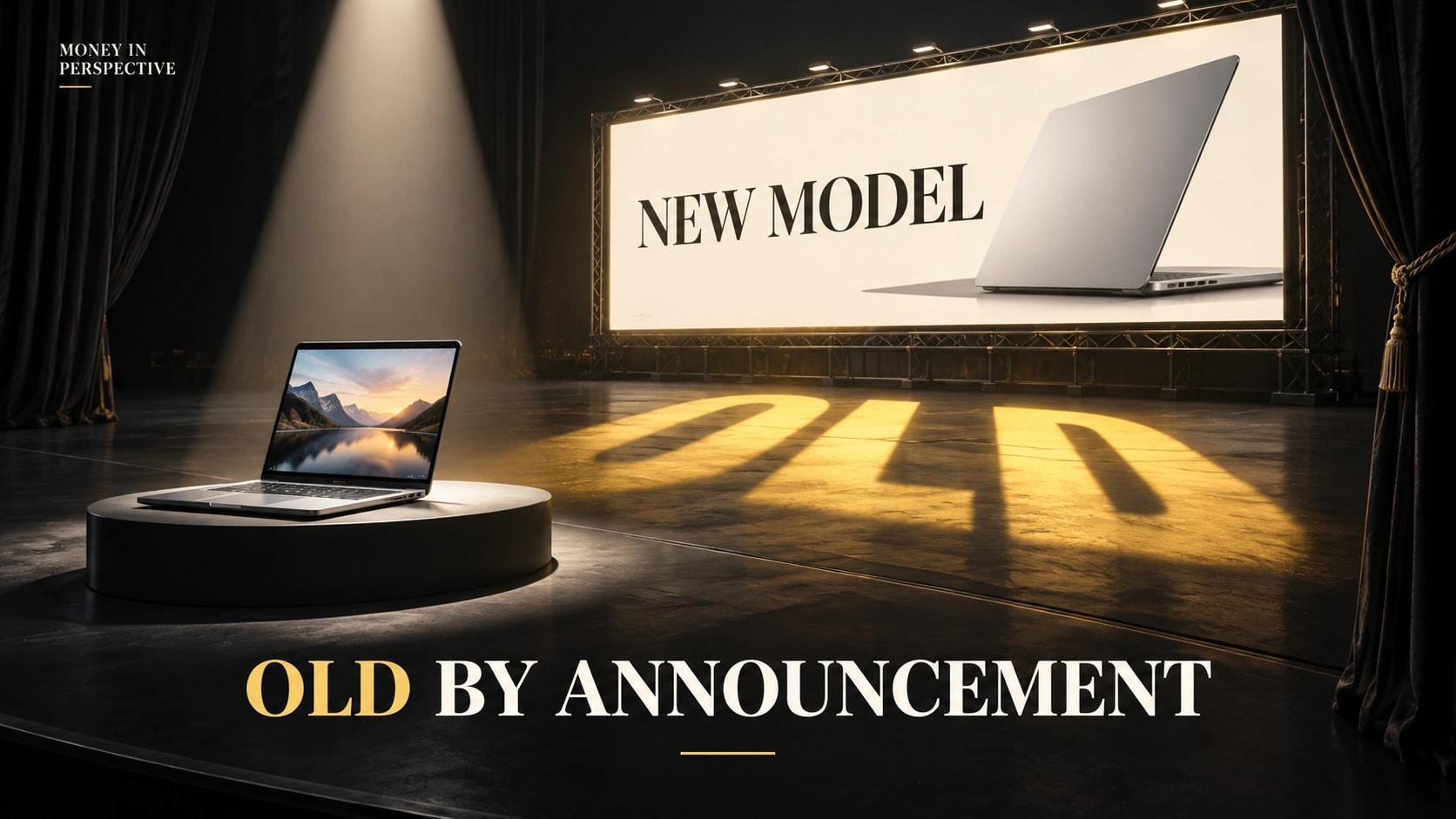
Your phone can work perfectly on Monday and feel strangely outdated on Tuesday.
Nothing happened to the phone.
The battery did not suddenly shrink.
The camera did not become worse overnight.
Your applications still open.
Then a new model launches.
The screen is brighter.
The camera can zoom further.
The processor is faster.
A new colour appears.
Suddenly the device in your hand looks older than it did twenty-four hours ago.
This is one of the most powerful effects in consumer technology.
Products do not need to stop working before we replace them.
They only need to feel behind.
Technology companies operate in a difficult commercial environment.
Many of their best products are extremely durable.
A premium phone can remain useful for years.
A good laptop can work far beyond the point at which the manufacturer releases several replacements.
From a consumer perspective, this is excellent.
From the perspective of a company that needs to keep selling devices, long replacement cycles create a challenge.
New products therefore need to make existing owners want something better.
That is not automatically sinister.
Technology genuinely improves.
Better cameras.
Faster processors.
Longer battery life.
Improved displays.
New safety features.
Better accessibility.
A new product should be marketed around its improvements.
The interesting question is how those improvements change our perception of what we already own.
Comparison creates dissatisfaction surprisingly quickly.
Before the launch, your camera is simply your camera.
Afterward, it becomes the camera without the new zoom feature.
Your screen becomes the old refresh rate.
Your laptop becomes the slower processor generation.
The previous product has been redefined through what it lacks.
This is how technology ages psychologically faster than it ages functionally.
Product names reinforce the hierarchy.
Pro.
Max.
Ultra.
Plus.
Studio.
The language creates a ladder.
The base product is capable.
The premium product is for people who want the serious version.
Again, these models can contain genuine improvements.
The marketing effect is that ordinary adequacy begins to feel like compromise.
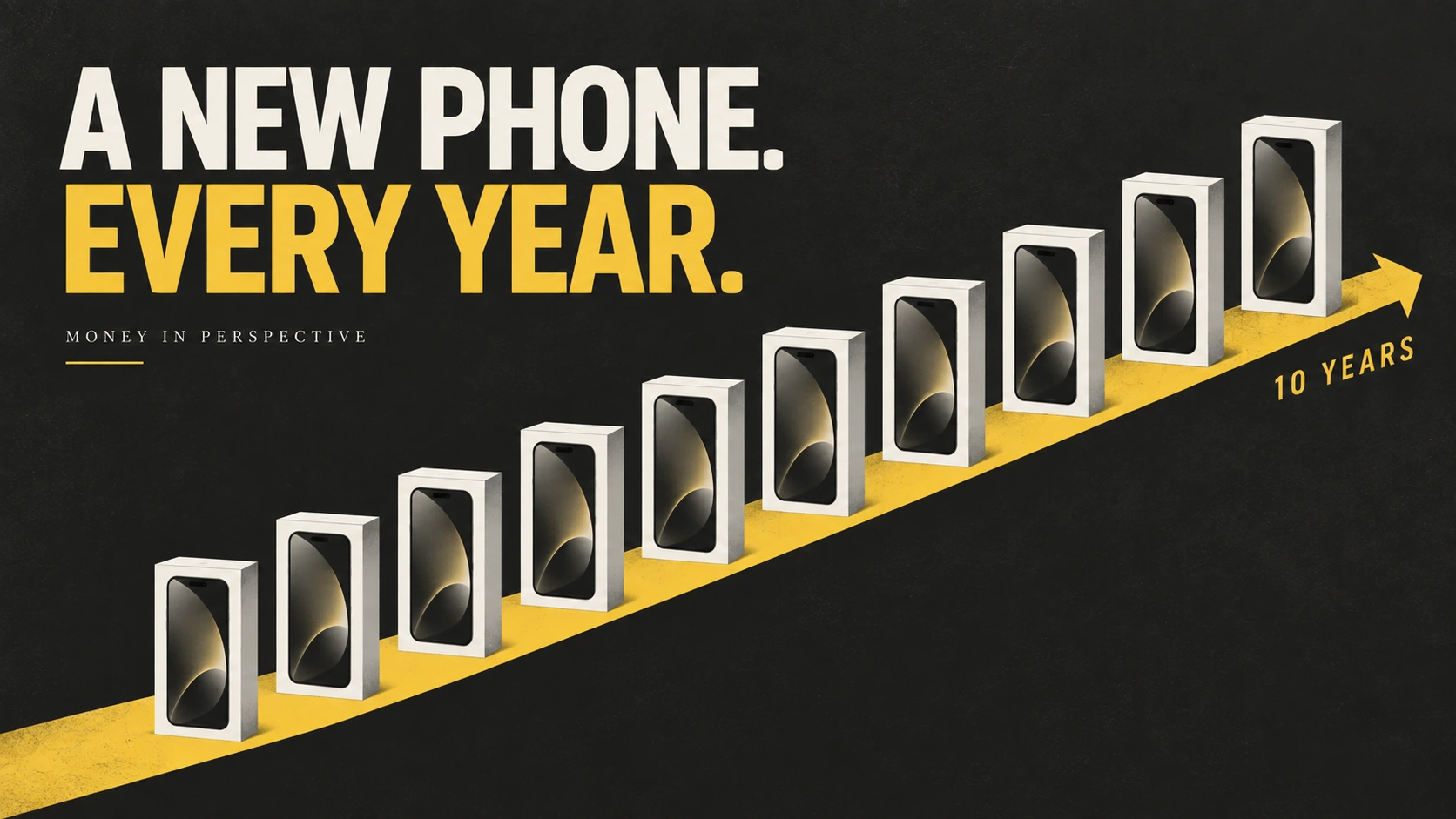
Annual launch cycles amplify this.
Every year brings a new comparison.
A phone kept for four years experiences four generations of advertising explaining what it cannot do.
Even if the differences are small individually, the owner receives repeated reminders that the device is no longer current.
This can create upgrade pressure without any actual failure.
Software contributes as well.
A device may receive a new operating-system update where some headline feature is restricted to newer hardware.
Sometimes there are legitimate technical reasons.
New features may require processors, sensors or memory the old device lacks.
From the user's perspective, however, the result is the same:
the device still works but now visibly sits outside the newest experience.
This can accelerate perceived ageing.
Battery degradation is another major factor.
Batteries are consumable components.
After several years, a phone that once lasted all day may need charging by late afternoon.
The entire device can begin to feel old even though the problem is concentrated in one replaceable component.
For some products, a battery replacement can dramatically improve usability and extend life.
Comparing the cost of repair with replacement should therefore happen before assuming the whole device is finished.
Storage creates similar pressure.
A phone with limited storage can feel outdated once photographs, video and apps accumulate.
Cloud services or a storage cleanup may solve the immediate problem.
Or perhaps your needs have genuinely changed and more storage is worth paying for.
The useful step is identifying the real limitation.
“Old” is too vague.
Ask what the device is failing to do.
Is it slow during a specific task?
Battery poor?
Storage full?
Camera insufficient?
Software unsupported?
Screen damaged?
Once the problem is specific, replacement becomes easier to evaluate.
A good upgrade should solve something you actually experience.
This is very different from upgrading because a launch event created a problem you had never noticed.
One of the best tests is to avoid consuming launch coverage temporarily.
If your current device felt completely adequate last week, give the excitement a month.
Continue using it.
Notice whether the limitations are real.
Do you repeatedly wish you had the new feature?
Or does the desire fade as soon as technology websites stop discussing it?
This waiting period is powerful because launch marketing is designed to concentrate attention.
The new device appears everywhere.
Reviews.
Advertisements.
Social media.
Influencers.
Friends.
The old one cannot compete emotionally during that period.
Time restores perspective.
Trade-in offers create another form of urgency.
“Get up to £400 for your current device.”
This sounds like value you will lose if you wait.
Trade-ins can genuinely reduce upgrade cost and simplify selling.
But the £400 is not free money.
Your old device has value.
The relevant question is whether the net upgrade cost is worth paying.
Suppose a new phone costs £1,100 and your existing phone receives a £350 trade-in.
You are still spending roughly £750 to move from the old experience to the new one.
Would you pay £750 for those differences?
That framing is more useful than focusing on the trade-in credit.
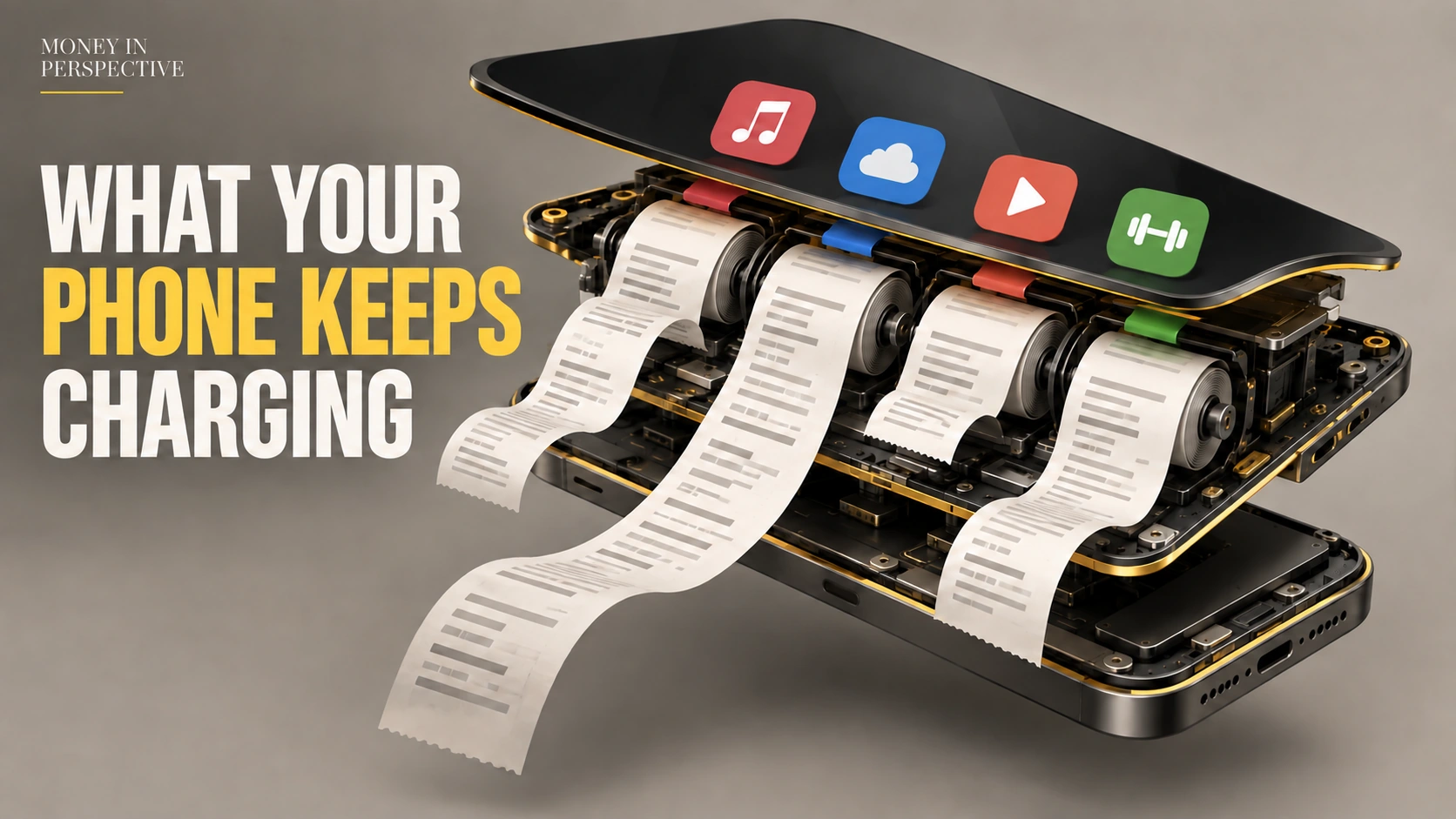
Finance plans make the upgrade feel smaller again.
£750 becomes another £31 or so per month across two years.
Now the decision is framed as one monthly amount rather than a functioning phone versus a £750 replacement cost.
This is why financing and annual product cycles work so well together.
The old payment ends.
A new product launches.
The next payment begins.
The household can remain permanently inside the upgrade cycle without ever making one dramatic purchase.
Breaking that cycle for even one year can produce meaningful savings.
If the old phone is paid off and still works, move to a cheaper service plan where appropriate and keep the difference.
One extra year from a premium device can dramatically improve its cost per year.
Suppose a £1,000 phone is kept for two years.
Ignoring resale and other costs, that is £500 per year.
Keep it for four and the purchase cost averages £250 per year.
The same device becomes far better value simply through time.
This is why software support matters enormously.
A product receiving security and operating-system updates for many years provides the option to keep it safely for longer.
When buying technology, long support can be more financially valuable than a feature you use twice.
Repairability matters too.
Screen replacement.
Battery service.
Storage upgrades where possible.
Keyboard repair.
Ports.
A product that can be economically repaired has a longer potential life than one where a small failure effectively requires replacement.
Consumers increasingly care about this because technology ownership cost extends well beyond the initial purchase.
There is also an environmental reason to keep devices longer.
Electronics require materials, manufacturing and transport.
Extending useful life reduces the frequency with which new products need to be purchased and old ones processed.
You do not need to keep unusable technology indefinitely.
The strongest outcome is keeping it while useful, then selling, passing on or recycling it responsibly.
The second-hand market can help separate “old to me” from “useless”.
A three-year-old phone replaced by one person may become an excellent upgrade for another.
That device still contains value.
Selling or passing it on extends use and can reduce the net cost of your upgrade.
This is better than placing it in a drawer where both financial and practical value continue falling.
Laptops show the same psychological ageing.
A new processor launches with impressive benchmark improvements.
For somebody rendering video every day, those gains may save meaningful work time.
For someone using email, spreadsheets and web browsing, the current laptop may already perform every task instantly enough that more speed changes very little.
Benchmarks measure performance.
They do not automatically measure personal value.
The same is true of cameras.
A new phone may capture technically better images.
If most photographs are viewed on a phone screen and shared casually, the improvement may be difficult to notice after the initial excitement.
A professional photographer or serious enthusiast may value the differences enormously.
Needs matter.
This is why generic upgrade advice is weak.
People use technology differently.
A content creator can justify frequent camera or computer upgrades when the hardware directly affects income.
A casual user may gain almost nothing from the same expenditure.
The device is the same.
The economics are not.
Tech companies are not wrong for wanting you to upgrade.
Selling new products is their business.
They spend enormous amounts on research and need customers to value innovation.
The consumer's job is simply different.
You are not responsible for maintaining the replacement cycle.
Your goal is to get the most value from the technology you buy.
Sometimes that means upgrading immediately because a new product solves a real problem.
Sometimes it means keeping the current device until the battery gives up.
One useful rule is to upgrade based on limitations, not anniversaries.
Do not replace the phone because it is two years old.
Replace it because it no longer meets your needs at a price where repair or continued use makes less sense.
This moves the decision from marketing calendar to personal utility.
Another rule is to list the three improvements you expect to notice every week.
If you cannot find three, the upgrade may be more about novelty than function.
That can still be a valid reason.
Technology is enjoyable.
People spend on hobbies.
You are allowed to buy the new phone because you love phones.
The financial mistake is pretending every enthusiastic purchase is necessary.
There is freedom in saying:
“I do not need this. I want it, I can afford it, and I am choosing to spend the money.”
That is more honest than inventing urgent shortcomings in a perfectly functional device.
It also makes it easier to decide when the desire is not worth the price.
Age and usefulness are not the same thing either.
A phone can be four years old and still be excellent.
Another can be eighteen months old and genuinely unsuitable because your work or needs changed dramatically.
Calendar age is easy to measure, which is why it becomes a convenient reason to replace.
Condition and usefulness are more important.
A simple annual device check can help.
Look at battery health, storage, software support, physical condition and the tasks you regularly perform.
If all five remain acceptable, the case for replacement is mostly about desire rather than necessity.
That is not a criticism.
Desire is allowed.
The distinction simply makes the spending clearer.
It also helps to calculate the cost of one more year.
If keeping the current phone for another twelve months saves an £800 upgrade, that year of continued use has substantial financial value.
Even if the eventual trade-in value falls by £150, you may still be hundreds of pounds better off.
This is why depreciation should not automatically scare people into upgrading early.
“Sell it before it loses more value” only makes sense if you already have a strong reason to replace it.
Otherwise you are spending far more on the new device to avoid a smaller decline in the old one's value.
Technology marketing naturally focuses on what changed this year.
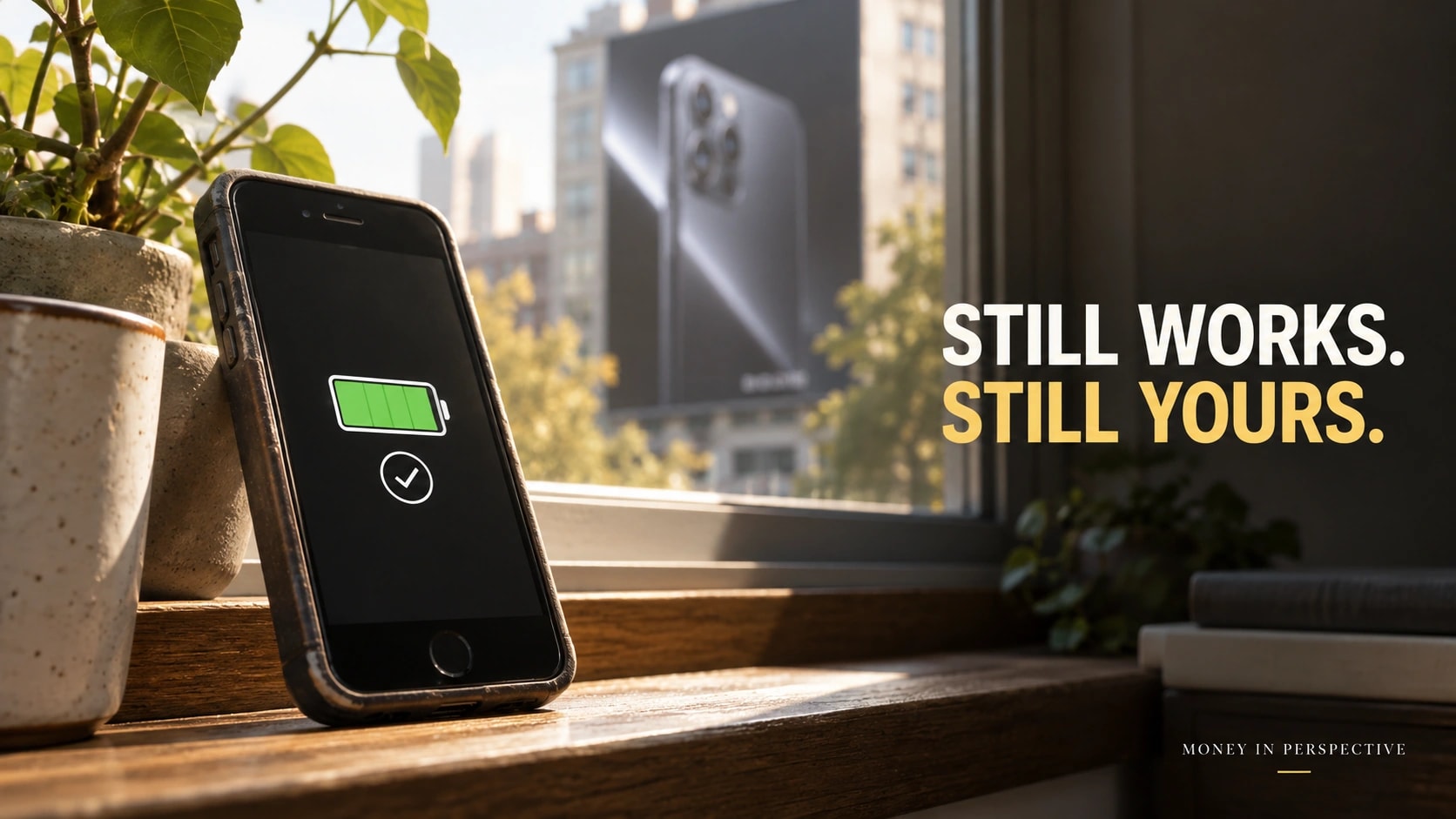
Consumers can focus on what still works.
If the device remains secure, supported and capable, age alone is not a defect.
Sometimes the most financially efficient upgrade cycle is the one that ignores the calendar completely and waits until a real limitation appears.
Marketing will continue making old devices look old.
That is its job.
Every new generation needs a story.
Your device does not receive the story.
It simply continues doing whatever it did yesterday.
Before upgrading, ignore the launch for a moment.
Pick up the device you already own.
Does it still work well?
Does it still perform the things you actually do?
Does its main problem have a cheaper fix?
If yes, the most advanced technology decision may be keeping it.
Nothing makes a premium device better value quite like refusing to replace it while it is still good.