You probably do not need the new iPhone.
That sentence is easy to say and surprisingly difficult to believe during launch season.
The new model appears with better cameras, faster performance, a brighter display, new materials and at least one feature presented as though ordinary life has been waiting impatiently for it. Review videos arrive. Comparisons fill social media. Your current phone, which worked perfectly well yesterday, suddenly feels older.
This is not because you are irrational.
Consumer technology is designed and marketed around improvement.
New devices are genuinely better in many ways.
The question is not whether the new iPhone is better than the one you already own.
It probably is.
The useful question is whether it is better enough to justify the cost of replacing a device that may still meet your needs comfortably.
That distinction matters because “better” is easy to prove.
Better value is personal.
Start with what your current phone actually does badly.
Not what the new model does better.
What problem do you experience today?
Battery no longer lasts?
Storage constantly full?
Camera genuinely limits something you care about?
Phone is damaged?
Performance has become frustrating?
Security or software support is ending?
Those are real upgrade reasons.
“My phone is two years old” is not a functional problem.
Age can correlate with problems, but the calendar alone does not make a device inadequate.
This is where annual launches affect perception.
A phone that feels fast before a new model is announced can feel slow after you watch a benchmark comparison.
The hardware did not change.
The reference point did.
That matters because technology companies do not need your device to fail before selling you another one.
They need the new device to make the old one feel less desirable.
There is nothing sinister about a company wanting to sell products. That is the business.
Your job as the consumer is simply different.
You are trying to get the most value from what you buy.
Those goals do not always align.
Camera improvements are one of the strongest upgrade arguments because phones have become the main camera for many people.
Better low-light performance, stronger zoom, improved video and more reliable portraits can matter a great deal.
For parents, travellers, content creators or people who genuinely care about photography, the improvement may be worth paying for.
But ask how photographs are actually used.
If most are viewed on phone screens, shared in messages and uploaded to social media, the difference between a very good two-year-old camera and the newest one may matter less than marketing suggests.
For a professional creator, the same difference could save time or improve paid work.
Same phone.
Different value.
Performance works similarly.
New chips are faster every year.
That is technically impressive.
But many everyday tasks already happen quickly on older premium phones.
Messages.
Email.
Banking.
Maps.
Social media.
Music.
Web browsing.
If these tasks feel instant enough now, another percentage of processor performance may have almost no effect on daily life.
Performance matters when you actually push the device.
Video editing.
Gaming.
Heavy creative applications.
Professional workloads.
If you do not, buying extra processing power can be like paying for a sports car to sit in city traffic.
The capability is real.
The benefit may not be.
Battery life is different because almost everyone notices it.
A phone that needs charging halfway through the day creates genuine friction.
But battery decline does not necessarily mean the whole phone needs replacing.
Batteries wear out.
If the device is otherwise excellent, a battery replacement can restore much of its usefulness for far less than a new phone.
The exact economics depend on model, repair cost and condition.
The important habit is comparing repair with replacement rather than treating replacement as automatic.
Storage can also create upgrade pressure.
Photos, videos and apps accumulate.
A phone that once had plenty of room becomes permanently full.
Before replacing it, check what is actually using the storage.
Old videos.
Downloaded media.
Duplicate photographs.
Unused applications.
Sometimes cleanup buys another year.
Sometimes your needs genuinely exceed the device and a larger-storage model makes sense.
Again, identify the actual problem first.
Software support deserves more attention than it usually gets.
A phone still receiving security updates and current software can remain useful for years.
When support ends, the case for replacement becomes stronger, especially where security-sensitive applications are involved.
This is why long software-support promises are valuable. They increase the potential life of the device and therefore improve the economics of keeping it.
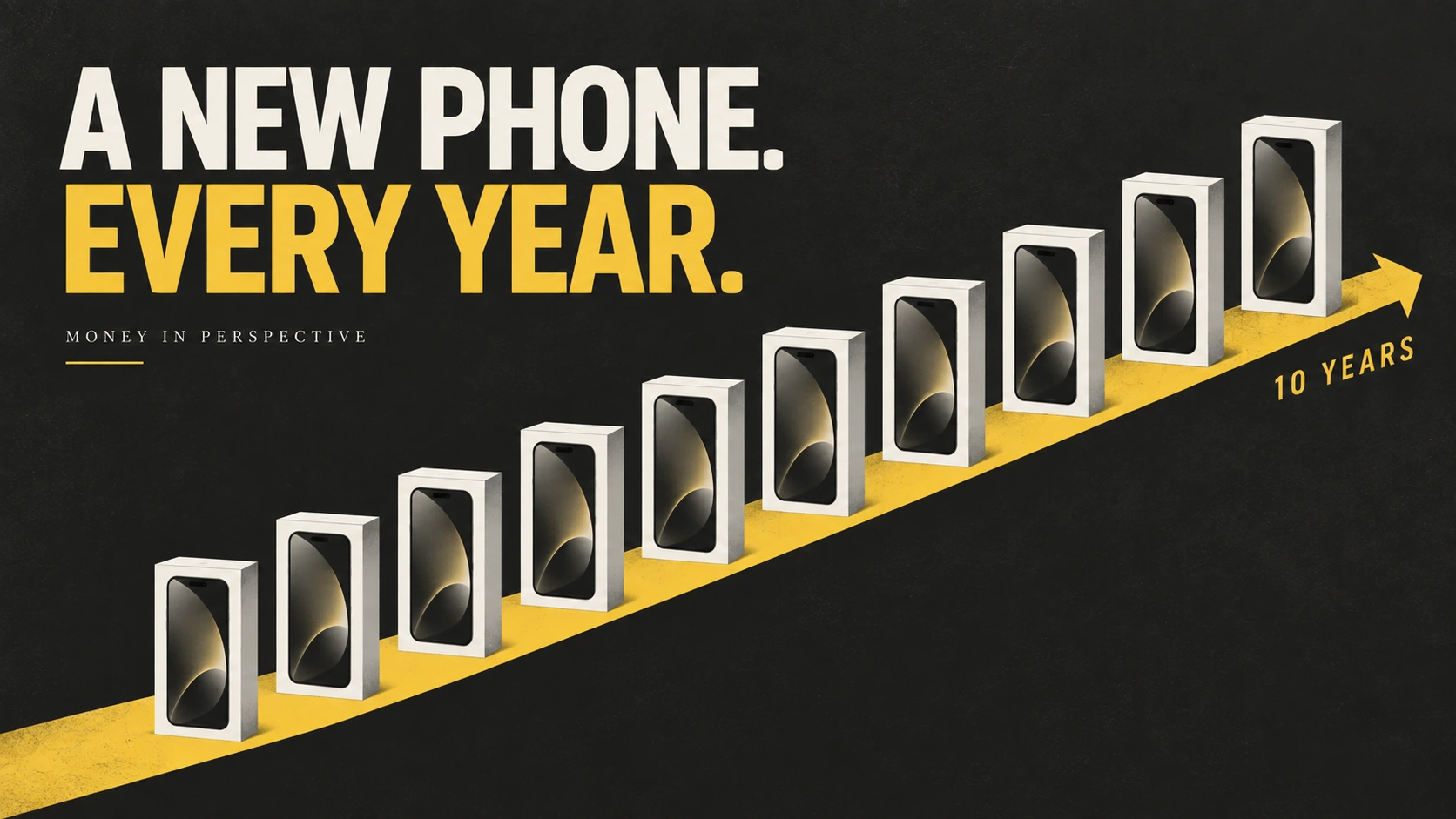
A £1,000 phone kept for four years costs roughly £250 per year before resale, insurance and repairs.
Replace it every two years and the annual hardware cost rises significantly even if the old device has resale value.
This is one of the simplest ways to understand upgrades: cost per year of ownership.
Suppose you buy a phone for £1,100.
After two years, you trade it for £400.
Net hardware cost across the period is roughly £700, or £350 per year.
Keep it for four years and eventually receive only £150.
Net hardware cost becomes roughly £950 across four years, or around £238 per year.
These are simplified examples, but the direction is clear.
Holding a working device longer usually lowers annual hardware cost because you make fewer purchases.
Trade-in offers can disguise this.
“Get £400 for your current phone” sounds like the retailer is giving you £400.
It is not.
Your current phone is worth something.
You are exchanging that asset.
The relevant figure is the net cost to move from what you already own to the new model.
If the phone costs £1,100 and the trade-in is £400, the upgrade costs roughly £700 plus any accessories, finance charges or other costs.
Now ask:
Would I pay £700 for the improvements?
That is a much clearer decision.
Monthly finance makes the upgrade feel smaller again.
£700 becomes £29 or £30 a month.
That amount may be affordable.
Affordability and value are different questions.
You can easily afford £30 a month and still decide the upgrade is not worth £700.
Retailers prefer monthly framing because small numbers are easier to accept.
You should translate them back into totals.
Accessories create another cost.
New case.
Screen protector.
Perhaps a different charger or cable.
Car mount.
These are rarely the reason someone decides not to upgrade, but repeated every couple of years they add to the ownership cycle.
Insurance can become permanent too.
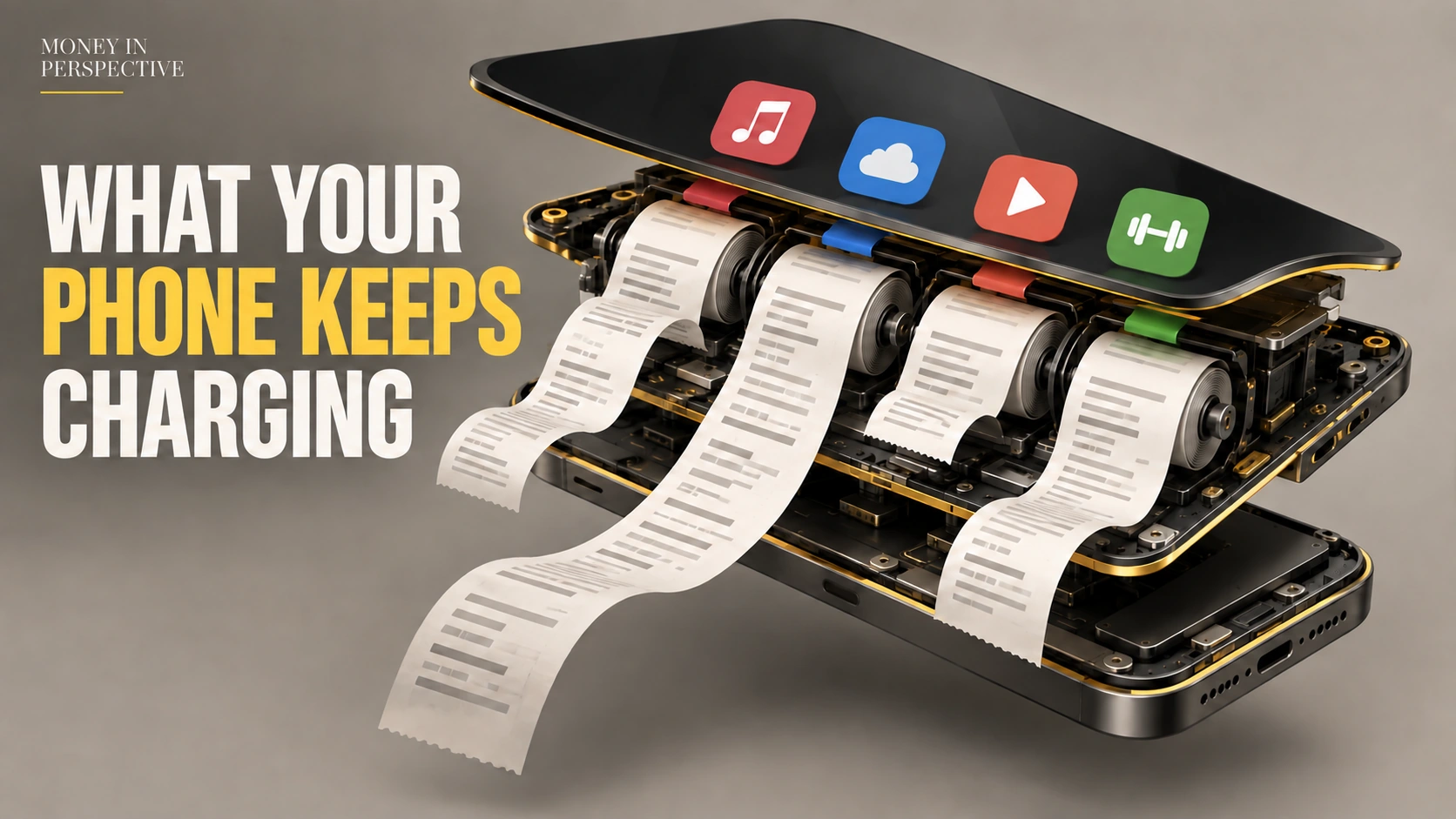
A premium phone may attract a £10 or £15 monthly protection plan.
Across two years, that is another few hundred pounds.
Insurance may be worthwhile depending on cover, risk and your ability to replace the device.
It should still be included in the total technology budget.
There is also the question of what happens to the old phone.
Trade it.
Sell it.
Pass it to a family member.
Keep one genuine backup.
Those options preserve value.
Putting several working phones in a drawer is expensive because they continue depreciating while providing almost no benefit.
A £300 phone left unused for two years may become a £100 phone.
The cost of keeping it “just in case” was the value it lost.
Environmental considerations point in the same direction.
Phones contain materials and energy-intensive components.
Using a device longer, passing it on and recycling responsibly can reduce waste.
You do not need to keep a phone until it becomes unusable.
Simply extending replacement cycles across millions of users can make a difference.
There is also something financially useful about becoming comfortable with owning an older device.
Technology marketing makes “current” feel important.
In reality, other people care far less about your phone than launch coverage makes it seem.
Most cannot identify which model you have unless they are interested in technology.
The social status of carrying the newest phone often fades very quickly because another one arrives next year.
If status is part of why you enjoy the purchase, that is fine.
Just recognise you are paying for novelty as well as utility.
That honesty matters.
There is nothing wrong with saying, “I love new phones and I want this one.”
Personal finance is not a court where every discretionary purchase must prove necessity.
If technology is a hobby and the upgrade fits comfortably without undermining other goals, buy it and enjoy it.
The weaker argument is convincing yourself the purchase is essential because the new camera has a feature you had never thought about before launch day.
Want and need can both be valid.
They should not be confused.
One useful rule is to list three specific improvements you expect to notice every week.
Not specifications.
Experiences.
“My battery will last through a full workday.”
“I can photograph my children's sport properly from a distance.”
“My current phone cannot run software I need for work.”
Those are strong.
“The processor is 20% faster” is weaker if you cannot identify where that speed appears in your life.
Another rule is to wait.
Launch week is the worst time to decide whether your current device is inadequate because comparison and excitement are at their highest.
Give it a month.
Continue using the old phone.
If the same limitations keep frustrating you, the upgrade case has survived the marketing cycle.
If the desire fades, you have saved hundreds of pounds simply by doing nothing.
Waiting has another benefit: reviews become more useful. Early impressions focus on novelty. Longer-term reviews reveal battery behaviour, durability, software issues and whether headline features actually matter.
The best time to make an expensive technology decision is often after everyone has stopped shouting about it.
There are also moments when replacing makes clear sense.
Repair costs approach the value of the phone.
Security support is ending.
The battery, screen and other components are all deteriorating.
Your needs changed dramatically.
The device is unreliable.
In those cases, keeping the old phone purely to avoid spending can become false economy.
You lose time.
Miss calls.
Carry chargers everywhere.
Pay for repeated repairs.
Frugality should not mean tolerating a tool that no longer does its job.
The point is not keeping devices forever.
It is allowing usefulness rather than marketing calendars to determine replacement.
This becomes especially powerful when a phone finance contract ends.
Instead of immediately upgrading, move to an appropriate lower-cost service plan and keep the phone.
If the previous combined payment was £55 and the service-only plan is £15, keeping the device releases £40 a month.
That is £480 over one year.
Keep it two additional years and the difference approaches £1,000.
The old phone may lose some resale value during that time.
You can still come out significantly ahead.
This is where one extra year can have more financial impact than finding a discount on the new model.
People often spend days comparing retailers to save £50 while overlooking the £500 saving available from not buying yet.
There is also value in thinking across your whole technology ecosystem.
Phone.
Watch.
Earbuds.
Tablet.
Laptop.
Each category has its own upgrade cycle.
If everything is replaced frequently, technology becomes a large recurring lifestyle expense.
A yearly technology budget can make those trade-offs visible.
Perhaps the new phone is important enough that you keep the laptop longer.
Perhaps the watch upgrade provides almost nothing and can wait.
Money becomes more effective when products compete for it.
The newest device will always be better eventually.
That means waiting does not cause you to miss the final perfect phone.
There is always another model coming.
This can be strangely liberating.
You do not need to buy this year's improvement because it is your last chance.
If you wait, next year's device will probably be better again.
The cycle never ends.
Your decision can.
Ask whether the current phone still performs the life you actually have.
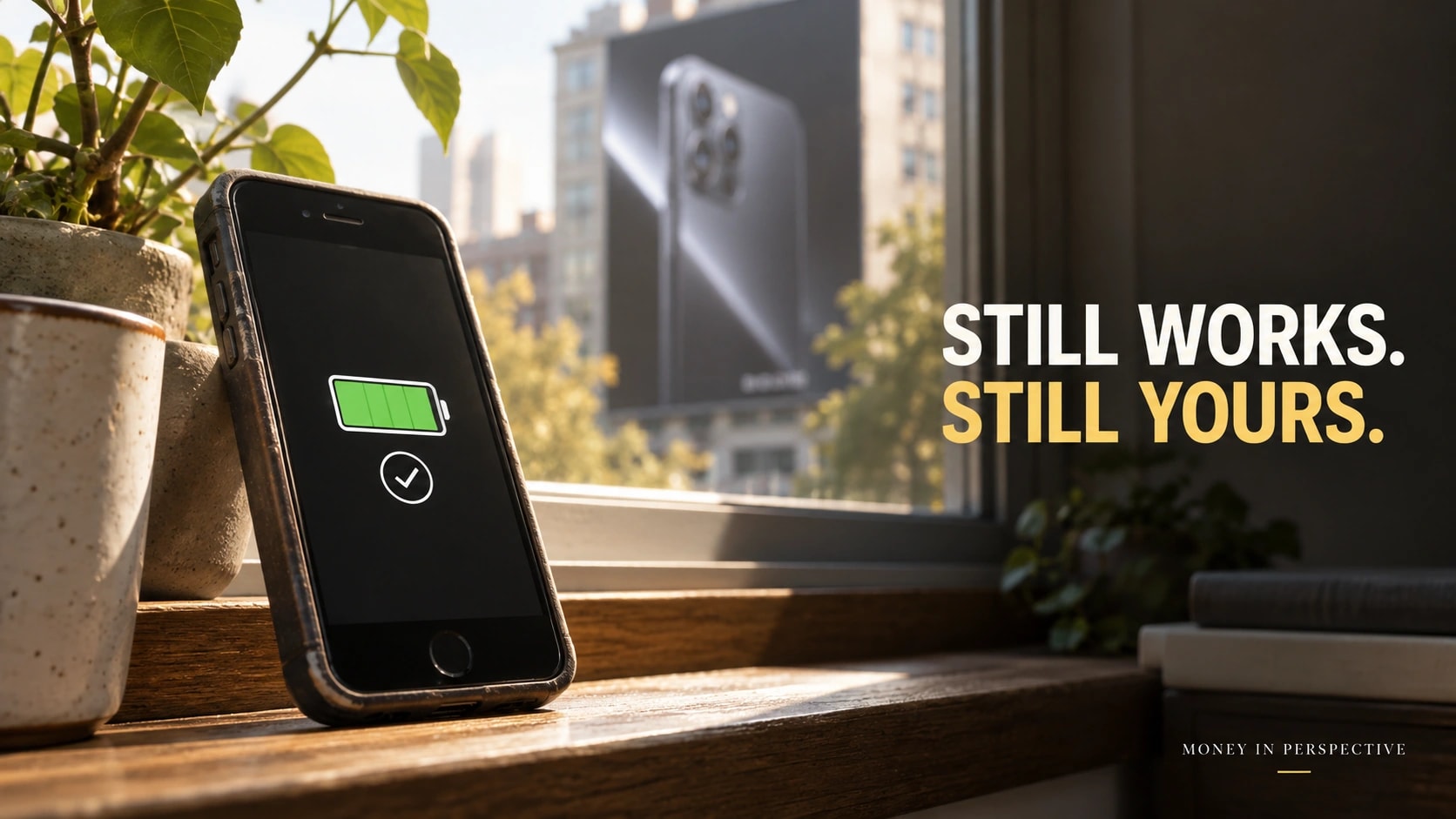
If yes, keeping it is not falling behind.
It is extracting more value from a product you already paid for.
The new iPhone may be brilliant.
Your current one may still be fine.
Those two statements can be true at the same time.
And financially, learning to live comfortably with that fact can save far more than any trade-in promotion ever will.