
A student-loan balance can look like a normal debt while behaving very differently from one. Someone can sign into their account, see £50,000 or £70,000 outstanding and immediately feel that the responsible thing is to attack it with every spare pound available. That instinct is understandable because most forms of borrowing reward early repayment. Clear a credit card and you stop paying interest. Overpay a mortgage and you normally reduce future interest. Repay a personal loan and the liability disappears.
UK income-contingent student loans do not fit that pattern neatly. Your required repayment is determined mainly by your income and repayment plan rather than by the size of the outstanding balance. The balance becomes highly important if you are likely to repay the loan in full. It can be much less important if a substantial amount is likely to remain when the loan reaches its write-off date.
That changes the decision completely. Instead of asking only, “How much do I owe?”, the more useful question is, “How much am I actually likely to repay under the rules that apply to me?” This article looks at income-contingent loans and UK repayment thresholds, checked on 5 October 2026. Older mortgage-style student loans and overseas repayment arrangements need their own terms checked.
Your repayment is driven by income, not the balance
For the 2026/27 tax year, borrowers on Plans 1, 2, 4 and 5 repay 9% of income above the relevant threshold. Postgraduate Loans operate separately, with repayments of 6% above £21,000. GOV.UK sets out the current thresholds and repayment rates:
| Repayment plan | Annual income threshold, 2026/27 | Rate above the threshold |
|---|---|---|
| Plan 1 | £26,900 | 9% |
| Plan 2 | £29,385 | 9% |
| Plan 4 | £33,795 | 9% |
| Plan 5 | £25,000 | 9% |
| Postgraduate Loan | £21,000 | 6% |
Two people can be on the same repayment plan, earn exactly the same salary and make the same statutory repayment even if one owes £12,000 and the other owes £62,000. This assumes both still have enough outstanding to meet that repayment; someone reaching the end of the loan should not keep repaying indefinitely.
That is one of the most important differences from conventional borrowing. If you owe five times as much on a normal bank loan, you would normally expect that difference to affect the repayment schedule. With an income-contingent student loan, the repayment is primarily connected to earnings. The balance still matters, but mainly because it helps determine whether you eventually clear the debt before write-off.
A £50,000 balance does not necessarily mean you will repay £50,000
Write-off rules are central to understanding whether voluntary repayment makes sense. Under the current cancellation rules, Plan 2 loans are written off 30 years after the April in which you were first due to repay. Plan 5 uses 40 years from that point. Postgraduate Loans for borrowers from England and Wales use 30 years; postgraduate borrowing from Scotland or Northern Ireland falls under different plan arrangements.
The clock does not simply start on the day you decide to look at your balance. Check the April from which your repayment period runs, and do not apply the Plan 2 or Plan 5 rule to another plan. Plan 1 and Plan 4 cancellation rules can also depend on when the first loan was paid.
A voluntary repayment produces a financial saving only to the extent that it reduces payments you would otherwise have had to make. Imagine someone whose realistic earnings projections leave a substantial Plan 2 balance at the end of the 30-year period. If that borrower voluntarily pays £5,000 today, they have definitely given up £5,000 of cash. But if the payment merely reduces an amount that would eventually have been written off, their lifetime statutory repayments may not fall at all.
That is why an extra payment can be sensible for one borrower and poor value for another, even where their current balances look similar. The decision depends on the path to repayment, not just the number at the top of the statement.
The same salary can produce the same deduction on very different balances
Consider two illustrative Plan 2 borrowers earning £40,000 a year in 2026/27. Using the annual threshold, the calculation is £40,000 − £29,385 = £10,615, followed by £10,615 × 9% = £955.35 in annualised repayments.
That is approximately £79.61 a month as a simple annual average. It is not a prediction of the exact payslip deduction: payroll uses pay-period thresholds and rounding, and bonuses, overtime or irregular earnings can change what is collected. These examples assume one steady employment income and a loan that remains outstanding throughout the period.
Now suppose Borrower A owes £12,000 and Borrower B owes £62,000. At that income, the same earnings formula applies. For Borrower A, a £5,000 voluntary repayment might materially shorten the period before the loan is cleared, provided their future income and remaining repayment term mean they would otherwise repay in full. Once that loan has been settled and deductions stopped, the payment can create a future cash-flow benefit.
For Borrower B, the same £5,000 may make very little difference if the remaining balance is still unlikely to be cleared before write-off. Their online balance becomes £5,000 smaller, but they may continue making the same statutory repayments for the same period. Neither outcome follows from balance alone; the examples illustrate the question to investigate, rather than forecast either person's career.
The useful comparison is therefore not whether £5,000 reduces the balance. Of course it does. It is whether paying £5,000 changes what you are likely to repay over the life of the loan. As with comparing mortgage overpayments with accessible savings, the smaller liability is only one side of the decision.
Interest matters, but not quite like credit-card interest
Interest affects how quickly an outstanding balance grows or falls. The Student Loans Company announcement for September 2026 to August 2027 gives Plan 5 an RPI-linked rate of 4.1%, subject to the applicable market-rate cap. Plan 2 normally uses RPI plus up to three percentage points, depending on circumstances, but its maximum is capped at 6% for this period. Rates can change, so check the current guidance rather than treating these figures as permanent.
For Plan 2, the distinction between studying and post-study circumstances matters. The current maximum applies while studying and until the relevant April after leaving; afterwards the applicable rate depends on income. A 6% maximum does not mean every Plan 2 borrower is charged 6%.
Those figures can look uncomfortable when someone has a large balance. Seeing thousands of pounds of interest added naturally creates urgency. But a high rate does not automatically make voluntary repayment the right response. If you are likely to clear the loan in full, interest is a real lifetime cost because it increases what you eventually need to repay. Reducing the balance early can then save future interest.
If you are unlikely to clear it before write-off, interest can increase the displayed balance without necessarily increasing what ultimately comes out of your income. That is counterintuitive because nearly every other debt teaches us that a growing balance is automatically bad news. Student loans require you to distinguish interest added to a statement from interest you will actually end up funding.
Plan 5 changes the comparison for younger borrowers
Plan 5 has a lower threshold than Plan 2 in 2026/27, runs for up to 40 years rather than 30 and normally charges interest linked to RPI. Those differences mean that advice written for an older Plan 2 graduate should not automatically be applied to a Plan 5 borrower.
The Department for Education's 2025–26 forecasts for England, published in 2026, expect 55% of full-time higher-education borrowers in each of the 2025/26 and 2026/27 Plan 5 starting cohorts to repay in full. The release compares this with 32% for the 2022/23 Plan 2 cohort, explicitly drawn from the earlier 2022/23 forecast. These are different cohorts and forecast vintages, not a controlled comparison of otherwise identical people.
They are also forecasts, not personal probabilities. Careers change, policy changes and earnings are uncertain. The IFS's independent analysis of education spending illustrates how changes to repayment thresholds can alter expected lifetime payments. A projection depends on its policy and earnings assumptions; it is not a promise about your future payslips.
Still, blanket advice such as “never overpay your student loan” is too simplistic. For a Plan 5 borrower with strong long-term earnings and a balance they are highly likely to clear anyway, voluntary repayment can deserve consideration. That does not mean being on Plan 5 is, by itself, a reason to send money.
Imagine two people who each owe £45,000. One is on Plan 2, earns £38,000 and is well into the repayment period. The other is on Plan 5, earns £60,000 early in a career and expects earnings to rise. Their balances are identical, but their likely outcomes may differ greatly. The first might still have money outstanding at write-off; the second might clear the balance through normal deductions. Both need a realistic range of earnings assumptions before drawing that conclusion.
What £60,000 of earnings means under the two plans
An illustrative £60,000 salary makes the threshold difference visible. The following annualised calculations use the 2026/27 rules, assume the loan remains outstanding all year and exclude payroll rounding:
| Calculation | Plan 2 | Plan 5 |
|---|---|---|
| Gross annual earnings | £60,000 | £60,000 |
| Less annual threshold | £29,385 | £25,000 |
| Income above threshold | £30,615 | £35,000 |
| Repayment at 9% | £2,755.35 | £3,150 |
The difference is £3,150 − £2,755.35 = £394.65 for that year, before considering interest and write-off rules. It is not a fixed annual difference to multiply unchanged across a 40-year career: earnings, thresholds and policy can change. It shows why the repayment plan matters even before you look at the balance.
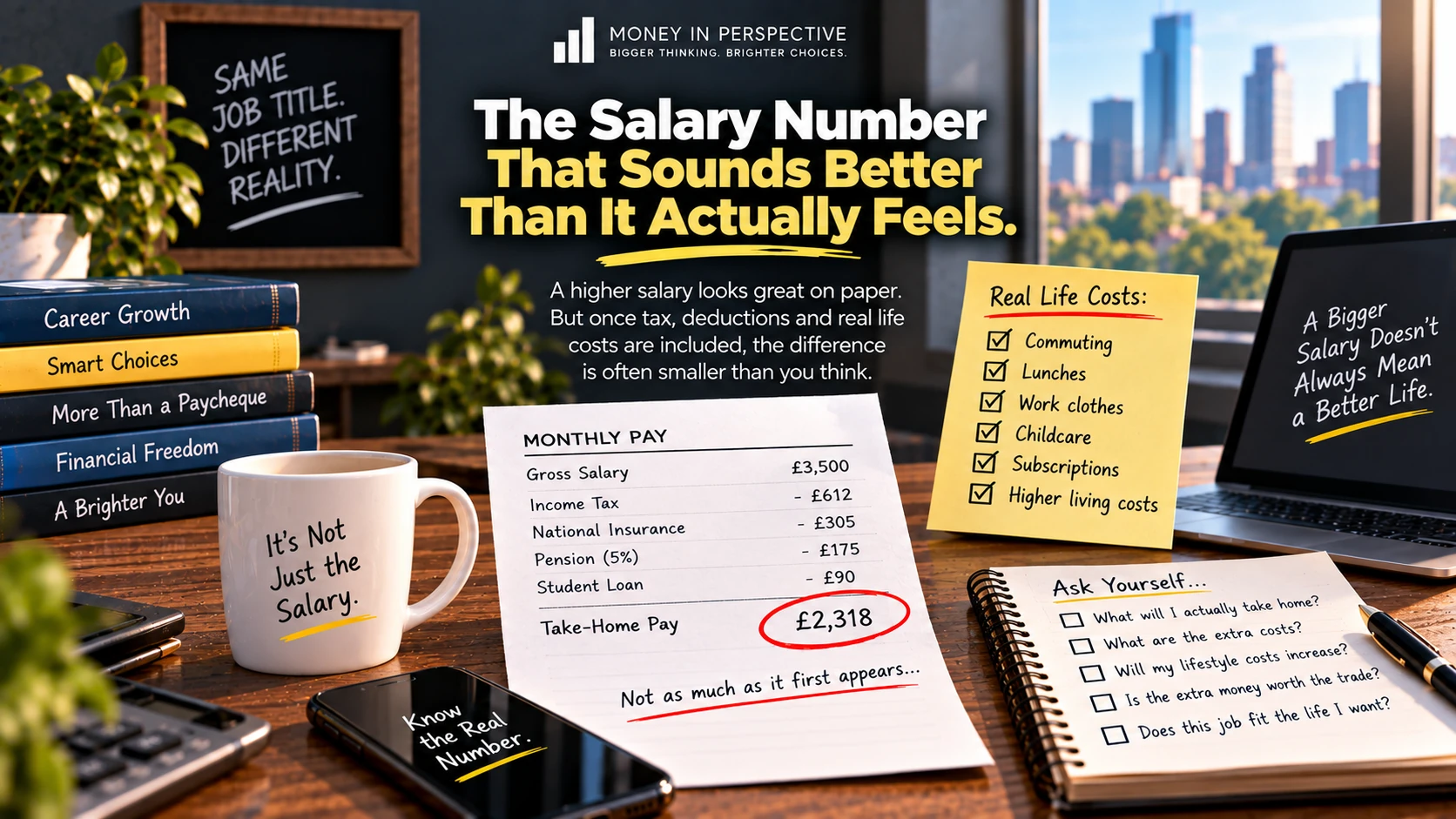
Over time, the combination of a lower threshold and a longer repayment period can make Plan 5 significant for lifetime cash flow. The product is still called a student loan, but the economics are different. This is also part of understanding why the salary number differs from money you can actually use.
A Postgraduate Loan can add another deduction
Someone with both an undergraduate loan and a Postgraduate Loan can have the two repayment calculations running alongside each other. For an illustrative £50,000 salary with Plan 2 and a Postgraduate Loan, the annualised figures are:
| Loan | Calculation | Annualised repayment |
|---|---|---|
| Plan 2 | (£50,000 − £29,385) × 9% | £1,855.35 |
| Postgraduate | (£50,000 − £21,000) × 6% | £1,740 |
| Combined | £1,855.35 + £1,740 | £3,595.35 |
Again, these are annual illustrations, not exact payroll forecasts. GOV.UK's repayment guidance confirms that the postgraduate deduction can run alongside the undergraduate one. This is different from holding multiple undergraduate plan types, where the rules do not simply stack a separate 9% deduction for every plan.
One balance may be relatively small while the other is nowhere near being cleared. If the smaller loan is clearly going to be repaid anyway, targeting it can sometimes remove one deduction sooner. Make sure an extra payment is applied to the intended loan: official guidance allows you to specify a plan, rather than leaving the allocation to the Student Loans Company.
The benefit still needs to be measured against the likely lifetime outcome. Removing a deduction earlier may help cash flow, but you have paid money upfront to do it. It is not new income appearing from nowhere.
Extra repayments are not a savings account you can empty later
GOV.UK's extra-repayment guidance says there is no penalty for voluntary repayments, but also warns that you might not benefit because the loan could be written off. It states that extra repayments cannot be refunded. That is different from the separate refund rules for certain incorrectly collected or excess statutory deductions.
Once you send the voluntary payment, treat the decision as irreversible. Moving £5,000 from one savings account to another leaves you with accessible money, subject to account terms. Paying £5,000 into a student loan does not leave you with a reserve you can withdraw when life changes its plans.
If you intend to clear the loan completely, ask SLC for the settlement amount and settlement date rather than relying on an old statement. Confirm how deductions will stop. Clearing the balance and the payroll instruction catching up are administrative steps, not necessarily the same instant.
Suppose you have £10,000 available. The comparison is not student-loan overpayment versus doing nothing; it is overpayment versus the best alternative use of that cash. Do you have an emergency fund, expensive credit-card debt, a house deposit to build or further employer pension contributions available? Would keeping the money accessible make your finances more resilient?
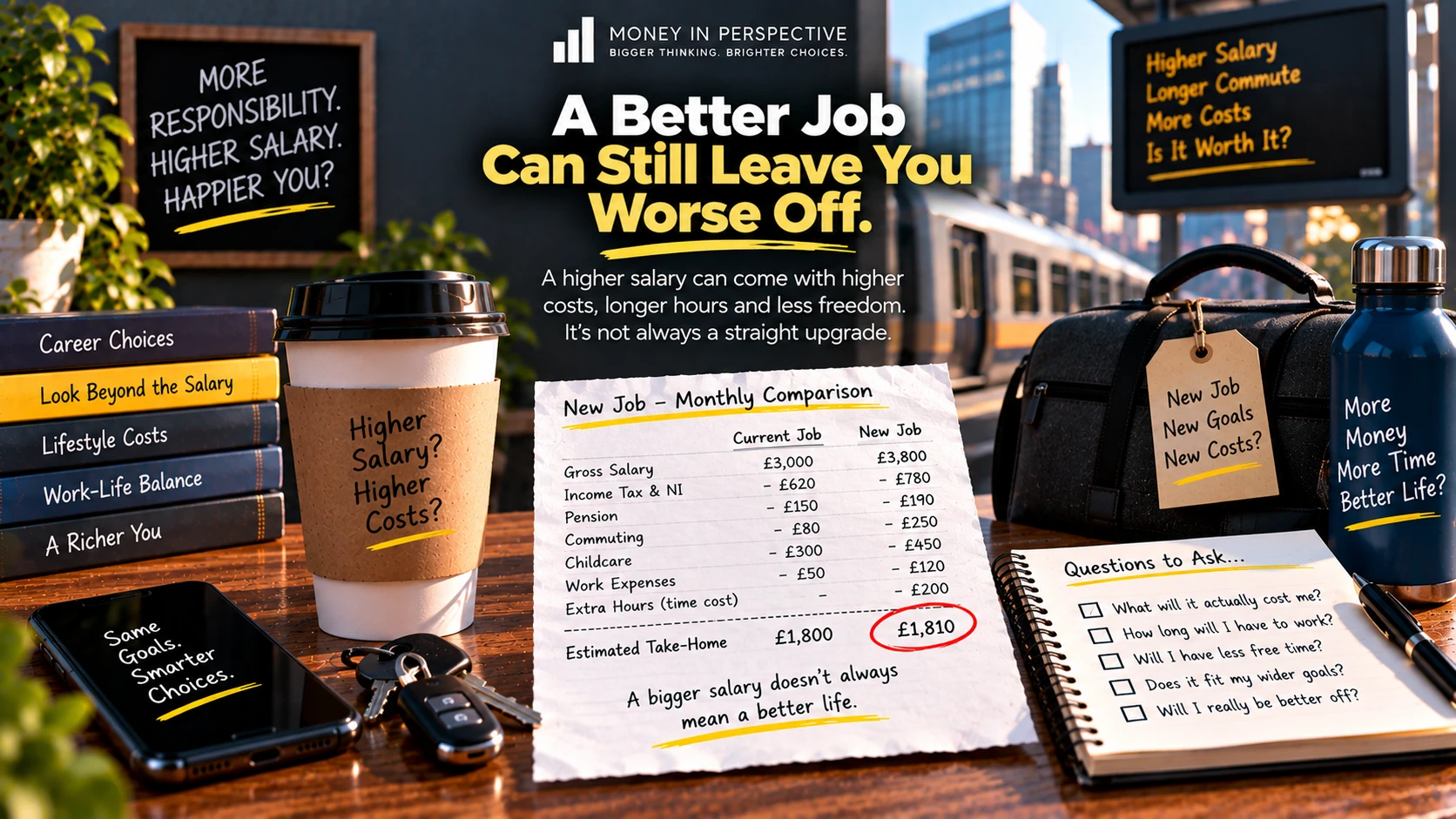
If you have almost no emergency savings, an irreversible payment could weaken your position even while improving the loan statement. If contributing to a pension would attract additional employer money, include that in the comparison, alongside the pension's access restrictions. The same need to examine the whole package appears when a better-paid job does not necessarily leave you better off. A decision cannot be judged properly without considering what you give up.
When paying extra makes sense—and when it may not
Voluntary repayment is easiest to justify when you are already highly likely to clear the loan before write-off. That might reflect high earnings, a modest remaining balance, many repayment years ahead or a combination of the three. None should be considered in isolation.
Imagine someone with £4,000 remaining who is currently having around £300 a month deducted. This is an illustrative situation, not a repayment forecast. If their employment is stable and they are clearly going to repay the balance, clearing it could stop that deduction sooner and reduce future interest. The benefit is measurable because they are bringing forward payments they would otherwise make. They should still compare the interest saved with the return and flexibility available elsewhere.
Overpayment deserves more caution when the balance is large relative to realistic future repayments. A Plan 2 borrower with moderate earnings and much of the term already gone may be heading towards write-off with money outstanding. A voluntary payment could then mean paying today for something they would never have been required to repay later.
Uncertain earnings make the decision harder. People change careers, become carers, have children, work part-time, become self-employed or go through periods without income. Required repayments respond to the applicable income rules. A voluntary payment does not come back because your career later takes a different direction.
There is an emotional side too. Some people simply hate seeing debt. A £60,000 balance can feel uncomfortable even if the required repayment is manageable and much of it may eventually be written off. That feeling is real, but paying thousands solely to make an unpleasant number disappear can be an expensive way to buy peace of mind. If being debt-free matters to you and you understand the opportunity cost, you can value that feeling without pretending it is automatically the cheapest decision.
Understand the rules before paying the balance down
Before paying extra, check which repayment plan you are on. Do not guess from your age or graduation year. Confirm the balance, the April from which your repayment period runs and the years remaining before the relevant write-off date.
Then look at current earnings and a realistic range of future incomes, rather than assuming either a flawless career or permanent financial disaster. Work out whether ordinary deductions are likely to clear the loan under each scenario. Compare the voluntary payment with other sensible uses of the money, including what happens if you need cash unexpectedly.
If full repayment looks unlikely across those scenarios, overpaying needs a strong justification. If it looks likely, interest savings become more relevant. If the answer is uncertain, retaining flexibility while you gather information may be better than making an irreversible decision. GOV.UK also suggests speaking to a financial adviser if you are unsure about extra repayments.
Student-loan balances are not meaningless. They determine what remains to be cleared and whether you eventually reach full repayment. But they should not be read like a credit-card balance or mortgage statement. The plan, threshold, repayment percentage, write-off date and likely future earnings belong beside that number.
A £70,000 balance can be less urgent to overpay than a £7,000 balance if the first borrower is unlikely to repay in full and the second is close to clearing theirs. The better question is what the loan is likely to cost you over your working life, and whether an extra payment changes that cost enough to justify losing the cash today.
Sometimes the answer will be yes. Sometimes the better decision will be to make the required repayments and use spare money elsewhere. And sometimes the smartest response to a frightening student-loan balance is to stop staring at the balance and start understanding the rules.